
The eighth annual Congress of Leaders of World and Traditional Religions will convene in Astana on Sept. 17. This year’s confab is expected to draw prelatic heavyweights to examine the causes of world conflicts, contemplate the nexus between transcendent realities and the nitty-gritty of everyday life, and otherwise chew the fat. Politicians and diplomats – striving for global stability – would be well advised to pay attention to the congress’ insights and conclusions.
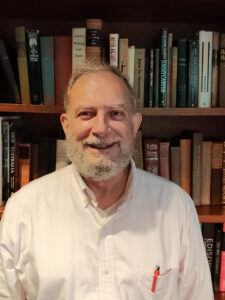
Javier M. Piedra.
In recent years, the congress has brought together a mosaic of leaders from Pope Francis to the Grand Imam of Cairo’s al-Azhar Mosque, Ahmed El-Tayeb, as well as representatives of Judaism, Buddhism, Hinduism, and Orthodox Christianity. Expect a similar level of attendance this year.
The religious leaders all tend to agree that conflicts are not inevitable and that diplomacy should be optimistic and the core of statecraft. This attitude emphasizes a need to return to traditional values and stands in contrast to pessimists, who believe that peaceful coexistence is wishful thinking.
The event is an opportunity for introspection in times of heightened international tension and fragmentation. The predominately clerical get-together will explore solutions to international disputes, expose misguided ambitions in geopolitics, and challenge the view that religion is prima face the cause of wars. The latter is only true when religion is hijacked by extremists or utilitarians, or instrumentalized by political operatives.
The congress will be much more than a ritualistic interfaith gabfest filled with banalities and bromides: it will seek to open new avenues for ambassadorial engagement and peace in an age of obsessive geopolitical gamesmanship.
As the principal architect of the congress, President Kassym-Jomart Tokayev is expected to deliver a speech as penetrating as his keynote at the opening ceremony of the seventh congress in 2023.
“Unfortunately, tension, mutual distrust, and even hostility are returning to international relations. What can we rely on to counter today’s challenges? History provides only one answer – goodwill, dialogue, and cooperation. There are no other guarantees of success. Threats, sanctions, and the use of force do not solve problems. We must turn to humanistic ideals, the main custodians of which are, of course, traditional religions,” Tokayev said.
The meeting will condemn fanaticism and the weaponization of religion. Authentic religion, which recognizes the dignity of the human person as the first order of business, builds bridges, whereas politicized religion – a grotesque parody of the harmony of faith and reason – destroys them.
Kazakhstan keen on dialogue
As the principal promoter of the congress, Maulen Ashimbayev, the chairman of the Senate, summarized the urgency and purpose of the gathering.
“The congress has become a universally recognized and respected international platform that works to strengthen interreligious and intercivilizational dialogue, which all the world’s traditional religions support,” Ashimbayev told in an interview for this story.
“The world is going through a complex geopolitical situation.” Ashimbayev explained. “We see wars both in the direct sense and in various forms: hybrid, information, trade, cyber wars. Under these conditions, the former system of international security, which was formed after World War II, is breaking down… and is actually unable to prevent certain conflict situations. Against this background, we see a tendency that religious leaders are looking for a platform for dialogue, for cooperation.”
The implication is that religious leaders must be given a voice at the diplomatic table to help restore semblance of sanity to the international order.
Without a doubt, this year’s congress takes place against a backdrop of grave global crises. Yet the organizers of the event recognize that perhaps the deepest crisis of all is philosophical: a widespread belief that military hardware and zero-sum reasoning are the only currencies of power, while communication and compromise are for weaklings and losers.
Bulat Sarsenbayev, the senior advisor to the chairman of the managing board of the International Center for Interfaith and Interreligious Dialogue, is substantially of the same mind.
“The congress is a dialogue grounded in realism, founded on the enduring values of magnanimity and mutual respect. These principles are not relics of the past, but the very foundation of any sustainable political order, reflecting the moral law inherent in the human heart, and compelling us to work towards lasting peace,” Sarsenbayev said.
In that sense, the congress stands as an alternative to the cynicism that pervades so much of modern diplomacy.
Dr. Christian Mendoza, professor of Catholic social teaching at Rome’s Pontifical University of the Holy Cross suggests that “the congress leaders could benefit from a careful reading of four key papal encyclicals, one going back more than a century: Rerum Novarum (1891), Populorum Progressio (1967), Centesimus Annus (1991) and Fratelli tutti (2020). It would serve diplomats well to keep in mind four main principles when trying to inject common sense into conflictive situations: the dignity of the human person, the common good, subsidiarity, and solidarity.”
One of the main goals of the event, without explicitly saying so, is to reaffirm natural-law principles – ethical principles that transcend any one religion or religious sect and are recognized across cultures and history as rooted in the moral architecture of human beings. Such principles include the right to public order free from conflict and fear and the sanctity of the family. These are the building blocks of a decent and orderly society. The principle of religious freedom, properly understood, is inviolable although it’s violated all the time.
For those who remain skeptical – seeing these gatherings as a noble but toothless exercise – Sarsenbayev offers a concluding thought.
“Peace is not merely the absence of conflict; it is the presence of mutual understanding and empathy in human relations. This understanding begins when individuals of faith and goodwill – diplomats among them – choose not to succumb to despair. The congress is a testament to hope, affirming that peace is indeed reachable,” he said.
Even in the face of indifference, unrestrained ambition, and ideological strife, the Congress of Leaders of World and Traditional Religions reminds us that the future of humanity depends on those who speak the truth, keep their commitments, listen to others with humility, and understand restraint in a world in need of solidarity and mutual respect. A dialogue rooted in the sacred, which presupposes empathy not enmity, and sanity not madness, offers hope for civilizations to coexist in peace, even amid the discord of our age and the rise of a culture of death.
The author is Javier M. Piedra, a financial consultant, specialist in international development and former deputy assistant administrator for South and Central Asia at USAID.
Disclaimer: The views and opinions expressed in this article are those of the author and do not necessarily reflect the position of The Astana Times.
