
ASTANA – Kazakhstan has launched a network of Active Longevity Centers nationwide to support the social integration of elderly adults and promote active lifestyle. These centers offer free cultural, creative, physical, and educational activities for retirees to improve physical and mental well-being.
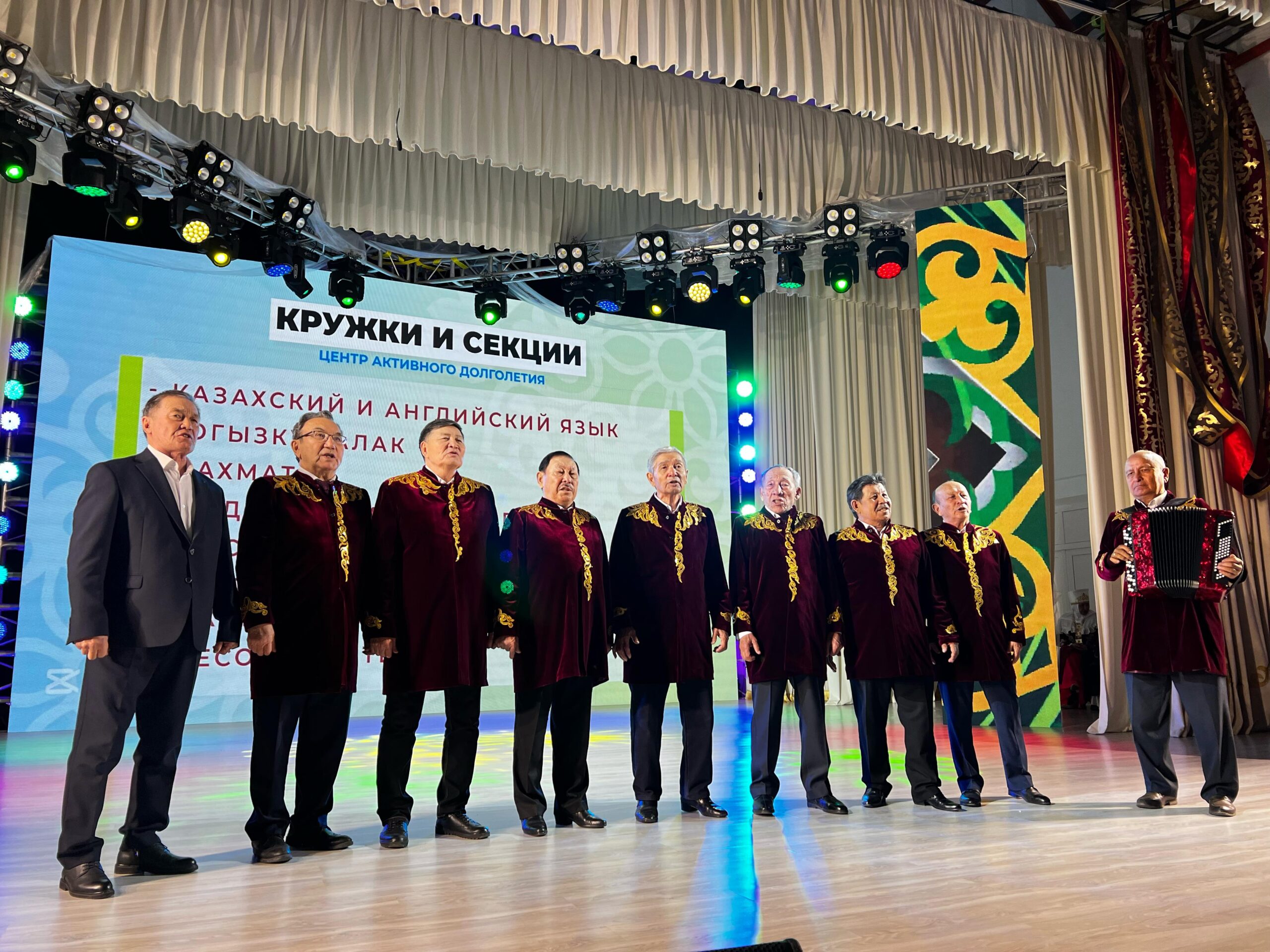
Visitors take part in events and concerts, such as an April 18 performance by artists from Astana’s center in Akkol. Photo credit: The Astana Times
According to official figures, Kazakhstan’s aging index reached 31.1 in 2024, a 1.6 percentage point increase from the previous year. This means that for every 100 children aged 0 to 15, there are now 31.1 people aged 65 and older. The highest rates were recorded in the North Kazakhstan, the East Kazakhstan, and the Kostanai regions.
Comprehensive programs for body and mind
The centers enable older citizens to take part in a wide range of public activities while improving their health and quality of life. People can do yoga, aikune therapy, which refers to health-improving gymnastics for the back and spine, Nordic walking, and therapeutic exercises.
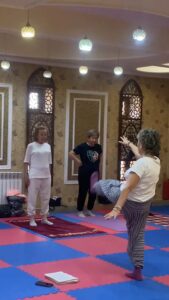
At the centers, seniors participate in yoga, aikune therapy [health-improving gymnastics for the back and spine], Nordic walking, and therapeutic exercises. Photo credit: The Astana Times
People of retirement age can attend dance and vocal classes, chess, Kazakh and English lessons, creative arts, handicrafts, IT literacy, gardening therapy, memory-enhancement techniques.
Six centers operate in the Kazakh capital, offering more than 40 free services, said Meruert Nurgaliyeva, head of the information promotion department at the Astana-based centers, in an interview with The Astana Times.
“Today, over 15,000 retired citizens receive services through these centers, with the oldest being 95 years old. Each center welcomes around 2,500 visitors per day, depending on the district and how long the center has been open. Every participant can enroll in up to three classes,” she said.
Before joining the center, each person undergoes a health checkup to identify chronic conditions and select the most suitable activities. Nurgaliyeva emphasized the importance of a balanced schedule. The participants can choose three different types of activities, but not all in the same category.
“We encourage variety. Participants can’t choose three creative or three fitness programs—they need a mix. This keeps both the body and mind active,” she said.
These centers are designed to encourage positive thinking and active engagement in life, which can ultimately extend longevity and prevent loneliness and stress.
“These centers are about helping older adults feel valued and stay connected,” she added.
Creativity as connection
One of the largest centers in Astana is in the Baikonur district, serving more than 3,200 people. One of its most popular programs is a handicraft group called Gifts Made by Hand, led by occupational therapy instructor Alfiya Chernyatevich.
Chernyatevich first came to the center as a participant, but soon found herself leading the class.
“I gave such a name because I wanted to teach people to create meaningful things with any material they had, both for themselves and as gifts. The class is not just about technical skills—it’s also about unlocking creative potential,” she told The Astana Times.
“Kazakh culture has many celebrations, and our seniors often attend toybastar (gift-giving occasions), so we create small, affordable, and useful items that are unique and personal,” she added.
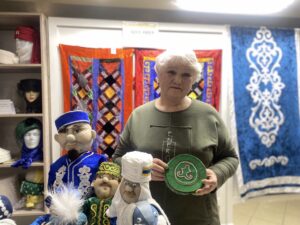
Alfiya Chernyatevich, the center’s occupational therapy instructor. Photo credit: The Astana Times
Chernyatevich teaches sewing and knitting, among other crafts, using various materials. She also encourages teamwork and mutual support among group members.
“When someone says they have an event coming up soon, others jump in to help. This kind of collaboration builds community and keeps everyone engaged. It’s rewarding to see them take initiative and support one another,” said Chernyatevich.
Many of her students arrived with no previous creative experience.
“Some come in not being sure of themselves. These are people who once had careers but never tried arts and crafts. I always say—if there’s a spark of interest, we will make it work. Everyone learns in their way, and I see them not as elderly people, but as students,” she said.
She noted that the group not only sharpens fine motor skills and memory but also boosts self-confidence and emotional resilience.
“They develop creativity and mental acuity. Knitting means counting every stitch, which keeps the mind active. Even in retirement, they remain eager to learn. Seeing them leave motivated and smiling is the greatest reward,” shared Chernyatevich.
She also emphasized the importance of emotional connection. Her group feels more like a family than a class.
“They support each other, celebrate together, and share stories. We have become a close-knit community. I always say, ‘We are a family—love, respect and support each other.’ I have been lucky to have such wonderful women in my group,” she said.
Chernyatevich credits the center with her growth and noted that she continues to learn from her students.
“Before coming here, I did not know Kazakh customs that well. But I learned along with them. I started to study the Kazakh language. Now, even with an accent, I can hold a conversation at the store,” she said.
Rediscovering joy
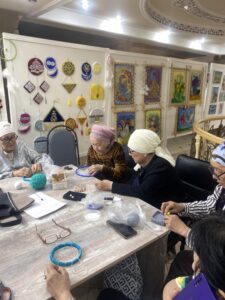
Handicraft groups sharpens the participants’ fine motor skills and memory but also boosts self-confidence and emotional resilience. Photo credit: The Astana Times
Kabira Maimedova, a 67-year-old former lawyer, came to the center two years ago after the death of her son. She now attends Nordic walking sessions and Chernyatevich’s craft group.
“I cared for my son for 21 years. After his passing, I had joint pain and hand stiffness. The doctor said I needed to improve my hand mobility. I tried physical therapy but did not like it. Then I heard about this handicraft group and joined,” said Maimedova.
She said she could not lift a glass before, but after a few sessions, she began to see improvement.
“I had never created anything in my life, but they taught me everything. And I found an amazing group of friends. We celebrate holidays together, share stories, and sometimes just chat after class. I live alone, so socializing is very important to me,” she said.
She also shared her experience with the Nordic walking group, which meets each morning at Central Park.
“I deliberately arrive early because our coach plays music before the session, and we all dance together, which brings us closer and boosts our mood. I assumed Nordic walking would be simple, but it took me a week to master the proper technique,” said Maimedova.
She emphasized that such centers are essential, providing seniors with a sense of purpose and the reassurance that they still matter.
