
ASTANA – Yellowed envelopes, handwritten greetings and personal letters can sometimes reveal more about a person than official biographies. Preserved in the personal archive of Kazakh poet Mariyam Khakimzhanova, correspondence with fellow writers, translators, editors and readers offers a glimpse into her life and the literary connections she built throughout the 20th century.
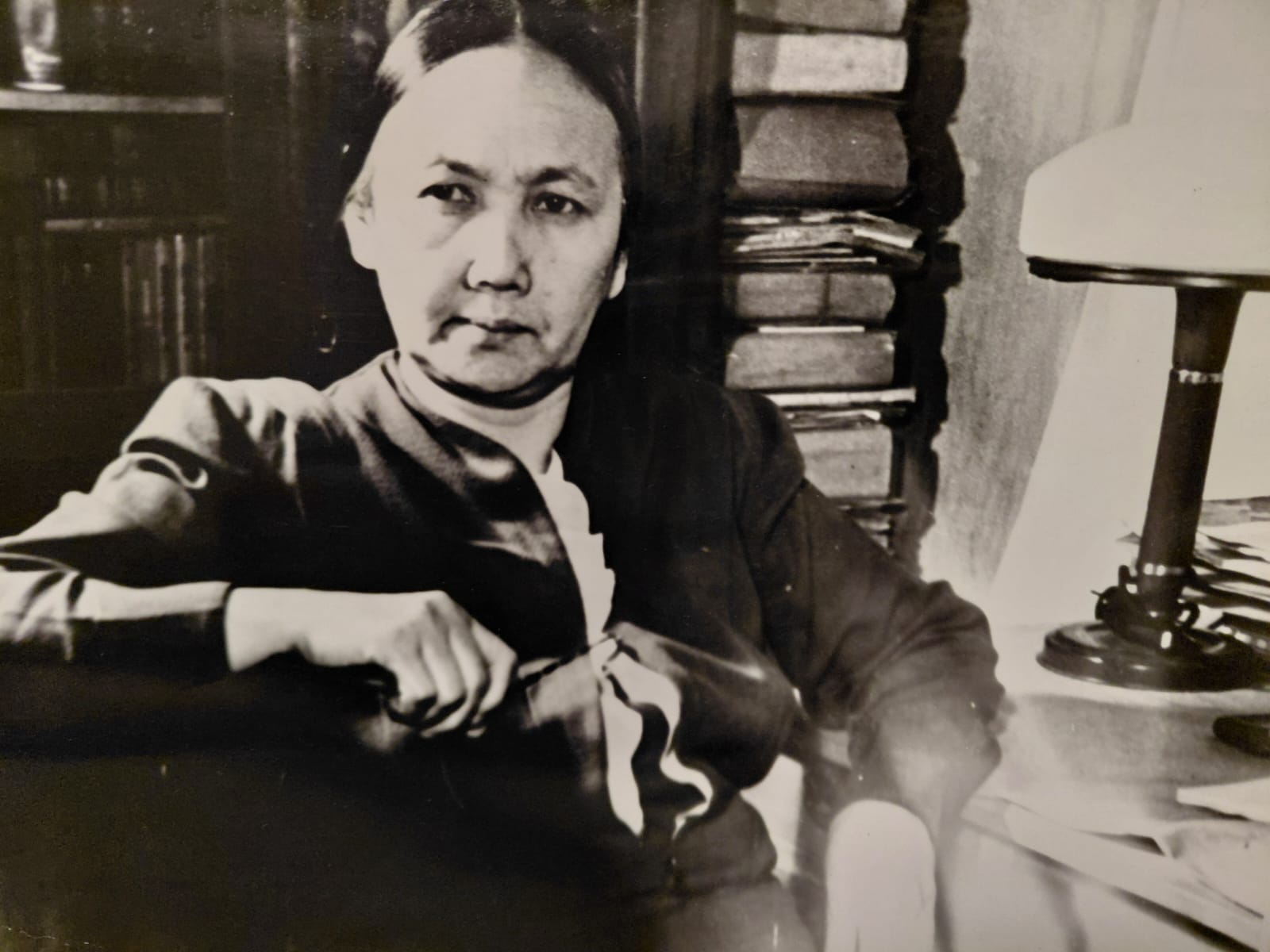
Mariyam Khakimzhanova, People’s Poet of the Kazakh SSR, whose literary legacy continues to be remembered. Photo credit: from the Khakimzhanov family archive / Kostanai News Agency.
This year marks the 120th anniversary of Khakimzhanova’s birth, commemorating a poet, translator and People’s Poet of the Kazakh Soviet Socialist Republic whose life spanned nearly nine decades of profound historical change.
Her letters reveal not only the recognition she received as a writer but also the warmth of her relationships, the respect of her contemporaries and the role she played in bringing Kazakh literature to wider audiences.
The collection includes correspondence from Russian writer and poet Pavel Kuznetsov, Ukrainian poet Oles Yurenko, editors, translators and publishers. Some letters contain professional requests and discussions about literary work, while others preserve personal greetings, expressions of sympathy and invitations between friends.
Among the most touching documents is a letter from Kuznetsov, dated Jan. 10, 1947. Addressing her as “our dear Maryam,” he sends greetings from his family and expresses sympathy over the difficult circumstances she was facing.
“If you need our help with anything, do not hesitate, Maryam, to turn to us. Within our abilities and possibilities, we will be glad to help you in your trouble,” he wrote.
Kuznetsov also asked her to send new poems, encouraging her to select her strongest work and prepare original texts alongside translations. He requested a photograph of Khakimzhanova wearing traditional Kazakh clothing for a magazine publication.
A life shaped by literature and resilience
Khakimzhanova was born in the village of Mezgil, now part of Kostanai District in the Kostanai Region. After finishing school, she studied at a preparatory faculty at the Kazakh Pedagogical Institute.
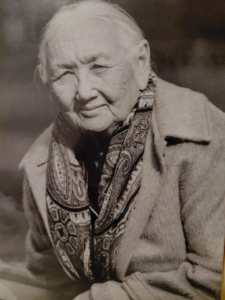
Mariyam Khakimzhanova’s correspondence offers a glimpse into her literary life and relationships with fellow writers. Photo credit: adebiportal.kz.
She began her professional career in journalism, working for the magazine Aiel Tendigi (Women’s Equality) as a staff member and executive secretary, before becoming head of a department at the regional newspaper Ekpindi (Accent).
Her life was marked by personal hardship during the years of political repression. Her husband was among those convicted, leaving her to care for their daughter and son, her husband’s younger brothers and an elderly uncle. His name was rehabilitated only 20 years later.
Despite these circumstances, Khakimzhanova continued her literary and professional work. During the Second World War, she headed the department of folk akyns at the Writers’ Union of Kazakhstan. She later worked at the Institute of Linguistics and Literature of the Academy of Sciences of the Kazakh SSR, the National Book Chamber, the magazine Novaya Zhizn (New life) and the Kazakh State Literary Publishing House.
Her first poetry collection, “Songs of My Aunt,” was published in 1935. During the war, her poems appeared in frontline and national newspapers and magazines.
Among her other books were “Manshuk,” “A Mother’s Love,” “The First Song” and “My Little One – My Poem”. Her poetry was translated into Russian, Uzbek, Karakalpak, Kyrgyz, Chinese, Belarusian, Armenian and other languages, introducing her work to readers beyond Kazakhstan.
A voice remembered by generations
Her contemporaries remembered Khakimzhanova not only for her poetry but also for her generosity, wisdom and influence on younger generations of writers, reported the Kostanai News agency.
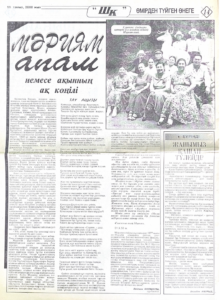
Mariyam Khakimzhanova’s correspondence offers a glimpse into her literary life and relationships with fellow writers. Photo credit: adebiportal.kz.
Urkiya Ryshchanova, founder and first director of the Ibray Altynsarin Kostanai Regional Memorial Museum and an Honored Cultural Worker of Kazakhstan, described her as a person of exceptional warmth and generosity. She recalled Khakimzhanova as a wise mentor to several generations of literary figures, whose work connected the cultural heritage of earlier women writers with a new poetic era.
Through her poetry, Ryshchanova noted, Khakimzhanova affirmed the moral values of working women and mothers, giving voice to their experiences and contributions.
A postcard dated March 5, 1959, from Ust-Kamenogorsk offers another glimpse into the friendships she maintained. In it, Kuznetsov sends his heartfelt congratulations and wishes her health, happiness and continued success in her creative work.
Her correspondence also documents the growing recognition of her poetry beyond Kazakhstan. In a letter dated Oct. 5, 1967, Galina Karimova, head of the literature department for the peoples of the Soviet Union at the Detskaya Literatura (Children’s literature) publishing house, invited Khakimzhanova to contribute poems to an anthology of selected works by women poets of the Soviet Union.
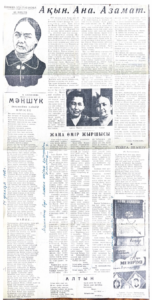
Archival newspaper clippings document different stages of the poet’s career and the lasting place of her work in Kazakh literature. Photo credit: adebiportal.kz.
The collection was intended for senior school students and young readers. Karimova wrote that the anthology would be incomplete without Khakimzhanova’s poems, underscoring the importance attached to her contribution to Soviet literature.
An archive that keeps the past alive
The letters were shared by journalist Magira Kozhakhmetova, who has helped bring these archival materials to public attention. Their value lies not only in the literary names they preserve but also in the everyday details of communication between writers. Requests for photographs, books and dictionaries sit alongside expressions of friendship, professional advice and encouragement, reported the Adebi Portal agency.
Together, they offer a picture of a literary community connected by correspondence, translation and a shared interest in discovering one another’s work. Khakimzhanova died on Feb. 7, 1995, at the age of 89. Her legacy remains present in her poetry, in the generations of writers she inspired and in the streets and schools named after her.
A century and two decades after her birth, the letters preserved in her personal archive allow readers to encounter her not only as a celebrated poet but also as a friend, colleague, mother and woman who continued to create through some of the most difficult chapters of the 20th century.
