
ASTANA – Kazakhstan’s Tuyuksu Glacier recorded its warmest summer since meteorological observations began in 1972, losing an estimated 5.6 million cubic meters of water during the warm season and raising concerns about the long-term water security of southeastern Kazakhstan.
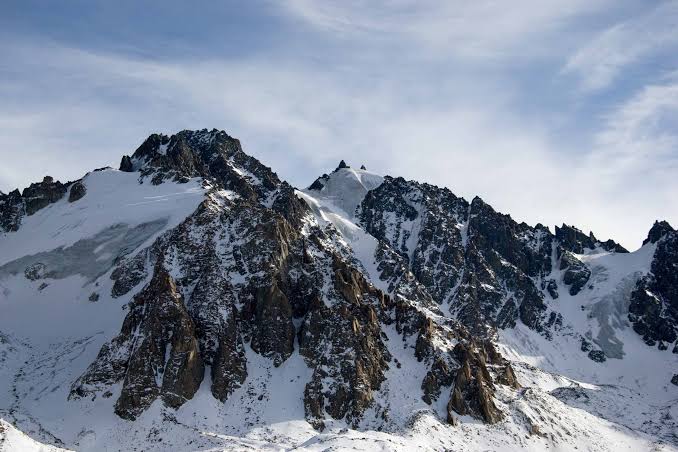
Photo credit: gorny-club.kz
Researchers at the Central Asian Regional Glaciological Center under UNESCO completed processing data from the 2025-2026 summer observation season in early November. The findings point to accelerated glacier retreat driven by unusually high temperatures and prolonged warm weather, Khabar TV reported on Nov. 11.
Located approximately 30 kilometers south of Almaty, Tuyuksu is among the world’s most extensively studied glaciers.
According to Nikolai Kasatkin, a researcher at the center, the average high-altitude temperature during the summer reached 6.17 degrees Celsius, nearly two degrees above the seasonal norm. Above-freezing temperatures lasted 150 days.
The glacier retreated by 42 meters over the summer, while its surface area decreased by 108,000 square meters.
Although snowfall last winter exceeded usual levels, it was insufficient to offset the ice lost during the unusually warm season.
Long-term water security concerns
Despite the significant glacier losses, water volumes in mountain rivers remained largely unchanged during the observation period. However, scientists warn that continued glacier retreat could disrupt the Zhetysu Region’s long-term water balance.
Vassily Kapitsa, head of the Laboratory of High-Mountain Geocryology, stressed the need for adaptation measures and more responsible water consumption, notably in major urban centers.
He highlighted Almaty, whose population has exceeded three million according to some estimates, as an example of a city that must prioritize efficient water use.
“Without rational and careful use of water resources, particularly drinking water, we may face a severe shortage of drinking water in the future,” he said.
Scientists warn that accelerated glacier degradation in the Zailiysky Alatau mountain range could gradually undermine an important source of freshwater for southeastern Kazakhstan, making sustainable water management increasingly urgent.
