
ASTANA – The Kazakh government approved an action plan on Nov. 3 to implement the president’s state-of-the-nation address, allocating around 6.5 trillion tenge (US$14.3 billion) for key social and infrastructure projects through the end of 2029.
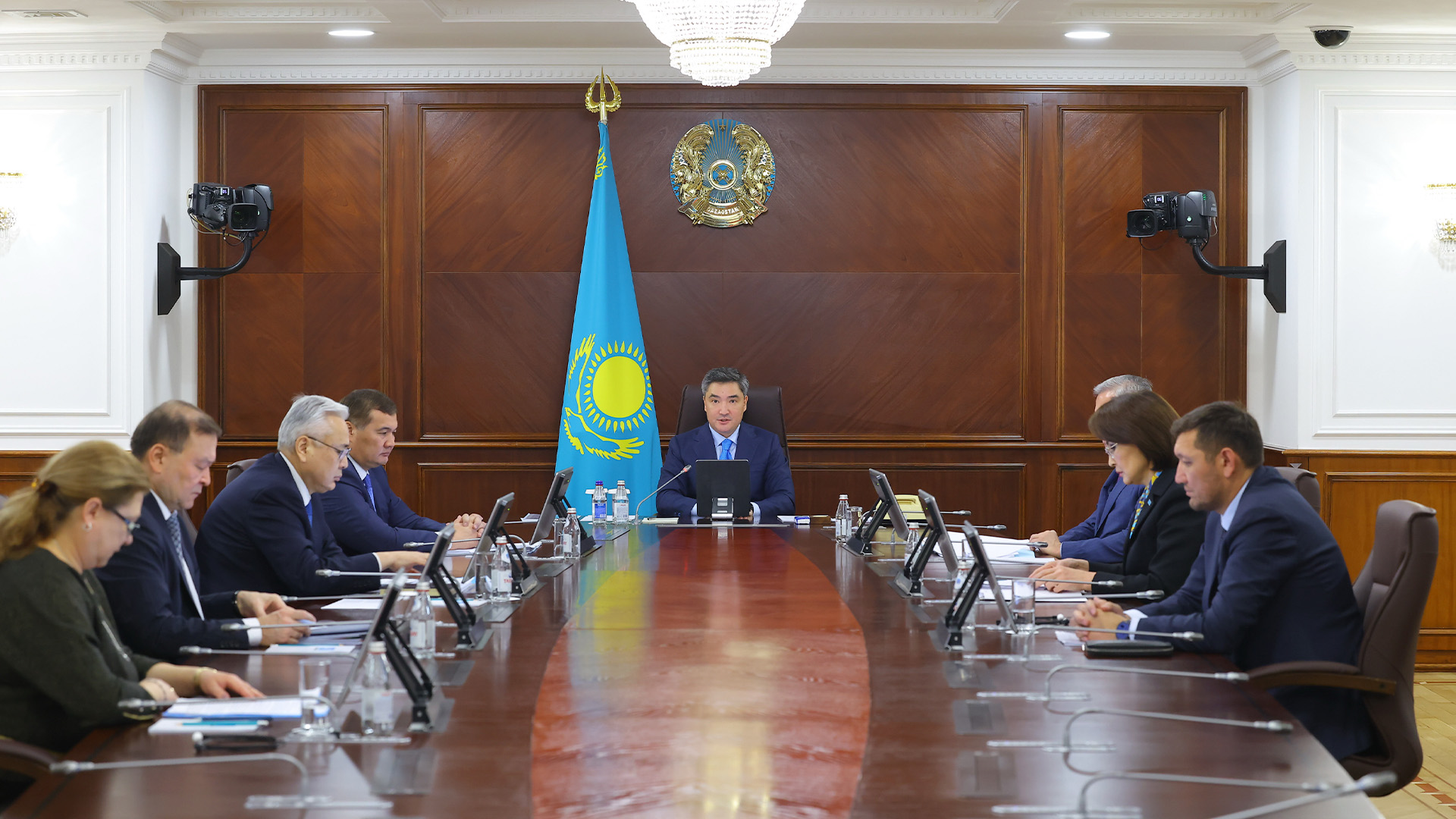
A government meeting chaired by Prime Minister Olzhas Bektenov on Nov. 3. Photo credit: primeminister.kz
The plan includes 96 measures across 12 areas and was presented at a government meeting by Deputy Prime Minister and National Economy Minister Serik Zhumangarin.
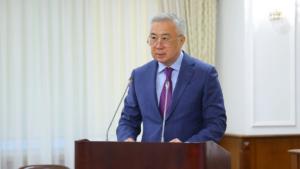
Deputy Prime Minister and National Economy Minister Serik Zhumangarin. Photo credit: Ukimet Telegram channel
The funding will support infrastructure development, housing construction, utilities modernization, and the provision of drinking water and natural gas to settlements. The government also plans to launch the Halyktyk Kurylys infrastructure development program, which will prioritize the use of domestically produced construction materials and equipment.
“Around 6.5 trillion tenge will be allocated from the National Fund for key social and infrastructure projects, with quality control over the work. The plan also provides for the modernization of housing and utilities infrastructure, continued housing construction, and the provision of drinking water and gas to populated areas,” Zhumangarin said.
New airports, railways and roads to strengthen connectivity
The plan calls for expanding the country’s transport infrastructure. New airports in Zaisan, Katon-Karagai and Kendirli are scheduled to open in May 2027. Construction of another airport in Astana is expected to begin in June 2027.
The Bakhty-Ayagoz railway line is scheduled for completion by the end of 2027.
Road construction and reconstruction projects will continue on national and regional routes, including the Aral-Caspian and Kokshetau-Petropavlovsk highways. The government also plans to complete the reconstruction of all road border crossings and transition freight transportation to electronic documents, supported by an intelligent transport system.
Government targets energy security and critical minerals
The government plans to build new power plants, modernize existing facilities, expand coal-fired power generation and develop electricity transmission lines. The country’s unified energy balance is to be updated through 2035.
By the end of 2027, Kazakhstan plans to establish a strategic state uranium reserve and sign an intergovernmental agreement on the Moyinkum nuclear power plant.
A national system for managing critical mineral reserves is expected to be established by the end of 2026. In 2027, the government plans to introduce mechanisms to accelerate industrial and technological development and expand the data available on its unified subsoil use platform.
Agriculture and water management
The plan also provides for long-term financing for livestock development and agricultural processing programs, as well as support for domestic tractor and combine harvester production.
“Next year, we plan to ensure equal access for all agricultural producers to the infrastructure of agricultural logistics centers. The National Water Resources Information System is expected to be completed in March 2027,” Zhumangarin said.
Wages, education and social support
The plan provides for an increase in the minimum monthly wage from 85,000 to 110,000 tenge (from US$188 to US$243). Salaries of primary health care specialists working at local clinics are also expected to rise through additional payments based on years of service and workload.
A pilot project testing new digital approaches to assessing family well-being is scheduled to be completed by the end of 2026. The government will also begin public awareness efforts to introduce a needs-based approach to social support.
In education, authorities plan to develop an early identification system for children with special educational needs by the end of 2027. The government also intends to reduce teachers’ administrative workload, including by cutting the number of reports required through digital platforms and information systems.
