
ASTANA – We want to take it out of the unregulated area and make it work, because it works whether we want it or not,” National Bank Chairman Timur Suleimenov said during the plenary session Rewiring the Architecture of Finance at Astana Finance Days 2026 on Sept. 9, capturing the regulatory dilemma at the center of a financial transformation that is rapidly moving from experiment to infrastructure.
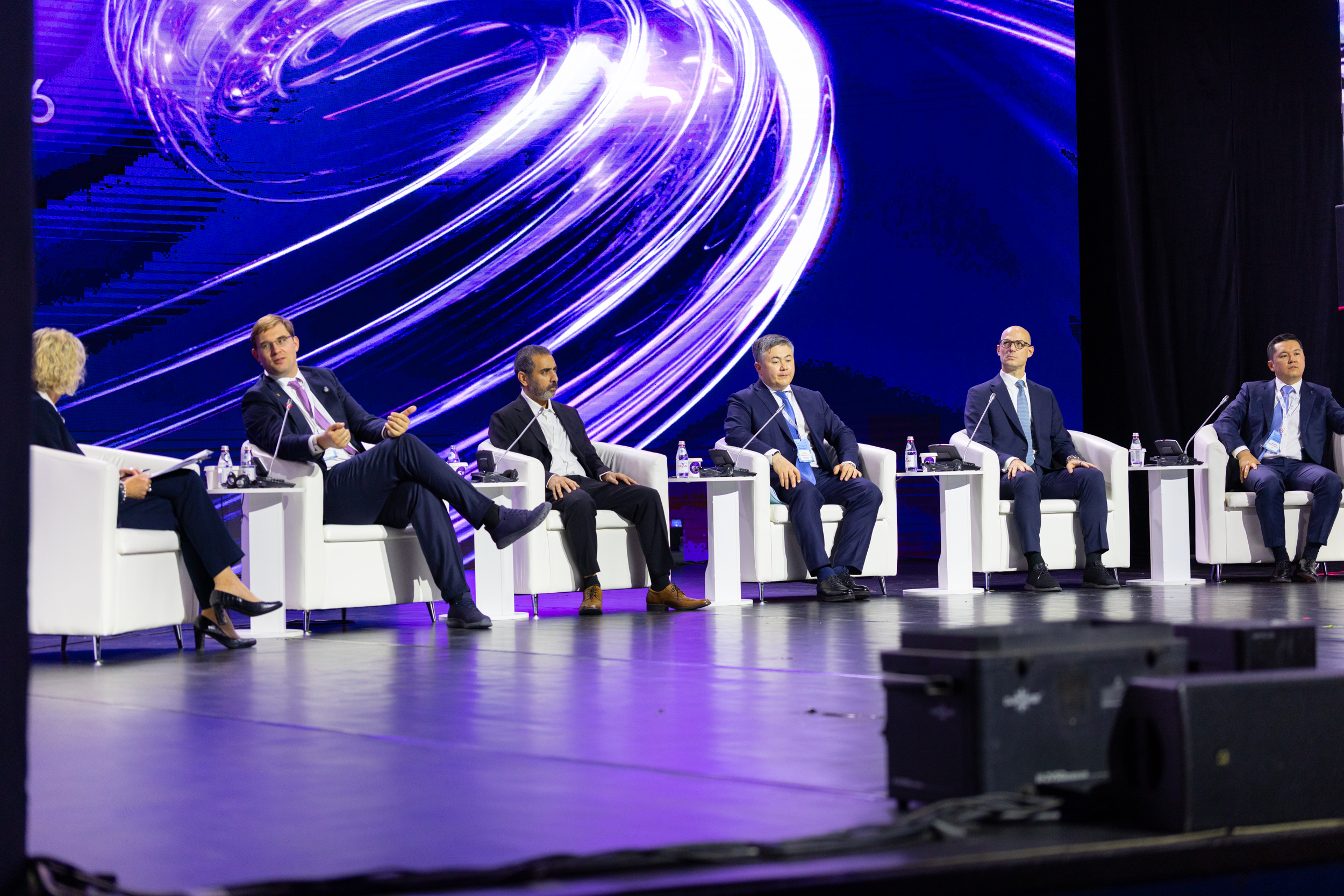
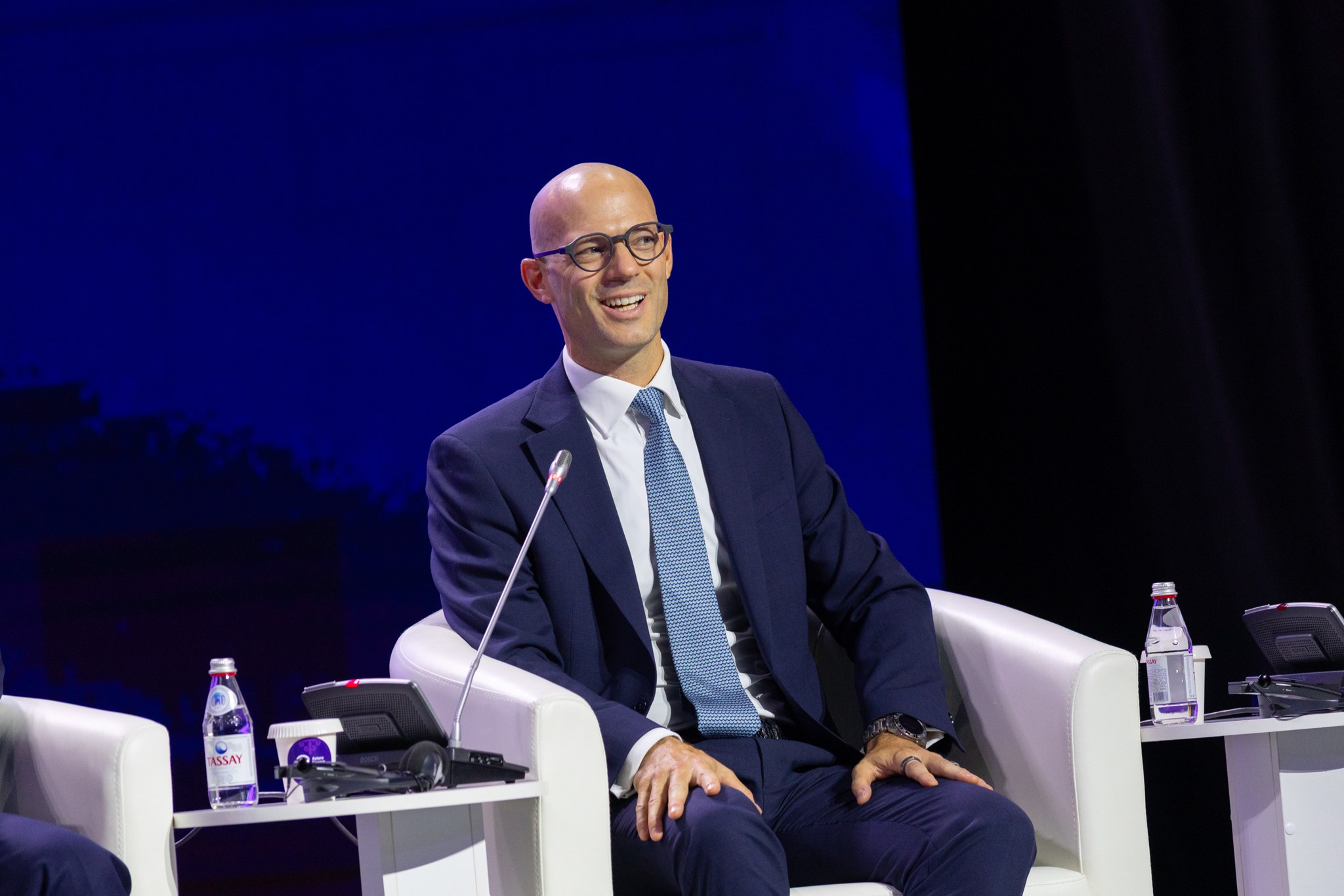
The discussion brought together Astana International Financial Centre (AIFC) Governor Renat Bekturov, Freedom Holding Corp. CEO Timur Turlov, Anchorage Digital Global Head of Stablecoin Solutions Sergio Mello and technology entrepreneur Balaji Srinivasan on Sept. 9 Photo credit: AFD 2026
As blockchain, stablecoins, tokenization, programmable money and AI reshape how assets are created, moved and managed, Kazakhstan is betting that an early embrace of new financial technologiesm, combined with rules and institutional trust, can become a competitive advantage.
The discussion brought together Astana International Financial Centre (AIFC) Governor Renat Bekturov, Freedom Holding Corp. CEO Timur Turlov, Anchorage Digital Global Head of Stablecoin Solutions Sergio Mello and technology entrepreneur Balaji Srinivasan, who approached that transformation from different angles, but agreed that the financial system is changing not only in how services are delivered, but also in the infrastructure underpinning them.
Suleimenov identified geopolitical fragmentation and technology as two of the forces reshaping global finance, arguing that changes in trade and investment flows are already translating into changes in financial flows.
“Trade flows, the finance flows are changing fundamentally. We’re seeing division across the Atlantic. We’re seeing division on the North American continent. We’re seeing trade wars and semi-trade wars across the world. And, of course, finance has always been a part of the debate. They always went hand-in-hand,” he said.
At the same time, the emergence of blockchain and tokenized assets is challenging financial regulators to develop rules for technologies that did not exist within the traditional architecture.
“We’re still in the rule-setting phase. There is no set of rules for decentralized finance, for digital finance, crypto finance,” he said.
For Kazakhstan, however, he described that uncertainty as an opportunity to establish a regulatory framework while the global market is still taking shape.
“We have adopted a very comprehensive set of rules, not only frameworks, but rules, very hands-on with how you trade cryptocurrency, how you trade stablecoins, what you do with the real world tokenized assets and things like that,” Suleimenov said
The task, he added, is not to stop technologies that are already finding users, but to ensure they operate within a system that protects trust and financial stability.
“We want to take it out of the unregulated area and make it work, because it works whether we want it or not. It will be working, but I think it is to the greater good of all of us that it works in rightly regulated area,” he said.
AIFC as a testing ground
AIFC Governor Bekturov said Kazakhstan’s advantage lies not simply in the technologies themselves, but in the people and institutions willing to experiment with them.
“I think that the first competitive advantage of Kazakhstan is its people,” he said, pointing to regulators, entrepreneurs and younger generations that are more open to new financial models.
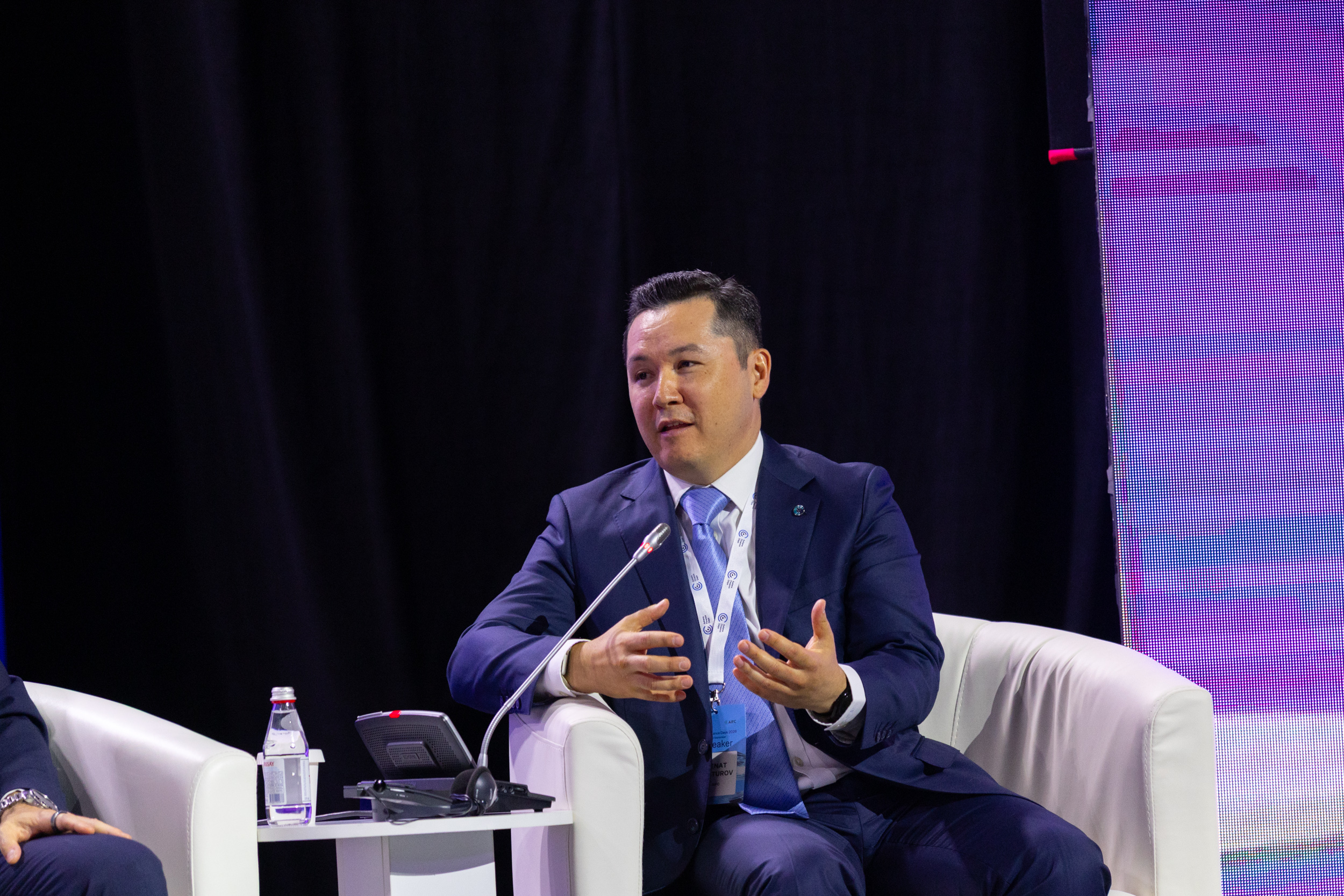
Bekturov described regulation as a continuous balancing act. Photo credit: AFD 2026
He also highlighted the political decision to establish the AIFC as a separate jurisdiction, noting that it has created space for Kazakhstan to test new financial products before deciding how they should be treated across the wider economy.
“You give the optionality to yourself, but also to the investors coming into the country, so they can kind of choose with which system they would like to work,” Bekturov said.
The AIFC, he added, has provided a practical environment in which regulators can observe new products, assess their risks and determine what works.
“I think in that terms, AIFC, was also helpful to the national regulators to kind of test out certain products and to see how that works, what are the risks, where we want to adapt and which part we want to regulate more or less,” he said.
That approach, Bekturov said, has helped Kazakhstan move comparatively quickly in areas including digital assets, the digital tenge, stablecoins and tokenized real-world assets.
“We are one of the leaders in the region in terms of adapting digital assets, digital tenge, stable coins in tenge and what goes beyond like tokenization of real assets,” he said.
For Turlov, the transformation is already visible from the customer and business perspective, although he cautioned that technological innovation does not necessarily change the underlying nature of a financial asset.
“Many products change their form. Very rarely they change the substance of them,” he said.
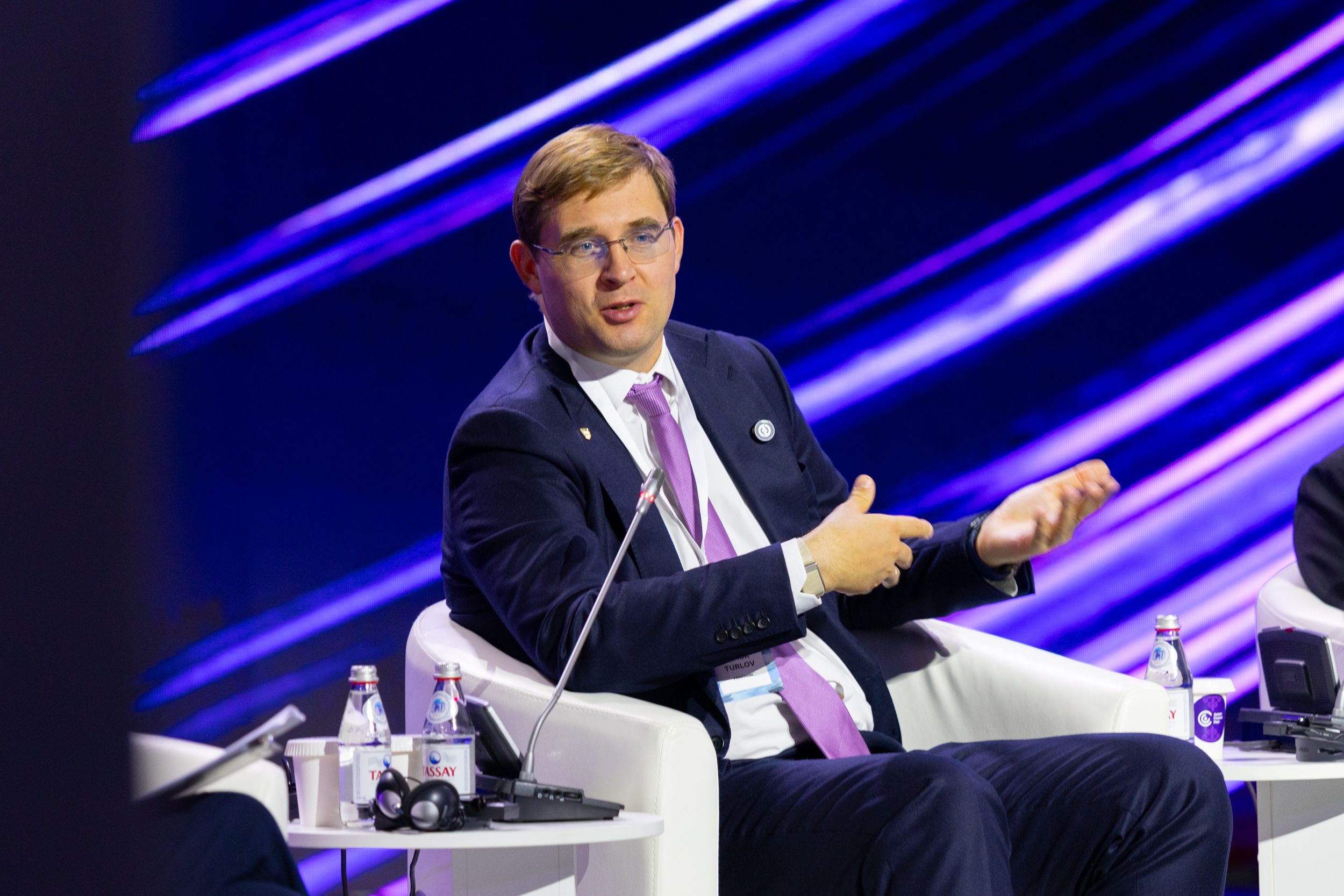
Turlov said another challenge is emerging: customers may struggle to navigate the very technology designed to make their lives easier. Photo credit: AFD 2026
Tokenization, in his view, is often another way of representing assets that financial markets have long known how to securitize. The more meaningful change is the ability to deliver those products faster, more efficiently and across borders. Turlov said Kazakh financial companies are already competing with global firms, which makes the ability to innovate domestically increasingly important.
“We have rules, we have trust, we have money on this market. Because sometimes if it’s very easy to innovate, but it’s not much trust, not much rules, not much money, it’s also very hard to do business. But I think now here in Kazakhstan, we have this perfect balance of many different factors,” he said.
According to him, that’s why Kazakhstan can function as a testing ground for global financial technology companies.
“Kazakhstan is feeling like a great laboratory for global fintechs because if you can succeed here, so maybe you can scale out to other markets,” he added.
From digital money to digital property
Technology entrepreneur Balaji Srinivasan offered the most expansive vision of where the transformation could lead, noting that the rise of digital finance should be understood through what he called “technopolitics.”
“You can think of the cloud as almost like a new continent that has arisen above us,” he said, suggesting that the digital economy is creating a new domain through which people, businesses and assets can interact regardless of geography.
“That’s a huge opportunity for Kazakhstan because Kazakhstan is landlocked, but it’s not cloud-locked. It can access any country in the world, any person in the world through the cloud,” he said.
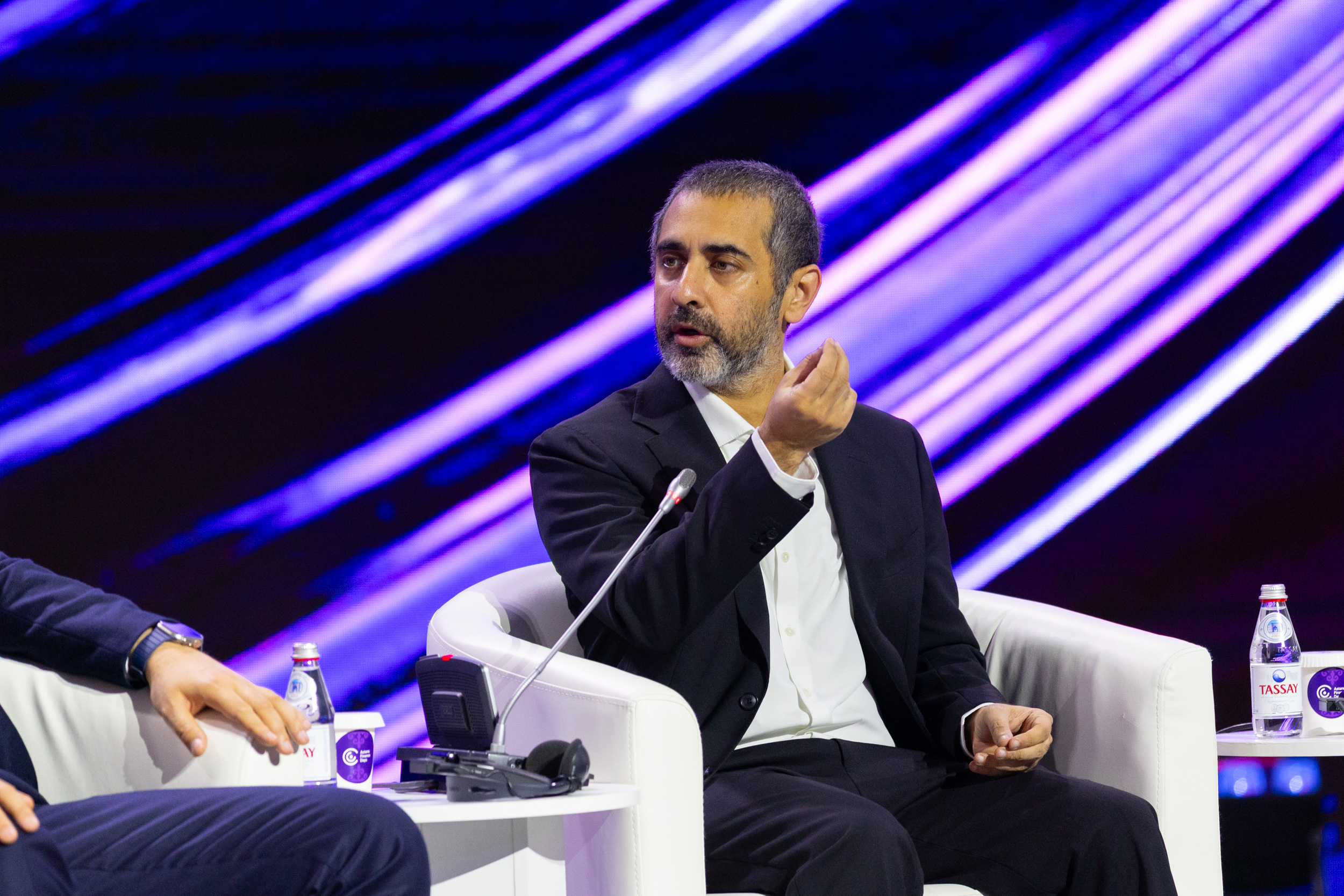
Srinivasan said Kazakhstan could eventually position itself as a trusted physical and regulatory gateway connecting these digital assets with the real economy. Photo credit: AFD 2026
In his view, the next stage could involve much more than moving existing financial assets onto blockchain. Real estate, vehicles, infrastructure and other forms of capital could increasingly be represented through digital credentials and cryptographic keys.
“The fundamental innovation of Bitcoin was Internet-first registry of assets. Now, it’s a smart contract. Now, it’s code. So it actually lives in the cloud primarily,” Srinivasan said.
His proposition was that Kazakhstan could eventually position itself as a trusted physical and regulatory gateway connecting these digital assets with the real economy.
“Kazakhstan can be the registry where those things can be traded from the cloud back to the land and back to the world,” he said.
Mello took a more immediate view, saying that some of the technologies discussed are already becoming standard financial infrastructure.
“Stablecoins are a very clear example. It’s an instrument that is no longer an experiment,” he said.
According to him, the next stage is less about proving that digital finance works and more about building the regulatory and physical infrastructure to support it at scale.
“After 10 years of experimentation, the next 10 years of crypto becoming a technology standard that leads us to financial systems,” Mello said.
Mello said that any moment of inaction today, from a regulatory policy perspective, is equivalent to a decade of inaction in the last century. Photo credit: AFD 2026
He compared the process to building airports, highways and railroads, saying that governments have to think ahead about the infrastructure required to support future economic activity.
“With all the rest of the world moving really fast, the pace at which innovation extends not only in financial infrastructure but also elsewhere is such that any moment of inaction today, from a regulatory policy perspective, is equivalent to a decade of inaction in the last century,” Mello said.
Digital tenge moves beyond payments
Kazakhstan’s own experience with digital currency illustrates how quickly priorities can evolve. Suleimenov said the National Bank has shifted away from viewing the digital tenge primarily as a retail payment instrument, given the range of digital payment solutions commercial banks already offer. Instead, one of the most promising uses is programmable public spending, allowing funds to be tracked and used according to the purpose for which they were allocated.
“I think the best usage for the central bank’s digital currency that we see is actually program and track the public spending,” Suleimenov said.
He said the approach can be applied to projects ranging from a kindergarten in a rural area to major industrial developments, with smart contracts helping ensure that public funds are spent as originally intended. The initiative began as a pilot in 2023 and has since been incorporated into legislation, with the government and the National Bank working to expand the areas where such mechanisms can be applied.
“It’s not just about public finances. It’s about overall government’s efficiency of running the economy, of running the social sphere, running the infrastructure to make it work with less amount of resources included,” Suleimenov said.
As financial platforms become more sophisticated, Turlov said another challenge is emerging: customers may struggle to navigate the very technology designed to make their lives easier.
“Adoption of technology sometimes is a much greater challenge than inventing some technology itself,” he said, noting that modern financial applications can combine banking, insurance, brokerage, travel and other services in a single platform.
He believes AI assistants could become an important interface between customers and increasingly complex financial infrastructure, allowing people to describe what they want in ordinary language rather than understanding the mechanics of each service.
“They just need to tell it in normal words, and that’s how I believe we can really improve the quality of life. Because sometimes products became so sophisticated that they need a very professional customer to consume them. And maybe AI Assistant will help to solve that,” Turlov said.
For Kazakhstan’s regulators, the challenge will be maintaining that openness without moving so far ahead of the market that innovation becomes detached from actual demand.
“When you’re a little front-run, you have a chance of failure or being too premature with some innovation. You are a little bit ahead because it’s still a competition, right? But yet you are not far behind because then the market is capturing this moment,” Bekturov said, describing regulation as a continuous balancing act.
That balance between innovation and trust, experimentation and regulation, the physical economy and the digital one may ultimately determine whether Kazakhstan becomes simply an early adopter of the next generation of financial technology or one of the places where that new architecture is actually built.
