
ALMATY – Kazakhstan increased oil transportation through KazTransOil’s main pipeline network by 4% in the first eight months of 2026, while volumes transported into the Caspian Pipeline Consortium (CPC) system rose 39%, highlighting both stronger oil flows and the continued strategic importance of export infrastructure to the country’s resource economy.
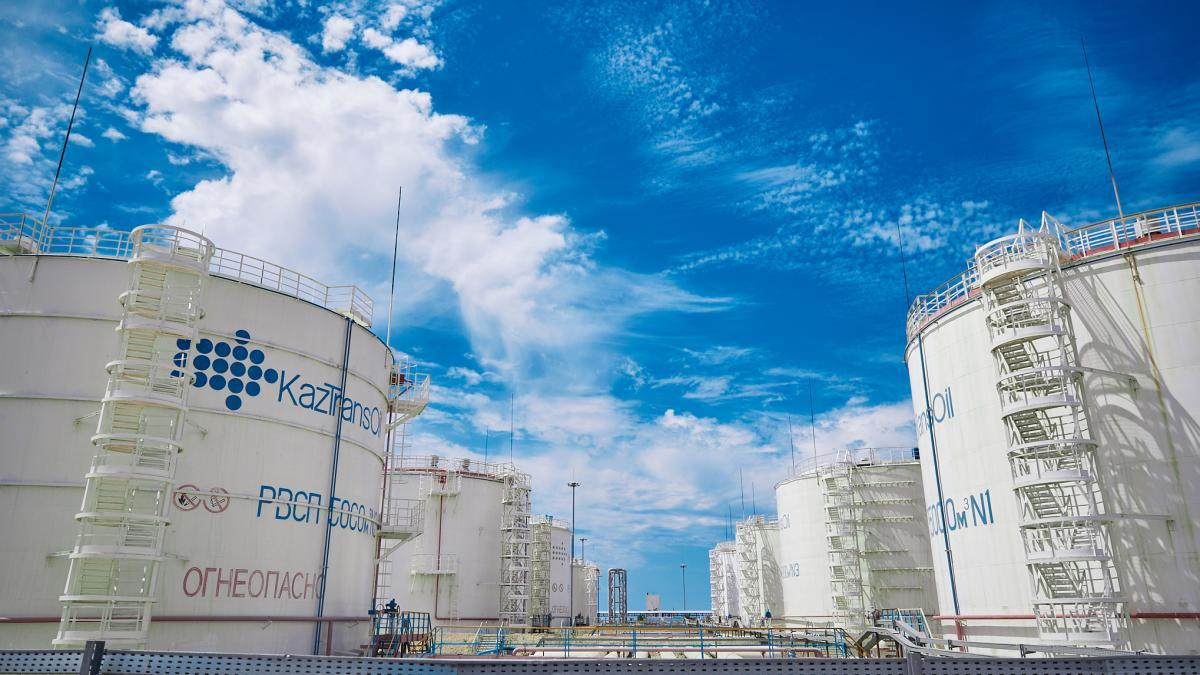
Photo credit: KazTransOil.
KazTransOil transported 30.639 million tonnes of crude through its main oil pipeline system between January and August, while the company’s consolidated volume of oil transportation and petroleum-product transshipment reached 31.89 million tonnes, also up 4% year-on-year, the company reported.
The increase was recorded across several important routes, including the Caspian Pipeline Consortium (CPC), Atasu-Alashankou, the Port of Aktau and the MunaiTas pipeline. At the same time, the distribution of those flows illustrates why Kazakhstan continues to need multiple export channels. While alternative routes are growing, the country’s largest oil volumes still depend on established pipeline infrastructure connecting its fields to foreign markets.
Growth across several routes
Kazakhstan’s domestic refining sector remained one of the largest destinations for crude transported through KazTransOil’s network. During the reporting period, 12.087 million tonnes were delivered to the country’s refineries. The Atyrau Refinery received 3.567 million tonnes, PetroKazakhstan Oil Products 3.664 million tonnes, Pavlodar Petrochemical Plant 4.316 million tonnes and Caspi Bitum 540,000 tonnes.
Export and transit routes also recorded increases. The Atyrau-Samara section of the Uzen-Atyrau-Samara pipeline transported 6.922 million tonnes, up 2% from the same period last year. A further 8.145 million tonnes passed through the TON-2 section, an increase of 5%. The Atasu-Alashankou route handled 7.602 million tonnes, up 3%. Particularly notable was the increase in Kazakhstan’s own oil exports through the route, which rose 24% to 863,000 tonnes.
The largest year-on-year increase among the major routes reported by KazTransOil was recorded in transportation into the CPC-K system. The volume reached 3.123 million tonnes, up 39%. At Aktau port, oil loaded onto tankers using KazTransOil infrastructure increased 6% to 2.384 million tonnes. Shipments toward the Baku-Tbilisi-Ceyhan pipeline rose 12% to 1.034 million tonnes. The Kazakhstan-China pipeline system transported 13.121 million tonnes, up 2%, while oil transportation through the MunaiTas pipeline increased 10% to 4.302 million tonnes.
The figures point to a more diversified network of flows, but they do not necessarily mean that Kazakhstan has eliminated its dependence on individual corridors.
When infrastructure becomes a resource constraint
This distinction matters because the economic value of oil does not end at the wellhead. According to oil and gas analyst Abzal Narymbetov, a useful comparison comes from Qatar, where disruptions around the Strait of Hormuz have demonstrated how quickly access to a transport route can become a constraint on a resource-rich country’s ability to monetize its reserves.
The same principle, he said, applies to Kazakhstan, although the structure of the vulnerability is different. Kazakhstan has several routes for exporting crude, including CPC, the Caspian Sea and China. But the capacity of these alternatives is not currently equivalent to the volumes that can be moved through the country’s dominant export system.
This creates a strategic challenge. If the largest route experiences disruption or reduced availability, Kazakhstan cannot simply redirect all affected production elsewhere without encountering capacity, infrastructure and logistical constraints.
In other words, an alternative route is not necessarily an alternative at scale.
CPC remains central despite diversification
The latest KazTransOil figures demonstrate that Kazakhstan is already using several transportation channels. The 24% increase in the country’s own oil exports through Atasu-Alashankou and the 12% growth in shipments toward the Baku-Tbilisi-Ceyhan pipeline indicate that eastern and trans-Caspian directions are expanding.
The increase in oil loading at Aktau also reinforces the importance of the Caspian route. But diversification should not be measured only by percentage growth. A route expanding rapidly from a relatively small base may still represent a limited share of total export capacity.
This is particularly important in the case of the CPC system, which remains a crucial outlet for Kazakhstan’s crude. In that sense, an alternative route is meaningful only when it provides real operational redundancy at scale.
Kazakhstan’s growing use of Aktau and the BTC direction is part of a broader effort to strengthen the Trans-Caspian route. Yet the Caspian itself presents another layer of infrastructure risk. Declining water levels have raised concerns about navigation, port operations and the long-term conditions for maritime transportation. Kazakhstan is therefore seeking to expand a route whose physical environment is itself changing.
This does not make the Caspian route unviable, but it underscores the need for continued investment in ports, vessels and related infrastructure, alongside adaptation to changing navigation conditions.
The weakest link determines the value of the resource
This leads to Narymbetov’s central argument.
“Reserves are not a property of the rock, but a property of the weakest link in the chain between the reservoir and the buyer,” he wrote.
For Kazakhstan, that chain extends far beyond geology. It includes foreign policy and relations with transit countries, regulation, fiscal stability, negotiations with operators, export infrastructure, tariffs, project financing and access to international markets.
It also includes the ability to attract investment into mature fields and develop new projects. Narymbetov highlighted that Kazakhstan needs a broader approach that includes predictable fiscal and contractual conditions, clear standards for reserves reporting, transparent geological data, mechanisms for financing long-term projects and planning for the eventual decommissioning of mature assets.
