
ASTANA – Kazakhstan’s first government meeting in its updated composition after the Kurultai elections focused on a topic that could determine the success of its economic transformation: whether the country will have enough skilled workers to support planned growth.
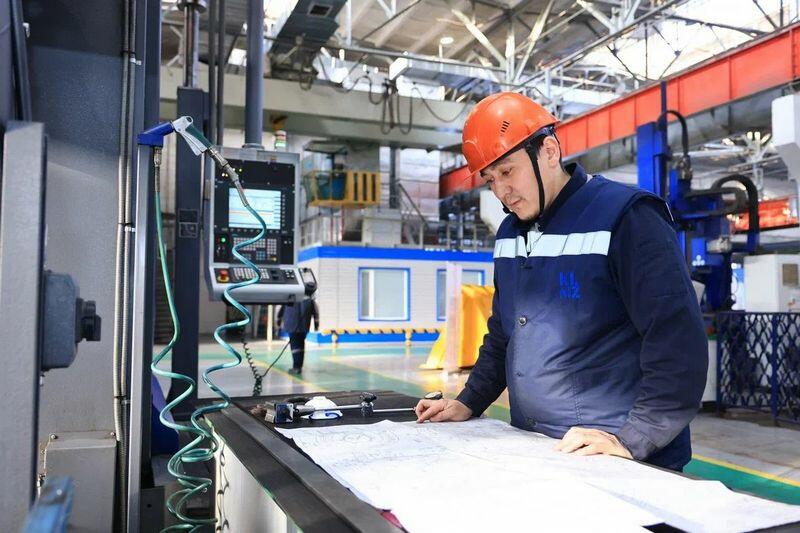
Photo credit: inkaraganda.kz
At the Sept. 8 meeting, Prime Minister Olzhas Bektenov called for an accelerated pace of work at a new stage of political and economic modernization. The decision to put workforce training at the center of the government’s first meeting highlights a growing concern: Kazakhstan has jobs, but increasingly needs people with the right skills to fill them.
By 2035, the economy is expected to require 2.9 million specialists, including 1.8 million workers in skilled trades. More than half of vacancies on the electronic labor exchange are already for working professions.
Political scientist Gaziz Abishev said the problem is therefore not a shortage of jobs, but a shortage of qualified workers.
He linked demand for technical specialists to existing industrial production, new projects under the country’s reindustrialization policy, municipal infrastructure modernization and rapidly growing cities.
Abishev cited Bektenov’s warning that Kazakhstan is “forced to attract thousands of specialists from abroad so that work does not stop,” underscoring the growing gap between demand for workers and the availability of qualified specialists.
Aligning training with economic needs
The government is seeking to make vocational education more responsive to these demands.
Education Minister Zhuldyz Suleimenova said Kazakhstan’s technical and vocational education system is being transformed according to labor-market needs. Some 480 colleges train working qualifications, while 57,000 students entered such programs this year.
Training programs are also being updated for a changing economy. New professions have been added to the national classifier, while micro-qualifications and AI-related skills are being introduced.
The Science and Higher Education Ministry estimates that more than half of labor demand is for technical and vocational specialists. Regional labor-market maps have identified more than 2,000 emerging professions and transformations of existing ones, including the use of digital twins and AI in production.
Employers are also becoming more directly involved. Nearly 50,000 students at 76 universities currently participate in dual education with 6,000 enterprises. Samruk Kazyna Sovereign Wealth Fund portfolio companies train more than 10,000 students annually through dual education and internships.
The need is particularly visible in energy and industry. Expansion of Kazakhstan’s three existing oil refineries is expected to increase refining capacity from 18 million to 29.2 million tons a year, while a planned new refinery would add another 10 million tons.
Such expansion will require a substantial increase in qualified workers.
Can training make these jobs more attractive?
The government’s challenge is not only to train workers, but to persuade people to choose these professions.
Abishev said many people remain reluctant to enter industrial and technical sectors because they consider wages insufficient. But he cautioned against viewing higher wages alone as the solution.
“Simple increases in wages without productivity growth lead to lower efficiency, higher costs and, ultimately, inflation,” he wrote on his Telegram channel on Sept. 9.
At the same time, he expects competition for qualified workers to push incomes higher. Experienced professionals in technical and skilled trades will always command higher incomes, he said. A shortage of skilled workers and competition for them will drive wages higher, while those who know their profession well, keep improving and have a strong work ethic will always be valued.
This could also alter the traditional perception of working professions. As AI transforms white-collar employment, technical occupations could become among the more attractive and better-paid positions in an economy still heavily dependent on physical infrastructure and industrial production.
The bigger test
The government is now developing a digital system to forecast labor demand, update qualifications and connect training with employment.
The priority professions list has already expanded from 51 to 174, covering engineering, construction, manufacturing, biotechnology, green and nuclear energy.
The first meeting of the updated government may therefore extend beyond education policy. Kazakhstan is preparing for an economy in which growth will depend not only on investment and new projects, but on whether it has enough people with the skills to build and operate them.
The question is no longer simply whether Kazakhstan can create jobs. It is whether it can prepare enough people to fill them.
