
ASTANA – Kazakhstan is expanding academic and scientific cooperation with leading universities and research institutions in Japan and South Korea. The country seeks to strengthen higher education, research and artificial intelligence (AI) development.
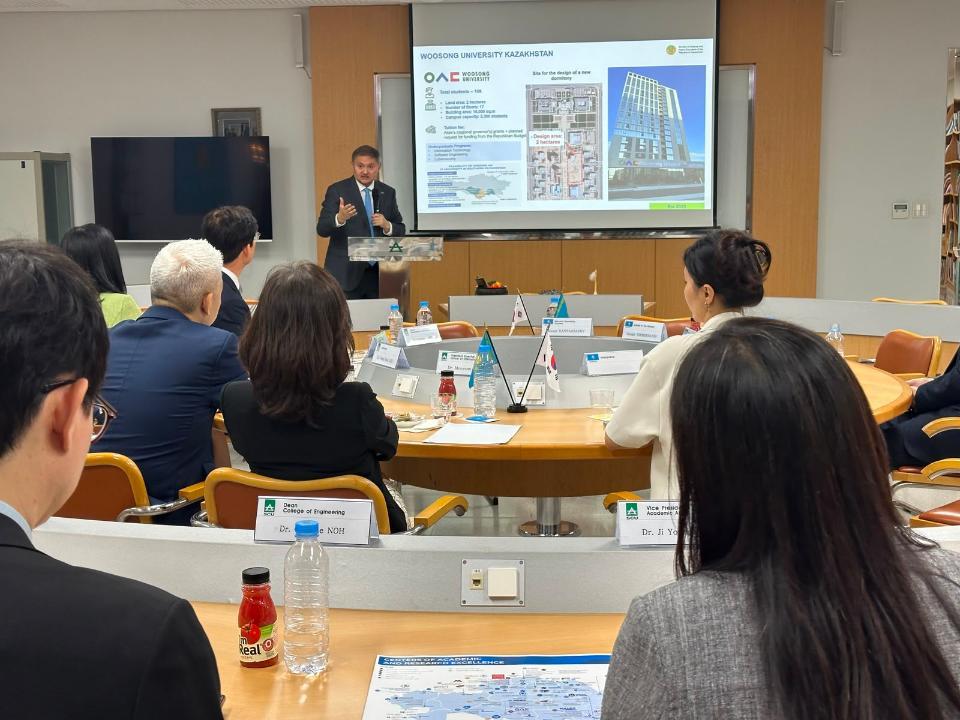
Science and Higher Education Minister Sayasat Nurbek visited Japan and South Korea to strengthen academic and research partnerships. Photo credit: gov.kz
During visits to Seoul and Tokyo in August, Science and Higher Education Minister Sayasat Nurbek met with university leaders and government officials to discuss academic partnerships, joint research, faculty and student exchanges, and workforce development.
Strengthening ties with Japan
In Tokyo, Nurbek held talks with the leadership of Tokyo Metropolitan University and the United Nations University (UNU).
During a meeting with Tokyo Metropolitan University President Takaya Ohashi, the two sides discussed expanding university partnerships, increasing academic mobility and launching joint educational and research projects. Nurbek also invited Ohashi to attend the Strategic Partners Forum, scheduled for November in Astana.
Cooperation with the UNU was another focus of the visit. During talks with the university’s Rector and U.N. Under-Secretary-General Tshilidzi Marwala, the officials discussed expanding collaboration in science, higher education, research and sustainable development.
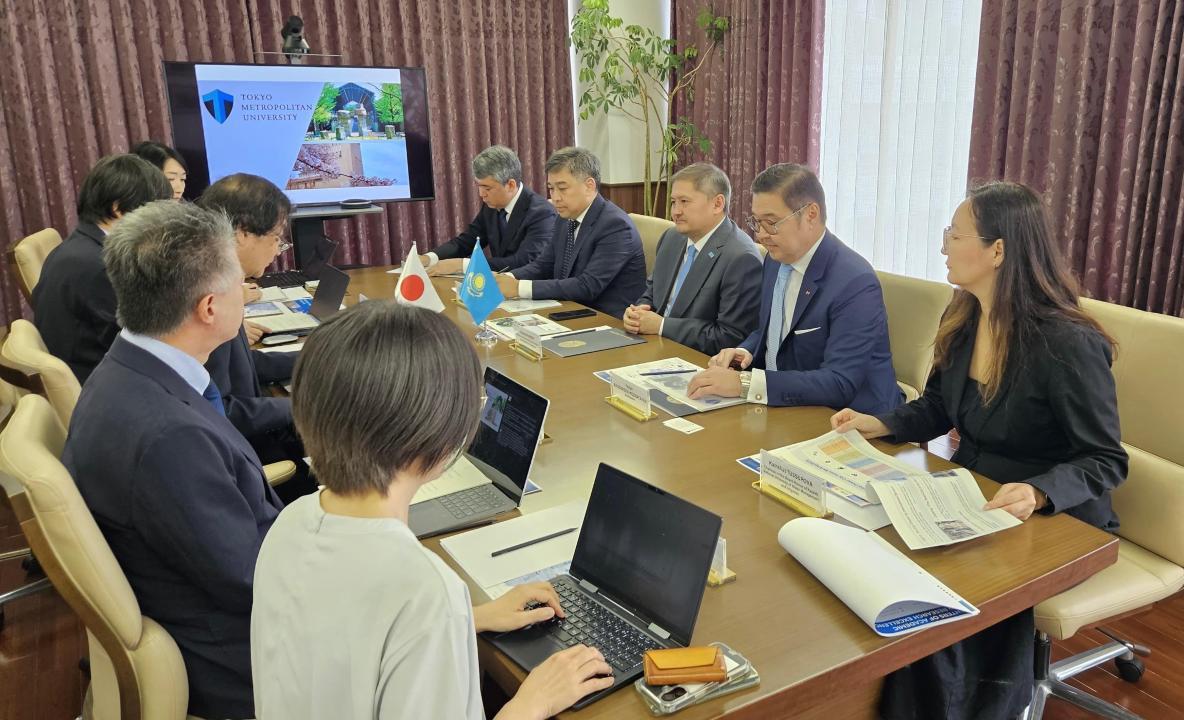
The Kazakh delegation met with officials from Tokyo Metropolitan University. Photo credit: gov.kz
The two sides also explored ways to expand the university’s presence in Kazakhstan, in line with President Kassym-Jomart Tokayev’s initiative to strengthen international academic partnerships. Marwala accepted an invitation to attend the Strategic Partners Forum in Astana.
The visit builds on growing educational cooperation between Kazakhstan and Japan following Tokayev’s official visit to Tokyo for the inaugural Central Asia-Japan Summit in December 2025. During the summit, Tokayev described human capital as “the main engine of development” and invited Japanese universities to establish branches and educational centers in Kazakhstan.
In an earlier interview with The Astana Times, Japan’s Ambassador to Kazakhstan Yasumasa Iijima said that educational cooperation has become an increasingly important pillar of bilateral relations alongside trade and investment.
Kazakhstan’s efforts to expand international academic partnerships come as the country strengthens its position as Central Asia’s leading higher education hub. In July, Almaty reached its highest-ever position in the QS Best Student Cities 2027 ranking, while the country recorded another year of growth in international student enrollment.
AI partnership with South Korea
In Seoul, Nurbek met South Korea’s Deputy Prime Minister and Minister of Science and ICT Bae Kyung-hoon.
The discussions focused on expanding cooperation in science, higher education and AI, including technology transfer, joint research and the training of highly qualified specialists.
One of the key topics was the planned opening of a branch campus of the Korea Advanced Institute of Science and Technology (KAIST) in Kazakhstan.
Nurbek also met with KAIST Vice President Jaemin Jung to discuss academic exchanges, joint research projects and cooperation in AI and digital technologies.
Separate meetings with the leadership of Seoul National University and Korea University focused on expanding collaboration in medicine, engineering, information technology and other priority fields. Both universities maintain partnerships with Kazakh higher education institutions.
Educational cooperation between Kazakhstan and South Korea is also expanding through dual-degree programs.
Seoul Cyber University currently partners with Q University, Almaty Humanitarian and Economic University, and Maqsut Narikbayev University (MNU). The expanding partnerships reflect Kazakhstan’s ambition to become a regional hub for AI and digital innovation.
The visits come as Kazakhstan and South Korea deepen broader strategic ties. Earlier this month, Tokayev accepted an invitation to visit Seoul during talks with South Korean Presidential Chief of Staff Kang Hoon-sik.
South Korea has also become an increasingly popular study destination for Kazakh students. According to the Korean Educational Development Institute, 1,516 Kazakh students were enrolled at South Korean universities as of April 1, 2024.
The trend reflects broader educational cooperation between the two countries. Earlier this year, Woosong University opened a branch campus in Turkistan, while exchange partnerships continue to expand across multiple institutions.
