
ASTANA – Kazakhstan and Cambodia are seeking to turn political dialogue into tangible economic outcomes by expanding agricultural exports, strengthening business ties and exploring transport and technology partnerships, Kazakhstan’s Ambassador to Vietnam, Cambodia and Laos said ahead of Cambodian Prime Minister Hun Manet’s visit to Kazakhstan.
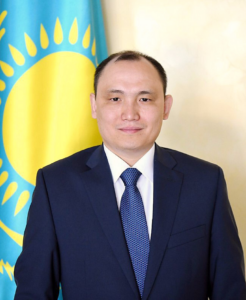
Kazakhstan’s Ambassador to Vietnam, Cambodia and Laos Kanat Tumysh. Photo credit: Embassy
“The principal expected outcome of the visit is agreement on practical next steps in priority areas and the creation of favourable conditions for new trade and investment projects,” Tumysh said in written responses to questions from The Astana Times.
Trade and investment potential
Bilateral trade reached $40.7 million in 2025, up from $33.8 million in 2024. In the first half of this year, it amounted to $20.6 million, up 1.4% year on year. Trade remains heavily weighted towards Cambodian exports, particularly textiles, knitwear, footwear and other consumer goods.
“The priority now is to realise more fully the potential of our partnership,” Tumysh said, identifying agriculture, food processing, tourism, construction, transport and logistics as promising areas.
At a meeting in Shanghai on July 17, Kazakh President Kassym-Jomart Tokayev and Hun Manet discussed cooperation in these sectors, as well as the textile industry and technology. Kazakhstan expressed readiness to increase supplies of grain, fertilizers and other agricultural products and share its expertise in advanced technologies.
Investment ties remain modest. No gross inflows of direct investment from Cambodia into Kazakhstan have been recorded, while gross outflows of direct investment from Kazakhstan to Cambodia amounted to $30,000 in January-June. As of Sept. 1, four legal entities with Cambodian capital participation were registered and operating in Kazakhstan.
“The presence of businesses with Cambodian capital does not automatically imply substantial direct investment inflows,” Tumysh said, adding that these companies could nevertheless provide a basis for stronger commercial ties.
Agriculture offers opportunities for two-way trade
Kazakhstan sees opportunities to supply Cambodia with wheat, fertilizers and other agricultural products, while importing Cambodian rice.
“Cambodia, in turn, can export its rice to Kazakhstan, and we are ready to purchase it. This offers an opportunity to develop mutually beneficial trade in both directions,” Tumysh said.
Cambodia has a population of approximately 17.8 million and imported around $34 billion worth of goods in 2025. Its agricultural exports that year reached approximately 14.9 million tons, worth around $5 billion, including rice, rubber, cassava, maize, cashew nuts and tropical fruit.
Expanding Kazakh agricultural exports will require identifying buyers, establishing product specifications and assessing transportation costs, certification requirements and seasonal demand.
“For grain, it would be useful to assess the requirements of flour mills and food-processing companies, including quality specifications and opportunities to supply both raw materials and processed products,” Tumysh said.
Fertilizer exports would require similar assessments of demand, registration procedures and potential local partners. Agricultural processing, packaging, storage and distribution could offer additional opportunities.
Kazakhstan’s total exports to Cambodia amounted to just $47,000 in 2024, with control and measuring instruments accounting for the principal export items. Confirmed figures for agricultural supplies in 2025 and the first half of 2026 are not yet available, and no quantitative targets for future shipments have been announced.
“At this stage, it is therefore appropriate to speak of exploring opportunities rather than guaranteeing supplies of a particular volume,” Tumysh said.
Transport and regional connectivity
Kazakhstan is working towards accession to the Treaty of Amity and Cooperation in Southeast Asia, also known as the Bali Treaty. Tumysh said Vietnam, Laos and Cambodia had supported the initiative, which Kazakhstan views as an important step towards strengthening engagement with ASEAN.
“We aim to translate this partnership into practical outcomes by expanding trade, strengthening business ties, exploring investment opportunities and improving transport connectivity between Central Asia and Southeast Asia,” he said.
One proposed step is to assess multimodal routes with exporters, importers, carriers and freight forwarders, comparing costs, delivery times, transshipment, storage and documentation requirements. Cambodia’s Sihanoukville port, its principal maritime gateway, could be considered in these assessments. However, no dedicated Kazakhstan-Cambodia transport corridor has been agreed.
The two countries also have experience with direct air services. In October 2024, SCAT Airlines launched charter passenger flights from Astana and Almaty to Sihanoukville to serve tourist demand, but the services were subsequently suspended. Their experience could inform future assessments of passenger demand and commercial viability.
Tourism remains another potential area for cooperation. Cambodia welcomed approximately 5.57 million international visitors in 2025, creating opportunities for engagement between tourism authorities, tour operators and airlines.
Digital cooperation and next steps
Both countries could also explore partnerships in digital technologies and public services. Kazakhstan has offered to share its technological expertise, while Cambodia is developing e-commerce, digital financial services and digital government services.
The institutional framework for cooperation has developed through a February 2025 memorandum establishing a mechanism for political consultations between the two foreign ministries and a May 29 intergovernmental agreement providing visa exemptions for holders of diplomatic and service or official passports.
Tumysh said the immediate priority was to arrange business meetings, exchange information on export offerings and import requirements, consult logistics operators and assess trial shipments.
“Realistic targets can then be set, with progress measured through signed contracts, repeat deliveries, investments actually made and the reliability of transport services. Ultimately, the guiding principle is a practical approach: moving from general expressions of interest to commercially sound solutions that deliver mutual benefits for businesses and strengthen links between the two regions,” Tumysh said.
