
ALMATY – The National Bank of Kazakhstan (NBK) cut its base rate to 16.75% on July 24, citing nine consecutive months of slowing inflation, while Governor Timur Suleimenov said policymakers would continue to base future decisions on incoming economic data rather than follow a predetermined easing path.
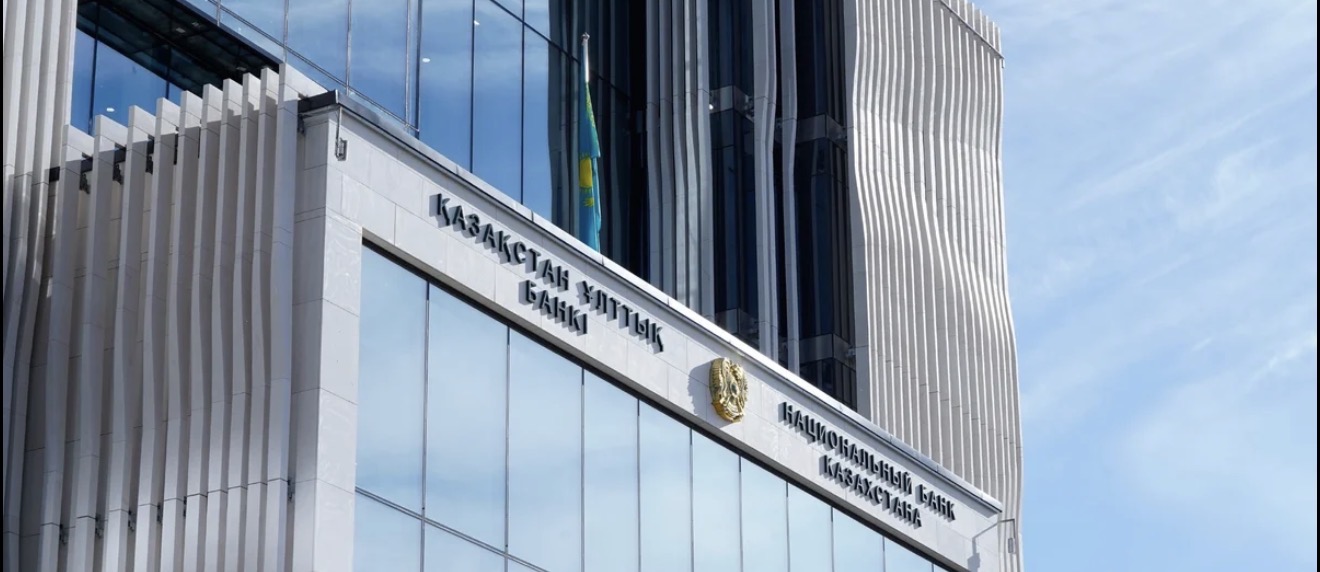
Photo credit: The National Bank.
The NBK Monetary Policy Committee lowered the base rate by 25 basis points, setting a corridor of plus or minus one percentage point, saying the decision reflected continued disinflation while maintaining monetary conditions sufficiently tight to bring inflation back to the 5% medium-term target.
According to Suleimenov, the committee’s deliberations combined economic forecasts, market analysis and independent assessments by each member.
“The forecasting team presented a comprehensive assessment of developments in the economy, financial markets and the external environment. Based on this, every committee member formed an independent view and voted independently,” he said.
He added that committee members also prepared their own forecasts for inflation, oil prices, economic growth and the future path of the base rate before and after the committee’s discussions.
Inflation continues to slow
According to Suleimenov, the balance of risks remains tilted toward inflation as the external environment remains volatile.
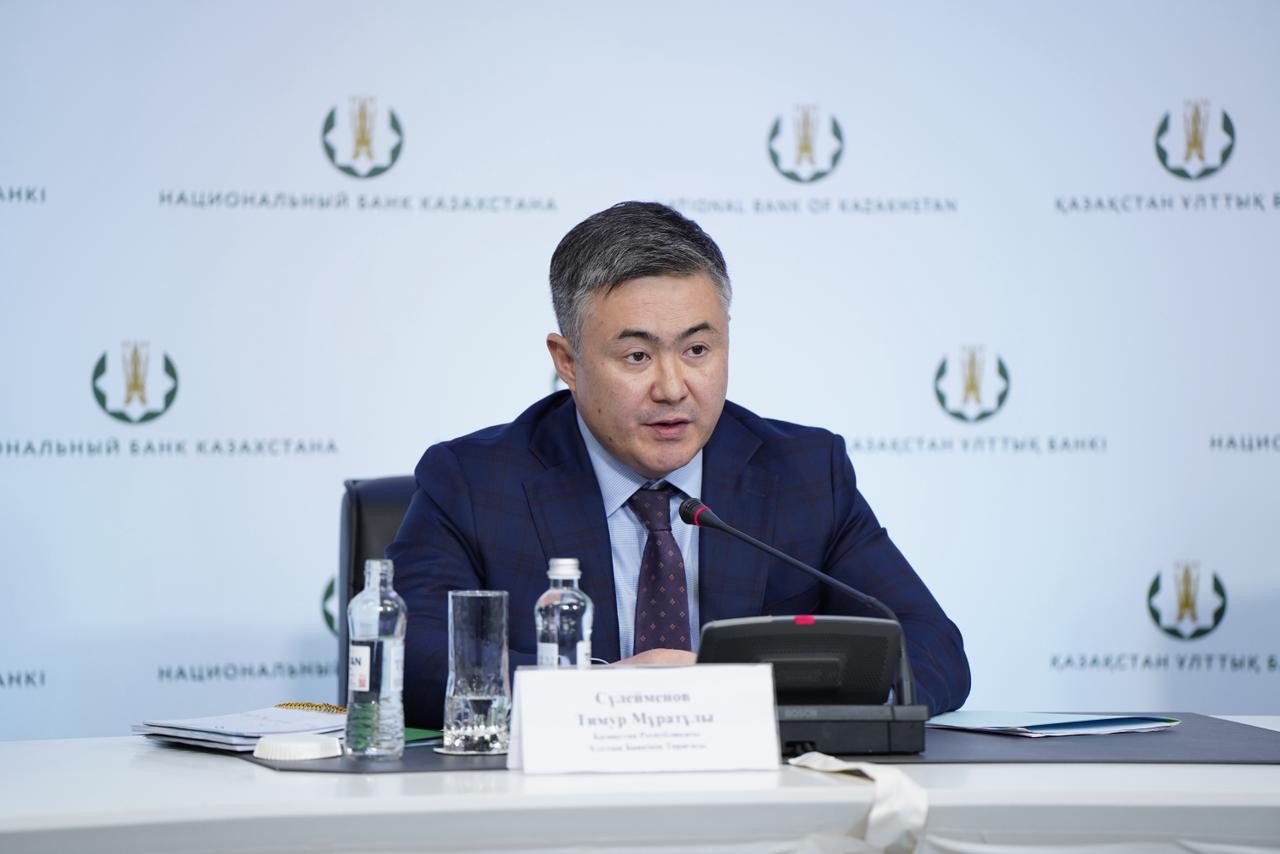
National Bank Chairman Timur Suleimenov. Photo credit: National Bank
“Despite some slowdown in inflation, persistent components of price growth have accelerated and inflation expectations remain relatively high. This points to continuing inflation risks and requires a cautious approach to easing monetary policy,” he said.
He also highlighted that annual inflation eased to 10.3% in June from 10.4% in May, marking the ninth consecutive month of decline. According to him, food inflation slowed from 10.7% to 10.4%, while non-food inflation remained unchanged at 11.7%. Services inflation edged up to 9% from 8.7%, reflecting higher prices for non-regulated services despite continued annual declines in regulated utility tariffs.
“The key disinflationary factors are the current monetary policy, the strong exchange rate of the tenge, the stabilization of consumer activity, and a number of anti-inflationary measures taken by the government and the National Bank,” Suleimenov said, adding that professional market participants, however, kept their 2026 inflation forecast at 10% while lowering their 2027 projection to 7.8%.
Economy expands despite external uncertainty
According to the NBK Governor, Kazakhstan’s economy continues to gain momentum.
“In January-June 2026, gross domestic product grew by 4.1%. Growth excluding the mining industry was about 5.3%,” he said.
Strong growth was recorded in construction, manufacturing and transport. Investment accelerated to 9.6%, while investment in the non-resource sector excluding budget funds increased 28.9%. Consumer demand, he said, remained positive, although slower growth in real household incomes and moderating consumer lending helped keep spending at a moderate level.
Global risks remain
According to Suleimenov, renewed escalation of conflict in the Middle East has pushed energy prices higher, while global food prices continue to move in different directions. Vegetable oils and meat have become more expensive because of strong demand and limited supply, whereas grain prices have declined amid improved harvest prospects.
In the eurozone, higher energy prices have worsened inflation prospects, prompting the European Central Bank to raise key interest rates in June for the first time since 2023. Meanwhile, inflation in the United States remains above target, with the U.S. Federal Reserve leaving rates unchanged while emphasizing that future decisions will depend on incoming economic data.
At the same time, the bank said previously implemented monetary tightening, higher minimum reserve requirements, exchange rate dynamics, mirror operations and measures to regulate consumer lending continue to restrain inflationary pressures.
According to Suleimenov, the bank also coordinated with the government and the Baiterek holding to limit inflationary effects.
“In accordance with the program of the Baiterek Holding, together with the government, agreed approaches to the use of a quasi-fiscal stimulus in order to support the economy and minimize its impact on inflation have been developed by focusing financing on investment projects worth more than 15 billion tenge (US$27.8 million), while encouraging greater use of bank liquidity to expand domestic production,” he said.
Future decisions remain data dependent
Speaking at the briefing, Suleimenov stressed that the regulator is not committing to a specific path for future rate decisions.
“Future decisions on the base rate are not predetermined and will be made based on incoming data. We will continue to assess developments in headline and core inflation, inflation expectations, domestic demand, conditions in fuel and commodity markets, as well as the scale of fiscal and quasi-fiscal stimulus,” he said.
The next scheduled monetary policy decision will be announced on Sept. 4.
