
ASTANA – Kazakhstan plans to increase the combined capacity of its three existing oil refineries from 17.5 million to 28.8 million tonnes per year as the government moves to meet growing domestic demand for petroleum products and considers construction of a fourth refinery.
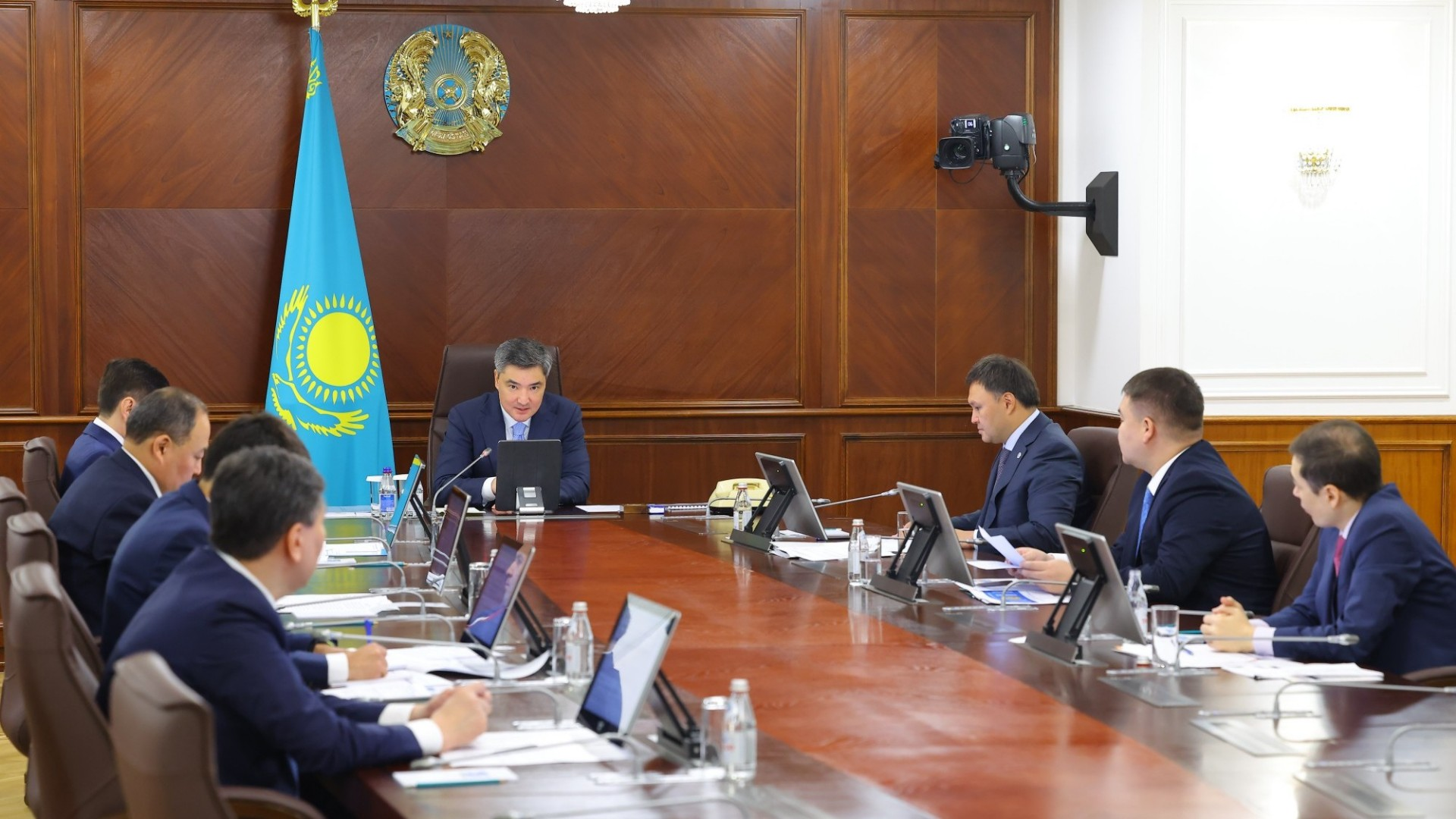
Prime Minister Olzhas Bektenov chaired a Sept. 23 meeting to discuss the modernization of existing refineries and assess the construction of a fourth facility. Photo credit: PM’s press service.
The plans were discussed at a Sept. 23 government meeting chaired by Prime Minister Olzhas Bektenov on the implementation of President Kassym-Jomart Tokayev’s instructions to modernize existing refineries and assess the construction of a fourth facility.
Existing refineries to undergo expansion
KazMunayGas Chairman Askhat Khasenov reported on the status and timelines of refinery expansion projects. According to him, the capacity of the Shymkent Refinery is planned to double from 6 million to 12 million tonnes of oil per year by 2030, while the Pavlodar Petrochemical Plant is expected to increase capacity from 6 million to 9 million tonnes by 2031.
At the Atyrau Refinery, an efficiency improvement project is scheduled for completion in 2027, increasing capacity from 5.5 million to 6.1 million tonnes annually.
The Shymkent refinery expansion will also require upgrades to oil transportation infrastructure, including increasing the capacity of the Kenkiyak–Atyrau and Kenkiyak–Kumkol main oil pipelines and the Tekesu station. A Shymkent–Almaty petroleum products pipeline with capacity of up to 3.5 million tonnes per year is also planned.
Fourth refinery under consideration
Deputy Energy Minister Kairkhan Tutkyshbayev reported on work to assess the construction of a fourth refinery. According to the Energy Ministry, Kazakhstan’s long-term demand for oil refining capacity could reach around 40 million tonnes per year.
Bektenov instructed the government to complete a comprehensive assessment and make final decisions on the fourth refinery by the end of this year. The assessment is expected to determine the facility’s optimal capacity, configuration, feedstock base, location and economic model.
Officials were also instructed to closely monitor the expansion projects, prevent delays and ensure the timely commissioning of new facilities, with further attention to increasing the depth of oil processing.
Government links refining investment to fuel prices
Bektenov said the expansion of refining capacity is closely linked to the economic conditions of the domestic fuel market.
“Increasing oil refining capacity is directly linked to the attractiveness of fuel prices on the domestic market. In the current situation, when gasoline and diesel prices in Kazakhstan are twice as low as in neighboring countries, investments in oil refining are economically unfeasible. Therefore, we need to actively continue market liberalization. This is a matter of economic security,” Bektenov said.
The government said the refinery expansion projects are intended to strengthen Kazakhstan’s ability to meet domestic demand for petroleum products over the medium and long term.
