
ASTANA — Kazakhstan’s livestock sector could follow one of three distinct development paths over the next five years, according to a new industry report presented on May 29 in Astana following the Dala.Camp National Livestock Expedition.
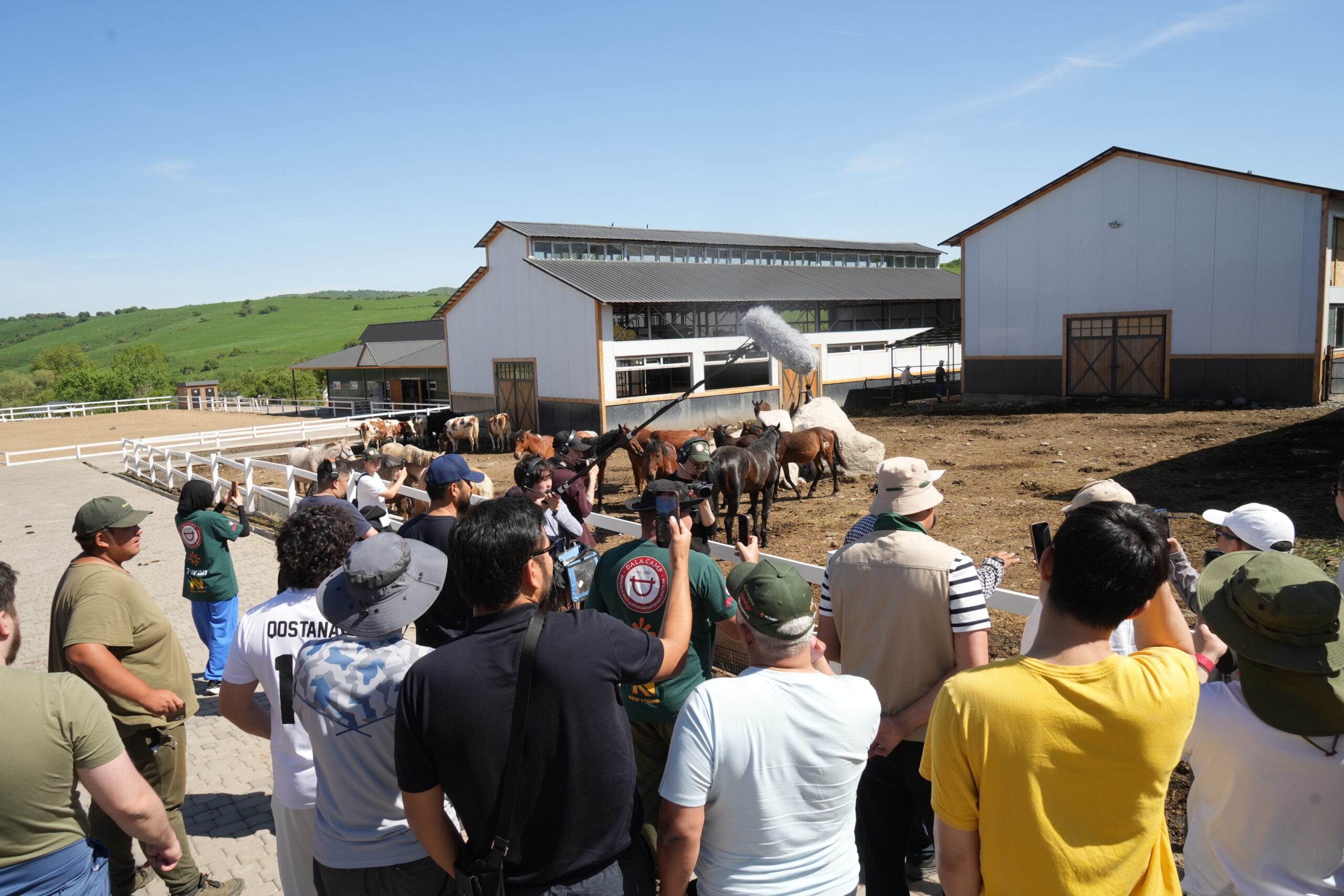
The report was based on findings from the Dala.Camp expedition, which covered more than 7,500 kilometers across 12 regions between May 1 – 16. Photo credit: Turan Association
The report, unveiled during a roundtable discussion organized by the NU Impact Foundation and the Kazakhstan Livestock Breeders Association Turan, examines the country’s export potential following Kazakhstan’s securing nationwide foot-and-mouth disease (FMD)-free status with vaccination from the World Organization for Animal Health (WOAH) on May 22.
The new status makes Kazakhstan the only country in Central Asia to hold the designation and opens access to major export markets, including China, the Gulf states and Southeast Asia. However, industry experts cautioned that the country must address longstanding productivity and infrastructure challenges to capitalize on the opportunity.
“The export permit has been received. But the chain is not yet in place,” said Zhanibek Kenzhebaev, chairman of the Turan Association and founder of the Dala.Camp expedition.
According to the report, Kazakhstan’s cattle population has reached approximately 9–9.2 million head, while total meat production stands at 1.2 million tons annually. During the first 11 months of 2025, meat exports rose nearly 25% to 91,300 tons. Lamb exports increased by 92.8%, while beef exports grew by 59.1%.
Despite the growth, researchers noted that roughly 90% of the national cattle herd remains outside the industrial production system. Private households account for 45.5% of livestock, farms and individual entrepreneurs hold 44.1%, and only 10.4% are concentrated in agricultural enterprises.
The study also highlighted a significant productivity gap between Kazakhstan and leading meat-exporting countries. While slaughter weights in the United States, Canada and France average around 370–420 kilograms, Kazakhstan’s figures often remain below 250 kilograms.
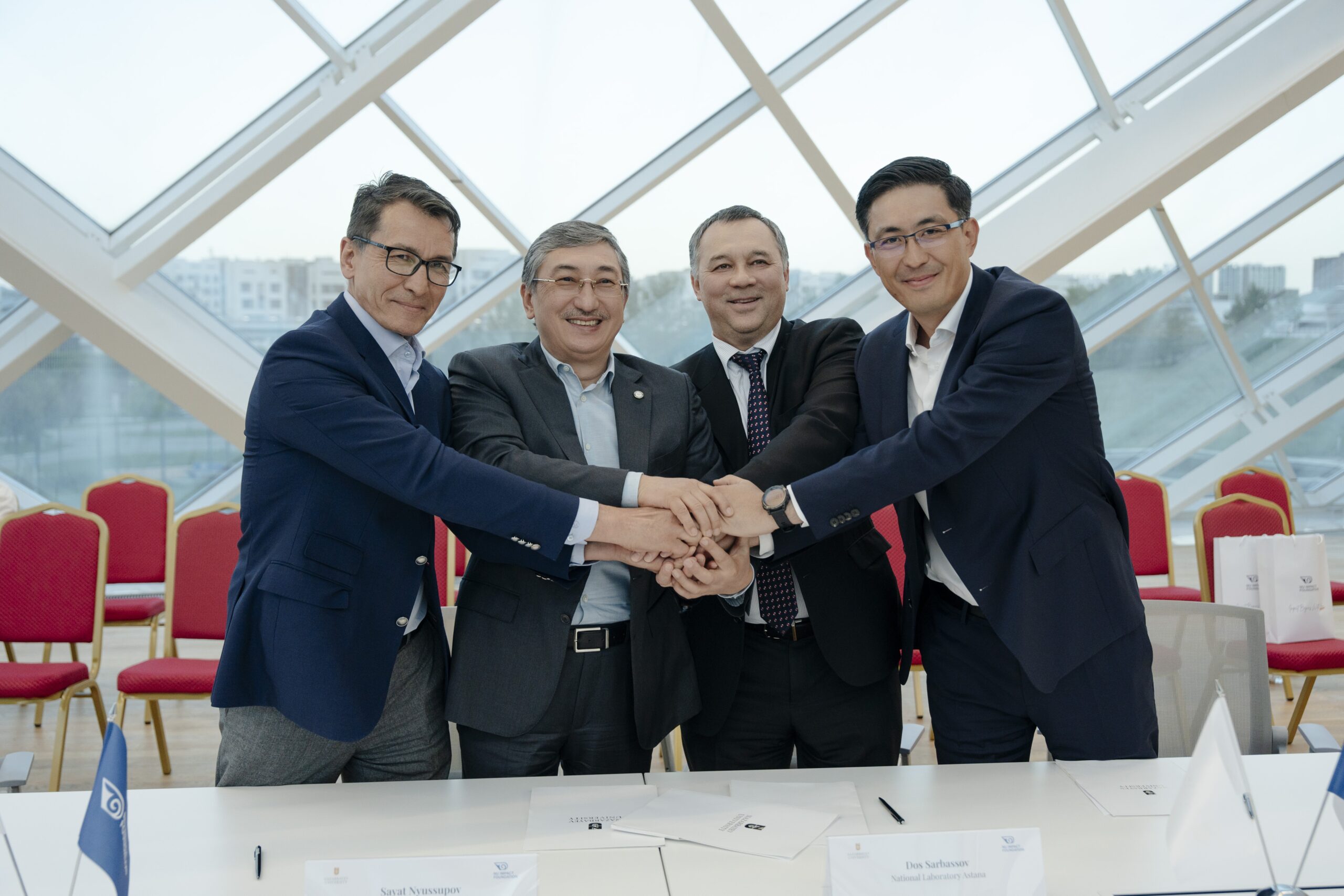
Representatives of the NU Impact Foundation, Turan Association, Asyl-Tulik and National Laboratory Astana sign a cooperation agreement to advance livestock genetics, biotechnology and scientific research, and launch a bovine reproductive technology center at Nazarbayev University. Photo credit: Turan Association
“The gap with global leaders is measured not by the number of heads, but by productivity per animal. It is closed by genetics, feed and technology, not simply by herd growth,” Kenzhebaev said.
The report identified several key challenges, including the fragility of Kazakhstan’s newly acquired export status, inefficiencies across the production chain and low productivity levels. Analysts recommended focusing on a limited number of export niches rather than competing across all international markets.
Among the priorities outlined for the next two years are maintaining FMD-free status, expanding breeding and genetics programs, developing a network of nursery farms, introducing traceability systems and strengthening Kazakhstan’s position in selected export markets.
Researchers presented three possible scenarios for the industry through 2031. Under the baseline scenario, Kazakhstan would remain primarily a supplier of raw agricultural products. A target scenario envisions the country becoming a competitive and diversified meat exporter, while a risk scenario could result in Kazakhstan losing its current export advantages if reforms stall.
The report was based on findings from the Dala.Camp expedition, which covered more than 7,500 kilometers across 12 regions between May 1 and 16. Participants visited livestock farms, meat-processing facilities and tourism sites to assess conditions across the sector firsthand.
During the event, the NU Impact Foundation, Turan Association, Republican Center for Livestock Breeding Asyl-Tulik and National Laboratory Astana signed a cooperation agreement to advance livestock genetics, biotechnology and scientific research. The partners also announced plans to establish a bovine reproductive technology center at Nazarbayev University to support embryo production, breeding programs and specialist training.
The Dala.Camp expedition was supported by a broad coalition of private-sector and institutional partners. General partners included Compass, Wendy’s, Kusto Group and Kazpetrol Group. Strategic partners were Nazarbayev University, the NU Impact Foundation, Өnergy Hub, Astana Business Campus, Savory, KMF Bank, KMF-Demeu and New Vision Forum, while official partners included the Auyl Party, KazBeef, iGpskz and the QazTrade Center for Trade Policy Development.
