
ASTANA — The residence of the British Embassy in Astana briefly turned into something between a gallery and a quiet warning system on April 21. The occasion was Wildlife Photographer of the Year, one of the world’s most respected nature photography competitions, produced by the Natural History Museum in London. For over six decades, it has done what policy papers often fail to do: make environmental change visible, immediate, and uncomfortably real.
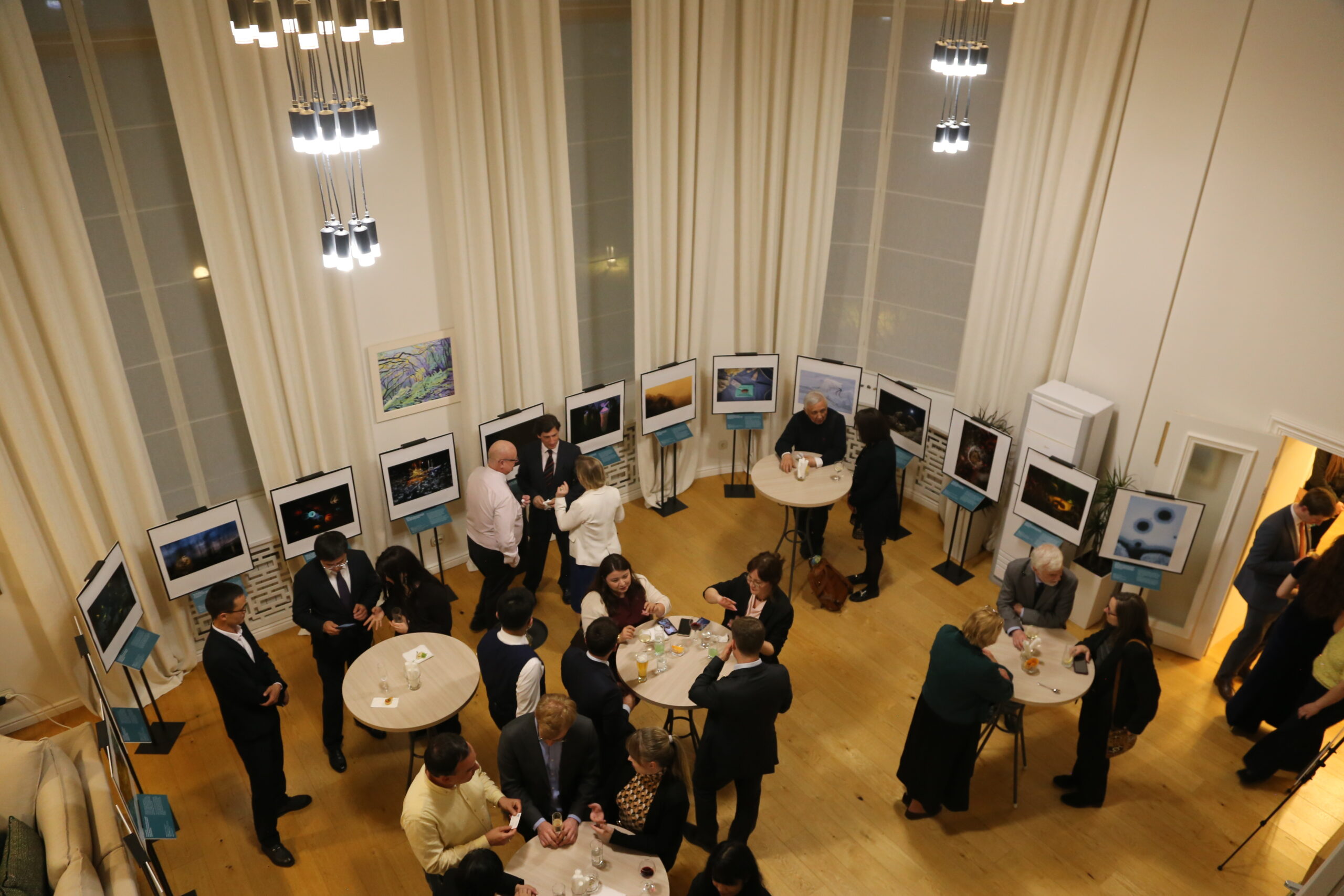
Works submitted to the Wildlife Photographer of the Year by Natural History Museum in London at the residence of the British Embassy in Astana on April 21. Photo credit: British Embassy in Kazakhstan
This year alone, the competition drew 60,636 entries from 113 countries. Numbers like that usually signal scale. Here, they also signal urgency.
British Ambassador Sally Axworthy noted that the images are judged anonymously: no reputations, no geography, just the raw evidence of what is happening to the natural world.
“I think in the pictures you can see some of the stresses that it’s under,” she added, referring to biodiversity itself.
Axworthy also noted that Kazakhstan, with its rich biodiversity, remains underrepresented in global environmental storytelling.
“We would very much like to have more entries from Central Asia. In the West, we don’t know enough about Kazakhstan’s biodiversity,” she said.
The country is the home of the domestic apple, the birthplace of the tulip—not the Netherlands, “as we were led to believe,” she added.
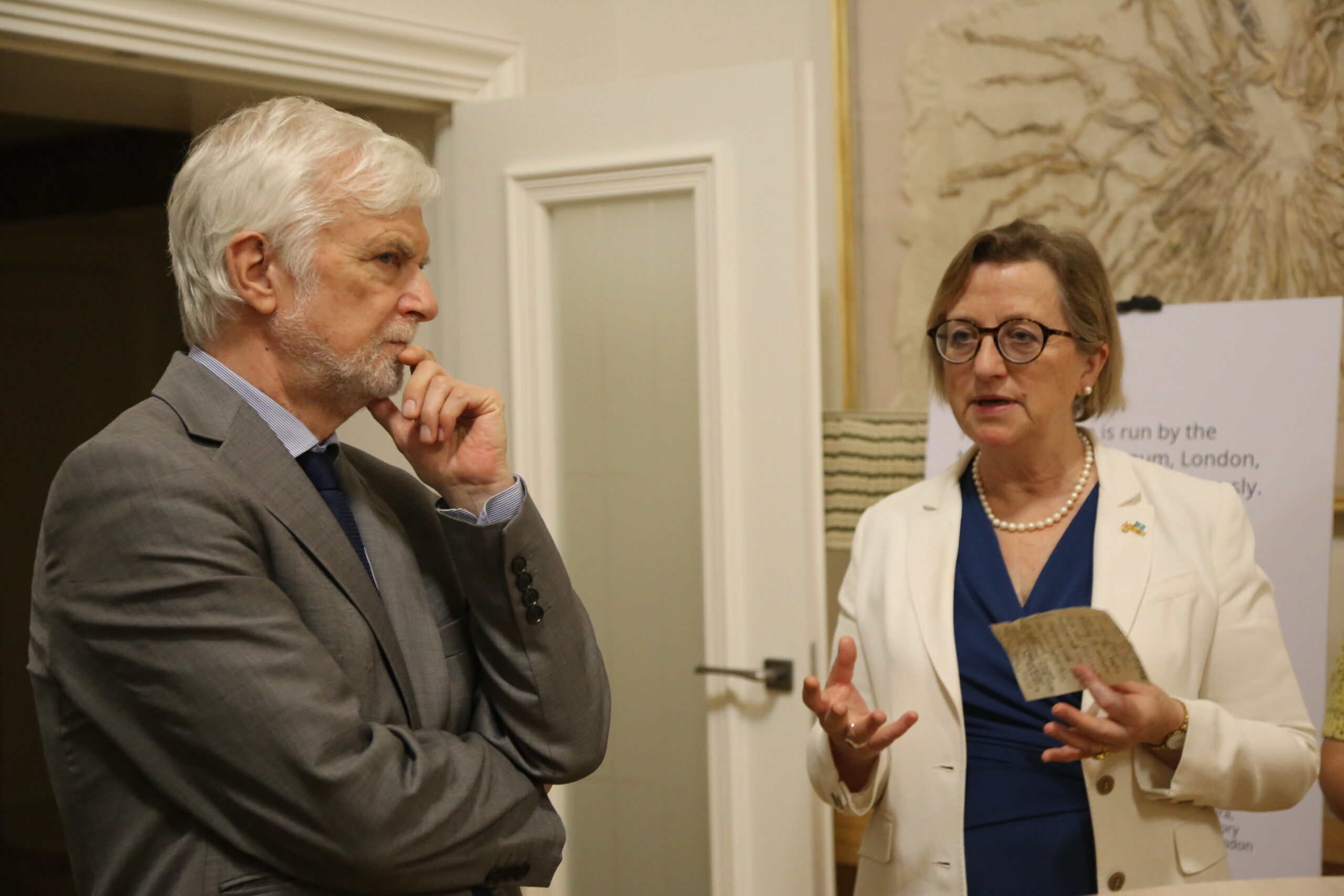
Ambassador Axworthy and Chair of IPCC Skea delivering remarks on April 21. Photo credit: British Embassy in Kazakhstan
Axworthy also shared impressions from her recent visit to the Aksu-Zhabagly Nature Reserve, the country’s oldest, founded in 1926.
“Everywhere we went, there were species that were particular to that area, didn’t grow anywhere else,” she said, listing mountain onions, saiga and snow leopards.
The subtext was clear: Kazakhstan is not a peripheral ecosystem. It is a critical one. That point is already being tested in practice. Axworthy highlighted the Altyn Dala conservation initiative, which won the Earthshot Prize backed by Prince William. The project helped bring the saiga antelope back from the edge of extinction to a population of around four million.
If Ambassador Axworthy’s remarks framed the stakes, Chair of the Intergovernmental Panel on Climate Change (IPCC) Sir Jim Skea framed the process and its limitations. Visiting Kazakhstan for the first time, he was direct about what the region still lacks: data, representation, and scientific visibility.
“The biggest motivation for me is to get scientists from the region to participate more in IPCC activities: to publish scientific information relevant to the region and to comment on draft IPCC reports when they go out for expert review. I would also encourage governments in the region to nominate scientists to participate in IPCC activities,” he said.
But Skea also offered a line that cut through the institutional tone.
“There is a competition between IPCC and the tortoise in the next room to see who can produce its work more slowly,” he joked.
It landed because it was uncomfortably close to the truth. Climate science moves carefully. Climate change does not.
That tortoise, incidentally, was not just a metaphor. In a separate screening, British filmmaker Saxon Bosworth presented Taspaqa (the Kazakh word for tortoise), a film shot on the Ustyurt Plateau with Kazakh researcher Vlad Terentyev. What began as a logistical challenge, two years of preparation and twelve days of filming in near-total isolation, became something more reflective.
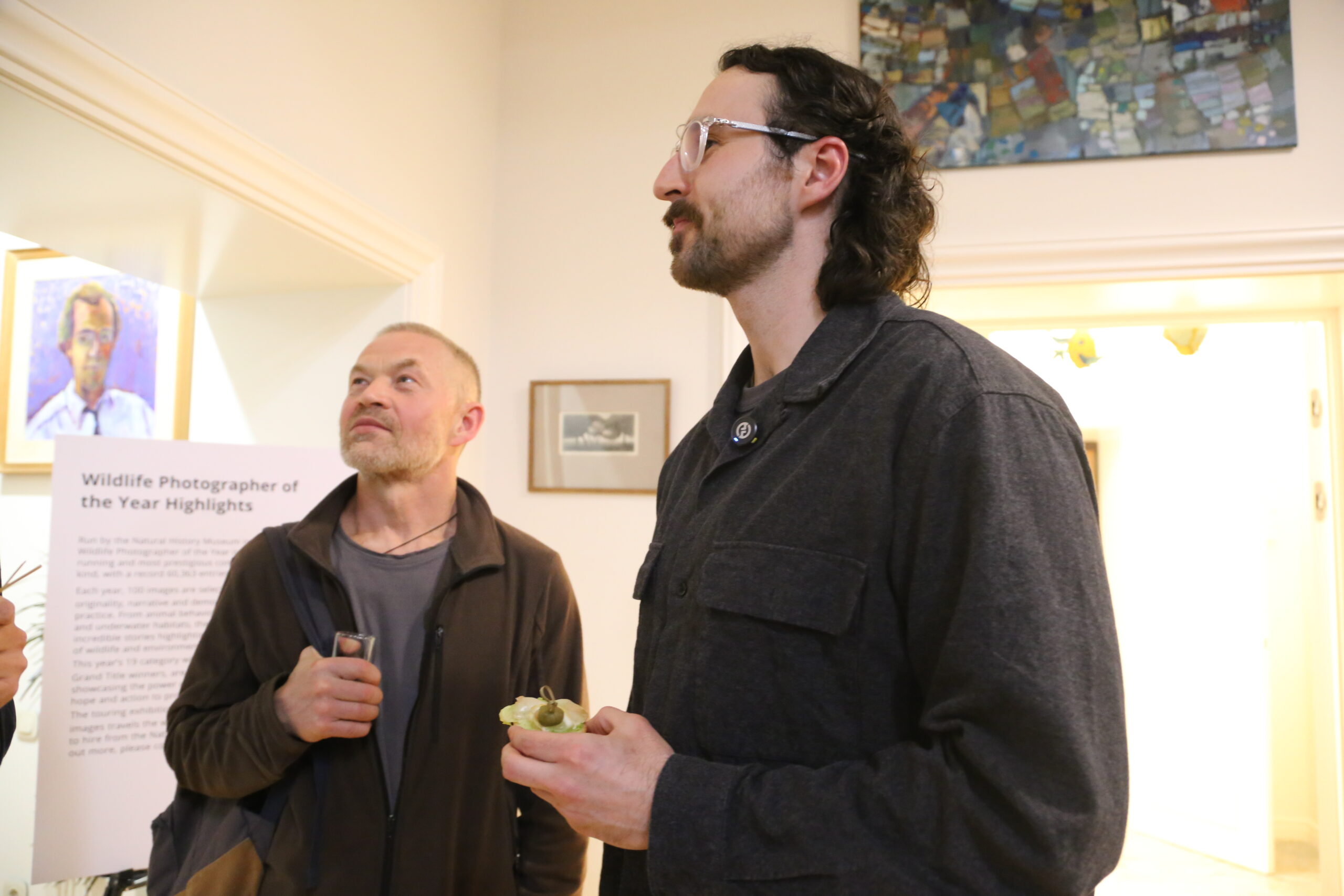
British filmmaker Bosworth with Kazakh researcher Vlad Terentyev filmed tortoise at the Ustyurt Plateau for 12 days. Photo credit: British Embassy in Kazakhstan
Bosworth described the tortoise as “an incredible representation of resilience and adaptation,” a creature surviving extreme temperatures and scarce water. But what lingered was what he took from the experience—what he learned from following a tortoise in its natural habitat.
“In the kind of smartphone world of today, where we feel rushed to do everything, operating at a constant pace. Is it Lao Tzu that said, nature doesn’t rush but everything gets completed, something to that effect. The tempo, that rhythm… following that specific tortoise for several days back to back, there was something very peaceful and magnetic about that energy,” he said.
It’s an observation that sounds simple until placed next to Skea’s joke. Between the slow work of science, the urgency of climate change, and the deliberate pace of a tortoise, there is an uncomfortable question: are we moving too slowly where it matters and too fast where it doesn’t?
