
ASTANA – A renewable energy training program from Kazakhstan was shortlisted for the European Training Foundation Green Skills Award 2025, placing the country among five global finalists recognized for linking education with the transition to clean energy and green jobs.
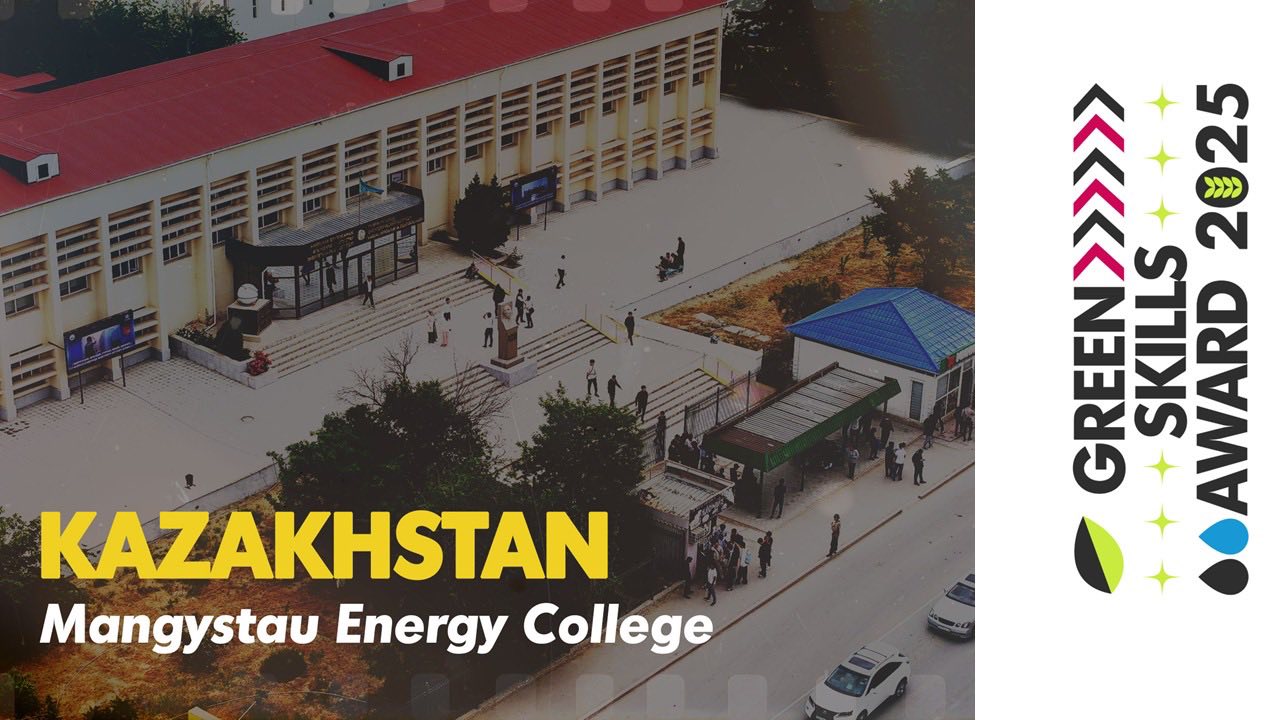
Photo credit: ETF
The Mangystau Energy College’s renewable energy dual training program was named one of the finalists out of more than 250 applications from over 50 countries.
“The program blends classroom learning, lab practice and industrial placements to build skills in installation, diagnostics, maintenance and automation of renewable systems. With strong links to regional employers, it helps align training with labour market needs, including opportunities for graduates to bring energy solutions to underserved rural communities,” reads the foundation’s Jan. 30 press statement.
With strong partnerships with local employers, the initiative aims to support Kazakhstan’s energy transition while expanding access to skilled jobs, including in rural communities.
North Macedonia’s Best Business Concept for Green Innovation won the top prize, followed by projects from Türkiye and Spain, the foundation announced during the EU-Italy Energy Days at Politecnico di Torino. Tunisia and Kazakhstan completed the shortlist.
The Green Skills Award, launched in 2021, highlights initiatives that support circular and low-carbon economies through education and workforce development. Over five editions, it has received more than 1,350 applications from over 60 countries.
“The Green Skills Award confirms that skills for sustainability are a global priority,” said Pilvi Torsti, director of the ETF.
“The strong international response shows how education and training are increasingly seen as central to the green and energy transition,” Torsti said, adding that the finalists demonstrated how local initiatives can deliver solutions with broader relevance. “Investing in green skills is also essential for competitiveness and preparedness, ensuring that the workforce can adapt to technological change and future shocks.”
In a separate category introduced in 2025, the ETF awarded its #ForOurPlanet Award for circular-economy education to a student-led project in Malaysia that uses insect-based bioconversion to transform food waste into compost and animal feed.
The ETF also opened applications for the 2026 Green Skills Award, with submissions accepted online.
