
ASTANA — Five underground mosques in Kazakhstan’s Mangystau Region have been added to UNESCO’s Tentative List of World Heritage sites, according to Kamar Bimagambetova, a specialist at the Mangystau State Historical and Cultural Reserve.
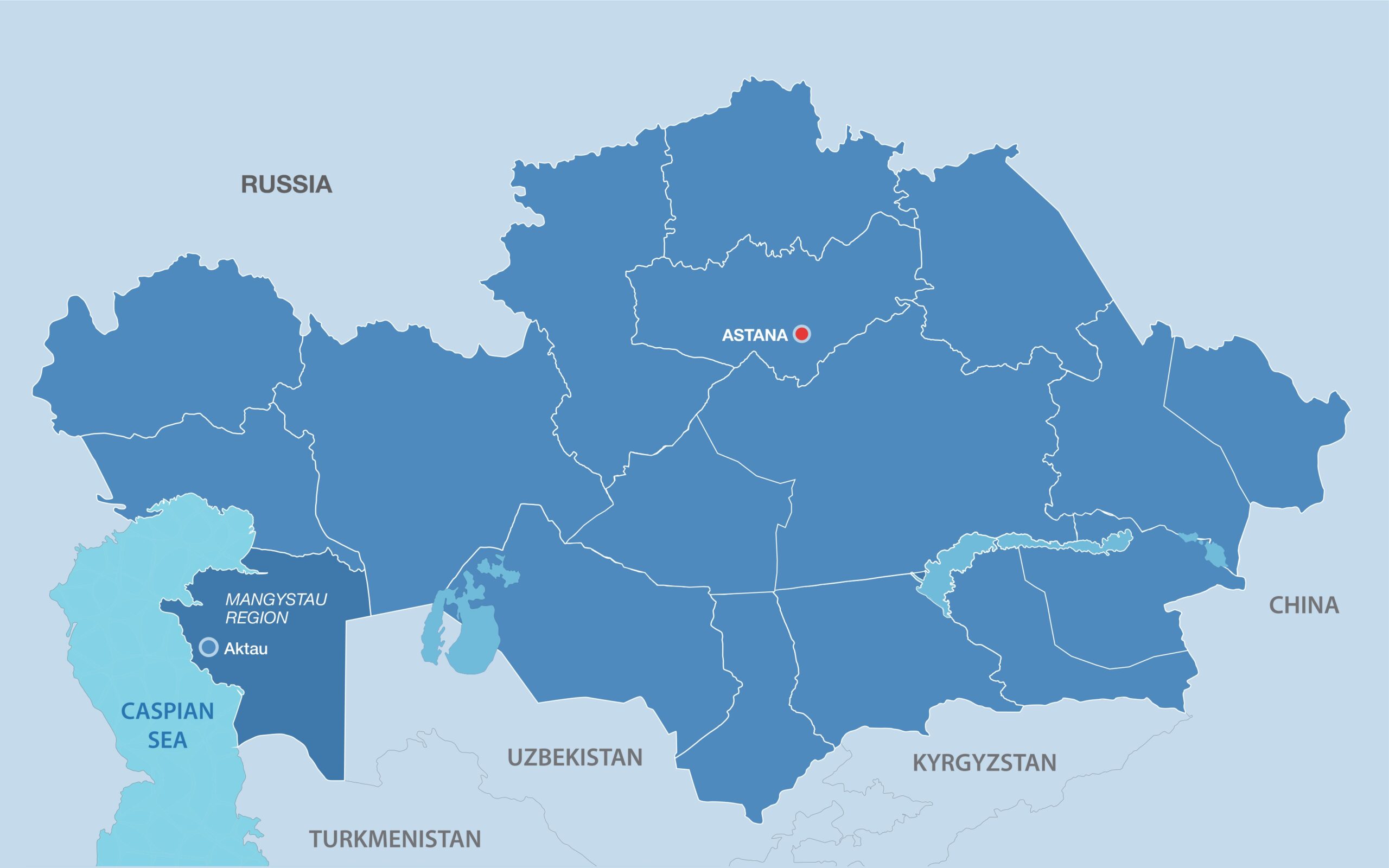
Click to see the map in full size. The map is designed by The Astana Times.
The sites include the underground mosques of Karaman Ata, Shakpak Ata, Sultan Epe, Beket Ata and Shopan Ata, all part of broader necropolis complexes that have served for centuries as places of pilgrimage, worship and burial in western Kazakhstan.
According to Bimagambetova, the move follows a recent field visit by a UNESCO representative. The evaluation results will be announced in 2027.
Karaman Ata: oaths, legends and stone
The Karaman Ata necropolis and underground mosque are located 35 kilometers southwest of the Shetpe village in the Mangystau district. Considered one of the oldest and largest burial sites in the region, the necropolis contains medieval gravestones, stone enclosures, domed mausoleums built in the late 19th and early 20th centuries, and numerous saganatams, traditional stone burial structures.
Bimagambetova said that this place has been perceived as sacred since ancient times, where people took oaths, separated truth from falsehood, guided those who had lost their way and provided protection to the youth.
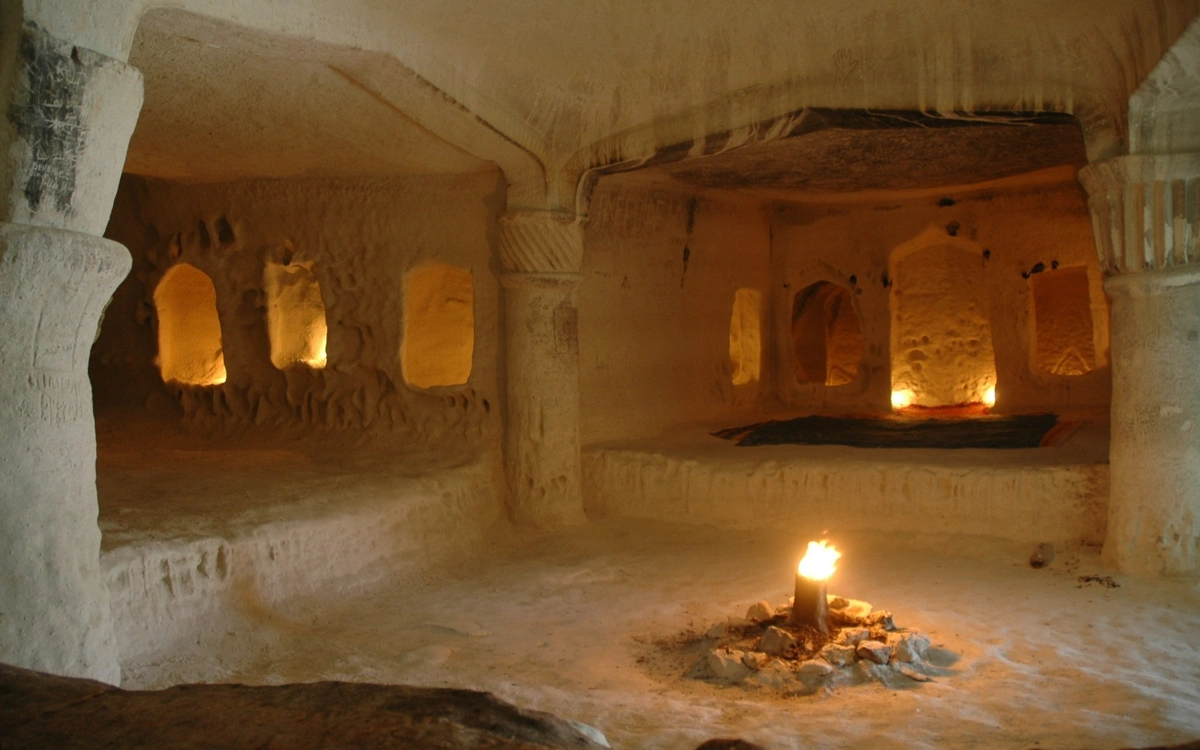
The Karaman Ata necropolis and underground mosque are located 35 kilometers southwest of Shetpe village in the Mangistau district. Photo credit: Kazinform
“In the Karaman Ata necropolis, Beket Ata acted as a mediator in resolving disputes between Kazakhs and Turkmens. In folk tradition, several legends about Karaman Ata have survived. According to one version, he was the younger brother of the saint Shopan Ata; according to another, Karaman Ata and Yesen Ata were sons of Shopan Ata,” she said.
She added that oral tradition also speaks of an underground passage linking the Karaman Ata and Yesen Ata mosques.
“It is said that Karaman Ata used this underground route and went for water to the Aksai tract, located six to seven kilometers from the mosque,” she said.
The mosque itself is carved into the slope of a low hill. According to Bimagambetova, builders may have adapted a natural cave into a religious structure. It consists of three rooms: an entrance chamber, a prayer hall and a circular burial chamber where the saint’s remains are believed to rest.
“Due to the relatively small thickness of the extracted marl rock, the rooms have comparatively low ceilings. To allow light to enter, two openings were made on the outer side of the mosque,” said Bimagambetova.
Sultan Epe: pilgrimage by the sea
The Sultan Epe underground mosque is located in the Tupkaragan district, 30 kilometers northwest of the Taushyk village, near the northern coast of the peninsula. The area stretches five kilometers toward the sea and is known for its natural landscape and freshwater springs.
The necropolis was placed under local state protection in 1982, while the broader Sultan Epe tract received protection status in 1993. There is also a well carved six meters into the peninsula’s rocky cliff, which stands near the Sultan Epe underground mosque, and its water is widely regarded as fresh, clean and suitable for drinking.
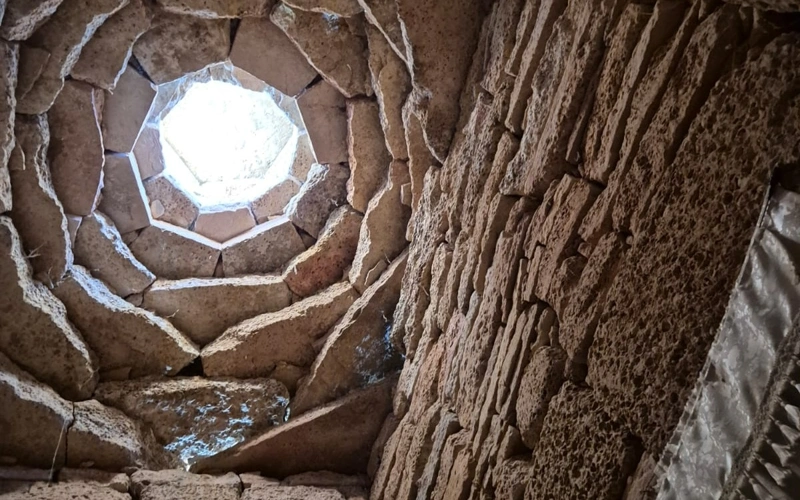
The Sultan Epe underground mosque is located in the Tupkaragan district, 30 kilometers northwest of Taushyk village, near the northern coast of the peninsula. Photo credit: Kazinform
“The pilgrimage site and mausoleum of Sultan Epe represent a shrine enclosed by a circular fence with vertically installed wooden posts. The underground mosque is located some distance from the necropolis, to its northeast, and is carved into a rocky layer of soil. It consists of nine chambers in total,” said Bimagambetova.
She said that pilgrims descend along a staircase made of unprocessed stones into a high, domed stone hall, where an interior stairway leads to an elevated platform. The rectangular hall, approximately three meters high, also includes a narrow chamber accessed through an opening in the northern wall.
Shakpak Ata: inscriptions in stone
Dating from the 14th to 19th centuries, the Shakpak Ata necropolis and underground mosque are also located in the Tupkaragan district. The mosque is considered unique in the Aral-Caspian region for its inscriptions and carved images covering its walls.
Geologist Alan Medoev described the site as a “rock mosque with complex architecture and a magnificent example of rare stone art in Kazakhstan.”
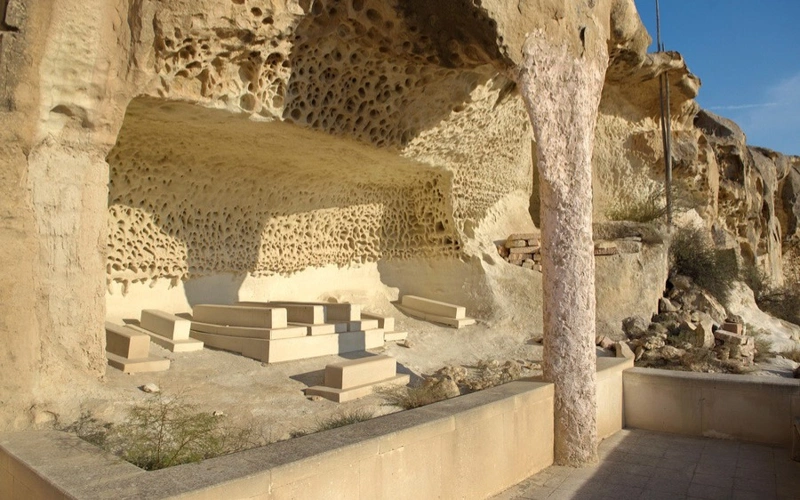
Dating from the 14th to 19th centuries, the Shakpak Ata necropolis and underground mosque are also located in the Tupkaragan district. Photo credit: Kazinform
“In the northwestern direction from the mosque is the Shakpak Ata necropolis. The burial complex consists of two interconnected parts: ancient graves associated with Turkmen lineages and later burial structures linked to the Kazakh population. According to archaeological research, the first burial complexes near the mosque began to form in the 14th century,” said Bimagambetova.
She added that although the exact lifetime of Shakpak Ata remains unknown, oral tradition portrays him as a religious scholar, teacher and batyr (a warrior) who fought against Kalmyk forces.
Shopan Ata: along the ancient caravan route
The Shopan Ata necropolis and underground mosque are located in the Karakiya district, 20 kilometers northwest of Senek village, along the ancient caravan route that once connected Mangystau with Khorezm.
According to Bimagambetova, research has identified 1,640 monuments within the necropolis, including medieval Turkmen enclosures and stone grave markers known as sandyk tas, koy tas and kulpytas. The eastern section contains burial monuments associated with the Adai tribe, a Kazakh tribal grouping in western Kazakhstan.
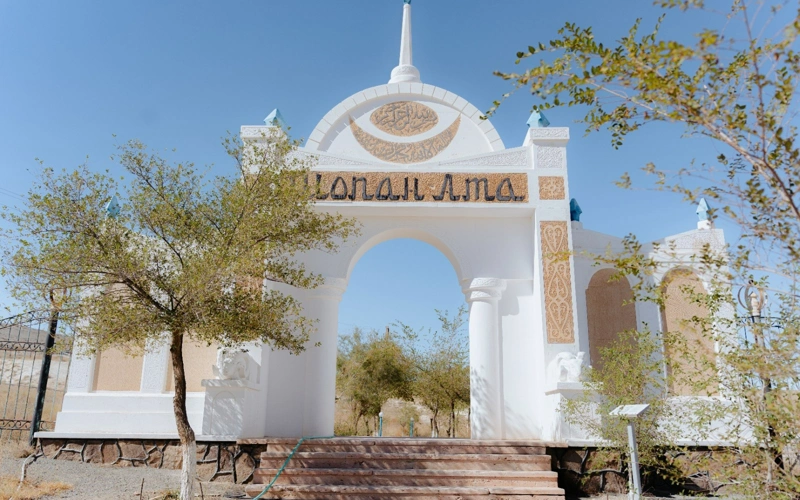
The Shopan Ata necropolis and underground mosque are located in the Karakiya district, 20 kilometers northwest of Senek village. Photo credit: Kazinform
The underground mosque of Shopan Ata consisted of 12 small interconnected rooms with distinct functions: some were used for religious rites, others for teaching children, and others for household needs.
The burial site of Shopan Ata is carved deep into the rock, and the complex includes rooms for pilgrims, a well and a second underground mosque built later with a separate entrance.
Shopan Ata is widely regarded as a disciple of Khoja Ahmed Yasawi, the 12th-century Sufi thinker whose teachings shaped Islam in Central Asia. In local tradition, Shopan Ata is remembered as a spiritual mentor who linked pre-Islamic Tengri beliefs with Islamic practice.
Beket Ata: scholar, warrior and architect
The underground mosque of Beket Ata, dated to the 18th-19th centuries, is located in the Oglandy tract of the Karakiya district, 95 kilometers northeast of Senek village. Carved into chalk cliffs within a mountain gorge, the mosque consists of four rounded chambers.
“The mosque is carved into the middle layer of chalk rock in the Oglandy gorge. (…) The main room contains a sacred wooden pillar. The entrance door is low and narrow. The first chamber is dome-shaped, with an opening in the upper central part for natural light. In the western part, there is a mihrab oriented to the south for prayer. In the southeastern part, there are two rooms, one of which contains the burial site of Beket Ata,” said Bimagambetova.
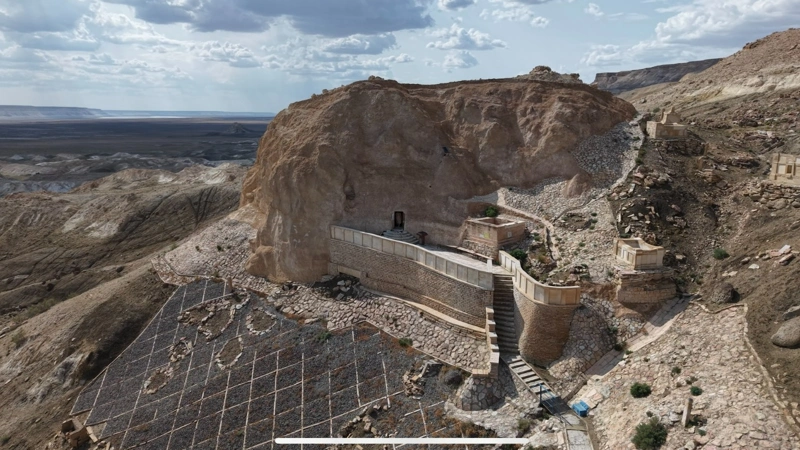
The underground mosque of Beket Ata, dated to the 18th-19th centuries, is located in the Oglandy tract of the Karakiya district, 95 kilometers northeast of Senek village. Photo credit: Kazinform
Beket Ata died at 63, the age traditionally associated with the Prophet. Bimagambetova noted that in the farthest chamber, there is a tree near which Beket Ata prayed for people seeking healing from physical and spiritual ailments and performed blessing rituals.
“All rooms have a rounded shape, and their height varies from 2.7 to 3.5 meters. Niches for lamps are arranged in the walls,” she said.
Beket Ata (formally Beket Myrzagululy) was born in present-day Atyrau Region in 1740 and is remembered as a religious teacher, architect and batyr. He founded religious schools and carved underground mosques adapted for prayer, education and community gatherings. In oral tradition, he is also known as Er-Beket for defending his people in battles against neighboring Kalmyk and Turkmen tribes.
The article was originally published on Kazinform.
