
ASTANA — A family in the Kerbulak district of Kazakhstan’s Zhetisu Region has spent decades preserving and developing the tazy, an ancient Kazakh sighthound prized for its speed and hunting ability. Their long-running work comes at a time when national efforts are growing to restore the dog’s historical status and protect its genetic line.
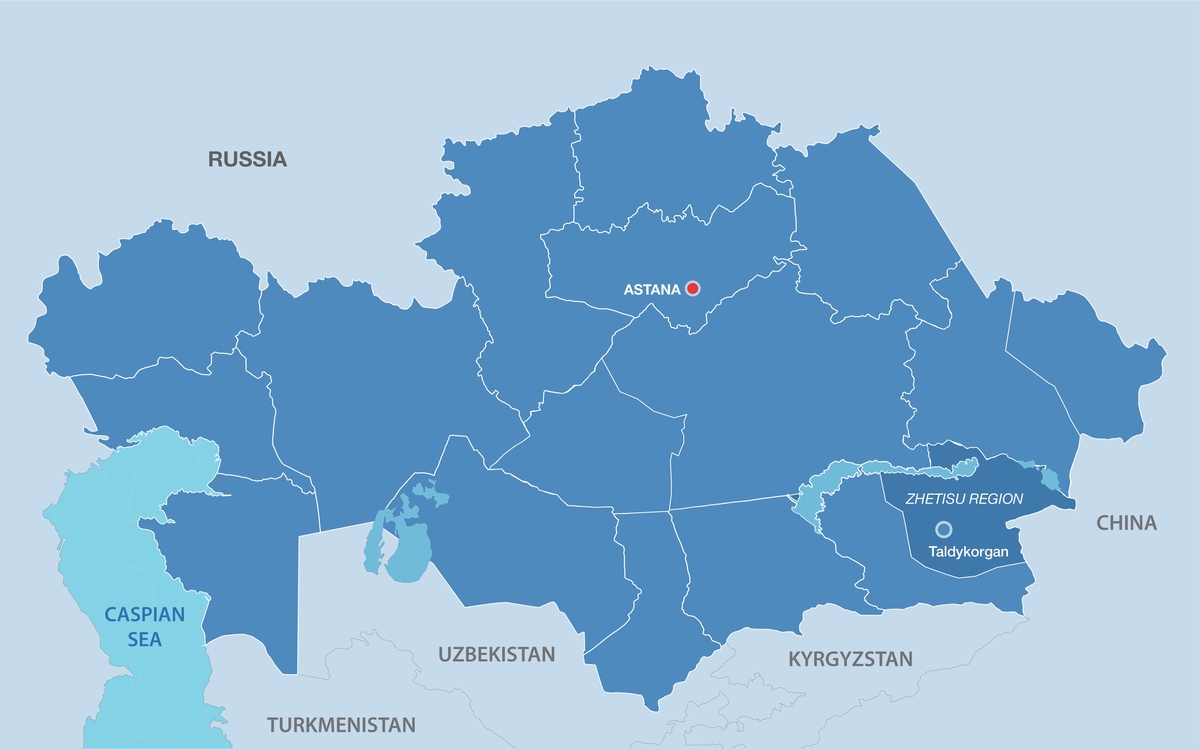
Anar Kazakbayeva, a schoolteacher who has spent nearly 50 years caring for and training the dogs. Photo credit: Kazinform Click to see the map in full size. The map is designed by The Astana Times.
The Kazakh tazy is a slim, long-legged steppe sighthound known for exceptional endurance, silent sprinting and the ability to pursue fast game such as fox, hare and roe deer. It has been part of nomadic hunting traditions for centuries, becoming a cultural symbol of the nation.
A guardian of a historic Kazakh dog breed
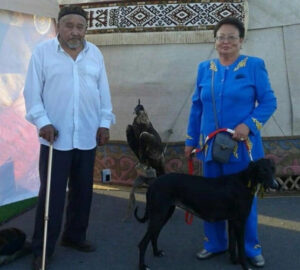
76-year-old Oryntai Kazakbayev and his daughter Anar, longest-serving tazy caretakers. Photo credit: Anar Kazakbayeva’s personal archive
In Zhetisu, 76-year-old Oryntai Kazakbayev is widely known among breeders as one of the longest-serving caretakers of this lineage. His first dog came from an ancient Qaska Tazy bloodline, a historic Kazakh sighthound family known for speed and instinct.
“My first tazy caught a roe deer. He came from an old lineage. Since then, I cannot imagine life without hunting. Whenever I had free time, I went hunting with a tazy. They caught badgers, roe deer, and countless foxes. My tazy even took down a wolf,” said Kazakbayev.
In Kazakhstan, many hunters and breeders are trying to re-establish the tazy’s official recognition and maintain its purity. Kazakbayev has become a reference point for this effort in the region.
A tradition continued by the next generation
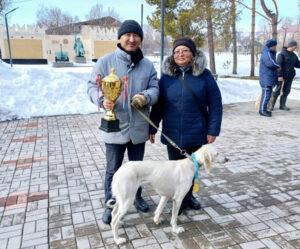
Kazakh Family Preserves Generations of Tazy Breeding. Photo credit: Anar Kazakbayeva’s personal archive
The family’s work is now led jointly by his daughter, Anar Kazakbayeva, a schoolteacher who has spent nearly 50 years caring for and training the dogs. She said her life began to be associated with tazy from early childhood.
“I take care of the dogs every day: I clean them and treat them if they get sick. We participate in exhibitions and prepare them for shows. There is a lot of work. I wake up before dawn because I have my main job. And on weekends, I go hunting with the tazy,” said Kazakbayeva.
Today, the Kazakbayev kennel houses several dozen dogs, each with a formal pedigree, a veterinary passport and an individualized care plan.
Care, diet and health: what a working tazy requires
The Kazakh tazy is a working dog, meaning it requires both physical conditioning and a highly controlled diet. Breeders generally emphasize fresh meat to maintain the stamina necessary for steppe hunting.
“This breed requires a special approach. Each dog has its own name, character and even schedule. We feed them meat, monitor their physical exercise and health. All our tazy receive vaccinations on time and get full care,” said Kazakbayeva.
She explained that proper feeding is directly tied to preserving the dog’s strength, muscle structure and endurance, qualities that define the breed’s reputation among hunters.
According to local registries, approximately 500 tazy are documented in the Zhetisu Region today. However, according to Kazakbayeva, the number of committed breeders is gradually decreasing.
The article was originally published on Kazinform.
