
ASTANA – Passenger air traffic in Central Asia is projected to nearly triple by 2045, reaching 242 billion revenue passenger kilometers, as rising incomes, economic growth and an expanding population fuel demand for air travel, Airbus said at a Nov. 17 briefing in Tashkent.

Jérôme Chaptal, Airbus’ director in strategic analysis and global market forecasting, presented the company’s projections during a Nov. 17 briefing in Tashkent. Photo credit: The Astana Times
Passenger traffic in Central Asia increased from 16 billion revenue passenger kilometers in 2005 to 89 billion revenue passenger kilometers in 2025, representing an average annual growth rate of 9%, said Jérôme Chaptal, director in strategic analysis and global market forecasting at Airbus.
By 2045, the figure is expected to rise by a further 153 billion revenue passenger kilometers to 242 billion, representing an average annual growth rate of 5.1%.
“The most important thing is that air traffic in this region will triple over the next 20 years. Globally, we expect it to double, while in Central Asia it will grow threefold,” Chaptal said, attributing the stronger regional outlook partly to faster population growth.
According to Airbus, several factors are expected to drive demand, including economic growth, rising incomes and demographic expansion. The company projects that the region’s population will increase by 23 million by 2045, while the number of people with middle-level incomes will grow by 26 million.
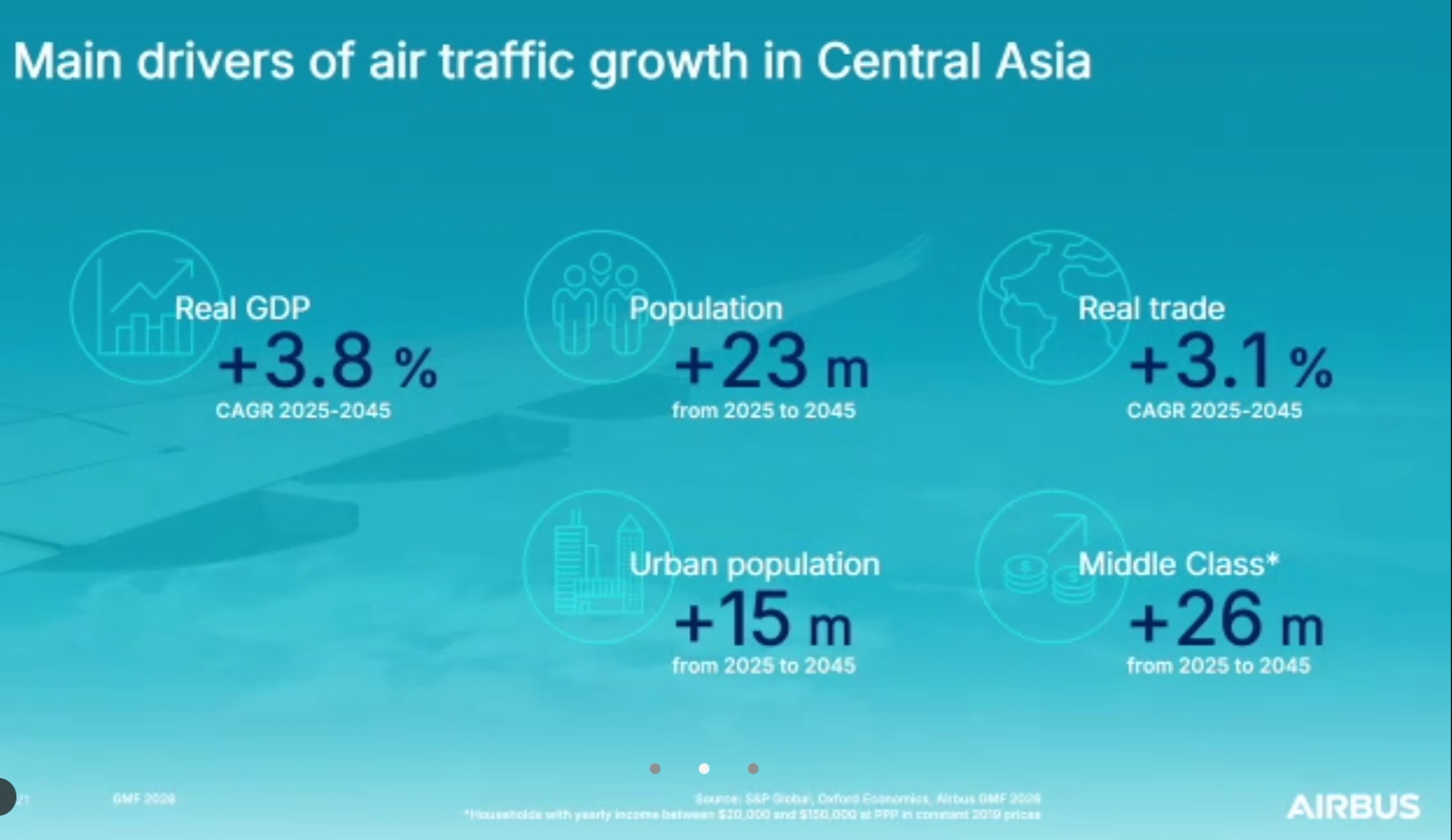
Airbus data highlights the key factors driving air traffic growth in Central Asia. Photo credit: The Astana Times
Chaptal also pointed to growing economic activity and trade within Central Asia as factors supporting passenger and cargo traffic. Europe and the Commonwealth of Independent States (CIS) are expected to remain important markets for regional connectivity, alongside expanding commercial links with other destinations.
Global aviation growth
The briefing also examined broader trends in global aviation. Airbus expects worldwide passenger traffic to nearly double over the next 20 years, supported by rising demand for air travel, particularly in emerging markets.
Chaptal highlighted China and India as major contributors to future growth. By 2045, China’s aviation market is expected to reach a scale comparable to Europe’s current market, while India’s market could reach a level similar to China’s today.
He also identified Asia, India, Africa and South America as regions with strong growth potential, contrasting them with more mature markets such as Europe and North America.
“Central Asia’s geographical position between Europe and Asia could further strengthen its role in international air connectivity, particularly along routes linking the two regions through the Middle East,” Chaptal said.
He noted that airlines’ decisions to expand their networks would depend on several factors, including market demand, geopolitical developments and the flexibility to adjust routes when airspace restrictions or other disruptions affect operations.
Rising passenger demand to reshape global aircraft fleet
The projected increase in passenger traffic will require substantial expansion and renewal of the global aircraft fleet.
According to Chaptal, the number of passenger aircraft with at least 100 seats is expected to increase from 23,310 in 2025 to 45,550 by 2045. Meeting this demand will require 42,060 new aircraft deliveries. Of these, 22,240 will support fleet growth, while 19,820 will replace older aircraft.
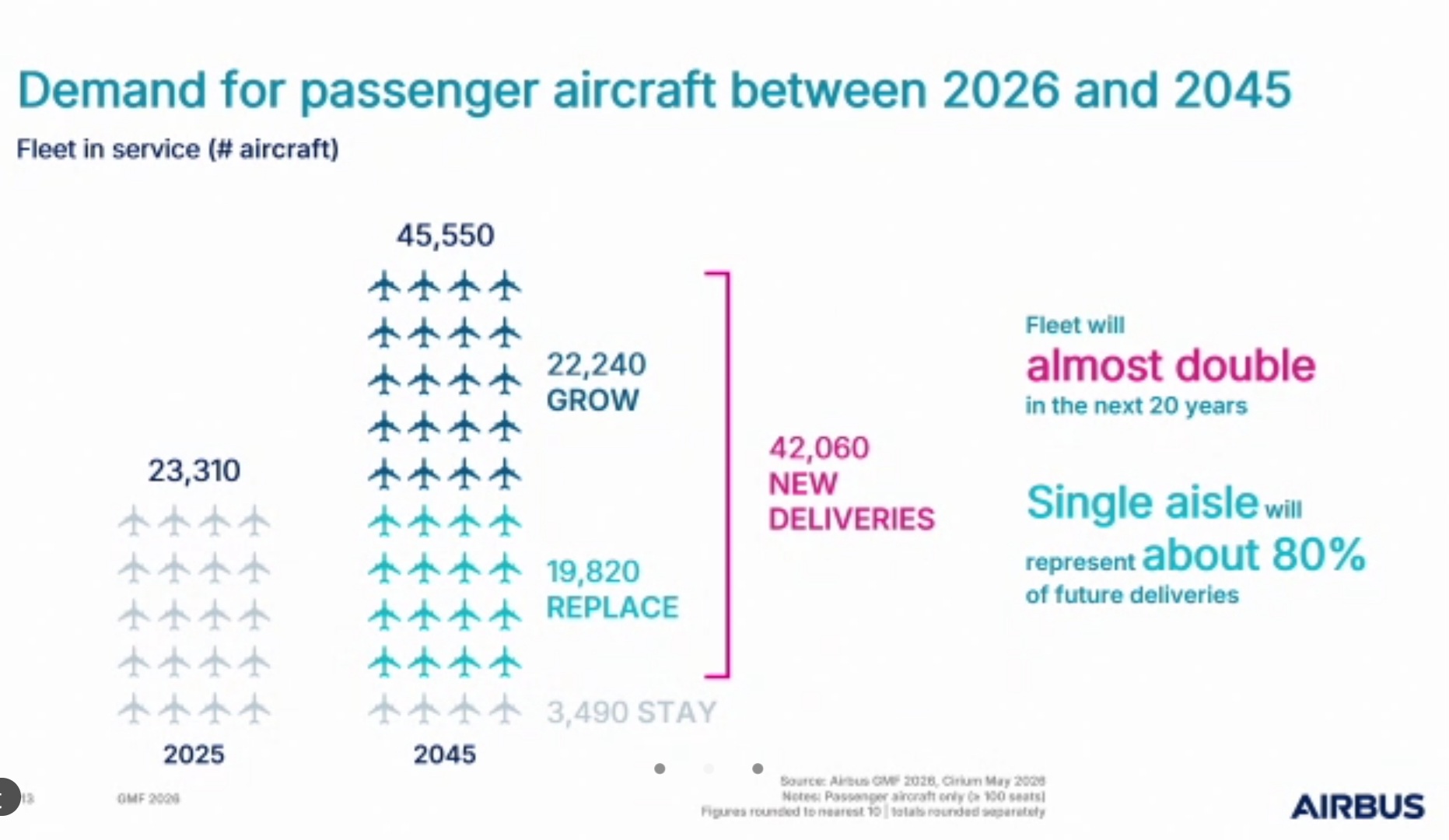
Airbus’ forecast for the global air pasaanger fleet through 2045. Photo credit: The Astana Times
Air cargo is another important area of growth, Chaptal said, noting that freight transportation has demonstrated resilience amid global disruptions.
Airbus also forecasts significant expansion of the global freighter fleet. The number of cargo aircraft in service is expected to rise from 2,360 in 2025 to 3,460 by 2045.
The company projects demand for 2,670 new freighters over the period. Of these, 1,580 will replace older aircraft, while 1,090 will contribute to fleet expansion. Around 790 existing aircraft are expected to remain in service in 2045.
The forecast reflects both growing demand for air cargo and the need to modernize aging fleets. Chaptal also pointed to the resilience of air freight amid geopolitical disruptions, fuel supply challenges and extreme weather events.
As Kazakhstan pushes to become a regional aviation hub, Airbus is also deepening its presence across multiple sectors, from passenger aircraft to military transport and space technology.
