
ASTANA – Kazakhstan plans to launch 200 industrial projects worth more than 1.7 trillion tenge (US$3.8 billion) by the end of this year, aiming to expand domestic manufacturing, reduce import dependence and create more than 17,000 jobs.
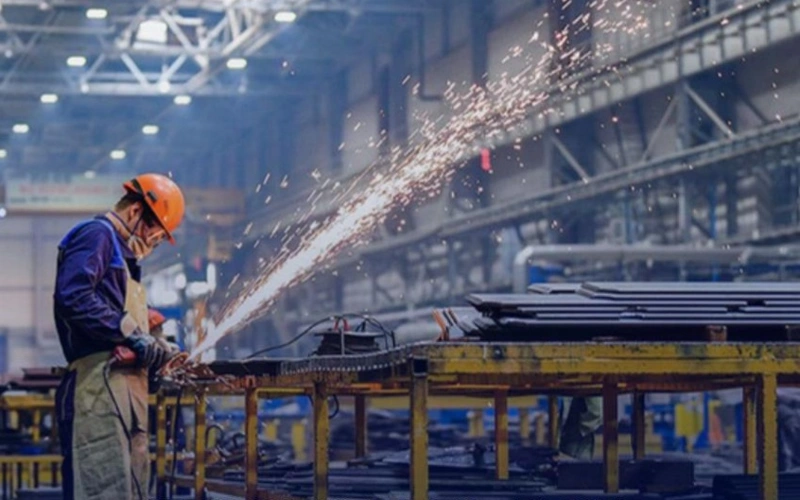
Photo credit: gov.kz
At full capacity, the projects are expected to generate approximately 1.5 trillion tenge ($3.3 billion) in annual output, including 500 billion tenge ($1.1 billion) in export-oriented production. Minister of Industry and Construction Yersaiyn Nagaspayev presented the plans at a Nov. 17 government meeting chaired by Prime Minister Olzhas Bektenov.
Manufacturing output increased by 9.3% in January-October. Of the 200 planned projects, 125 have already been launched, attracting 900 billion tenge ($2 billion) in investment. The remaining projects are nearing completion, the Prime Minister’s press service reported.
The new facilities will produce goods ranging from railway wheels and gear components to press equipment, laminate flooring, drip irrigation systems and aluminum coffee capsules. The projects are expected to create 17,300 jobs, including 5,500 in rural areas.
Automotive and railway manufacturing
A key element of the government’s industrial strategy is introducing an industrial cluster model designed to connect large manufacturers with domestic suppliers, small and medium-sized businesses, research institutions and service companies. Automotive and railway engineering have been selected as pilot sectors.
Kazakhstan already produces batteries, tires, multimedia systems and vehicle seats. Local manufacturers have also begun stamping bus body components using steel supplied by domestic producer Qarmet. This year, new production lines for heating, ventilation and air conditioning systems, flooring and truck engine blocks have been launched.
Further localization projects are planned in Kostanai and Almaty. Kostanai is expected to launch an automotive components facility with an annual capacity of up to 60,000 units, while Almaty is preparing to localize the production of wiring harnesses, brake lines and fuel pipes.
The government is also seeking to expand domestic heavy-truck production. Kazakhstan has already established production operations involving international brands such as HOWO, SITRAK and Scania. Volvo truck production is planned for Almaty by the end of the year, while negotiations with Mercedes-Benz are underway.
Investment in oil and gas equipment
The energy sector is another priority for localization. Kazakhstan is working with international and domestic original equipment manufacturers to establish 15 new production facilities supplying goods required by the oil and gas industry. The projects are valued at 37.7 billion tenge ($84.7 million).
Between 2022 and 2025, the country localized 10 such production facilities worth 7.9 billion tenge ($17.7 million), creating more than 350 jobs.
The government has also raised the reimbursement threshold for international certification costs from 3,000 to 15,000 monthly calculation indices, allowing domestic manufacturers to receive up to 60 million tenge ($134,818).
According to Energy Minister Yerlan Akkenzhenov, seven Kazakh manufacturers in the oil and gas sector have already supplied products to markets in Europe, North America and Asia.
Construction materials and agriculture
Kazakhstan aims to increase the share of domestically produced construction materials in the internal market from 73% to 80% within three years.
The government plans to attract investment into the production of insulation materials, ceramic tiles, composite materials and facing products. The initiative is linked to the Khalyktyq Qurylys, or the People’s Construction program, which is expected to receive approximately 6.5 trillion tenge (US$14.6 billion) from the National Fund.
Agriculture is also receiving substantial support. Gross agricultural output increased by 5.2% in the first 10 months of this year, reaching 8.9 trillion tenge ($20 billion).
Concessional agricultural lending reached 1.2 trillion tenge ($2.7 billion) this year, while domestic manufacturers accounted for 95% of agricultural machinery purchases, supported by preferential leasing programs.
Bektenov said the government would continue supporting local manufacturers through access to financing, industrial cooperation and guaranteed demand for their products.
