
ASTANA — Archaeologists from across the Turkic world are moving towards a new model of cooperation that could make the region’s archaeological heritage easier to study as a single interconnected historical space.
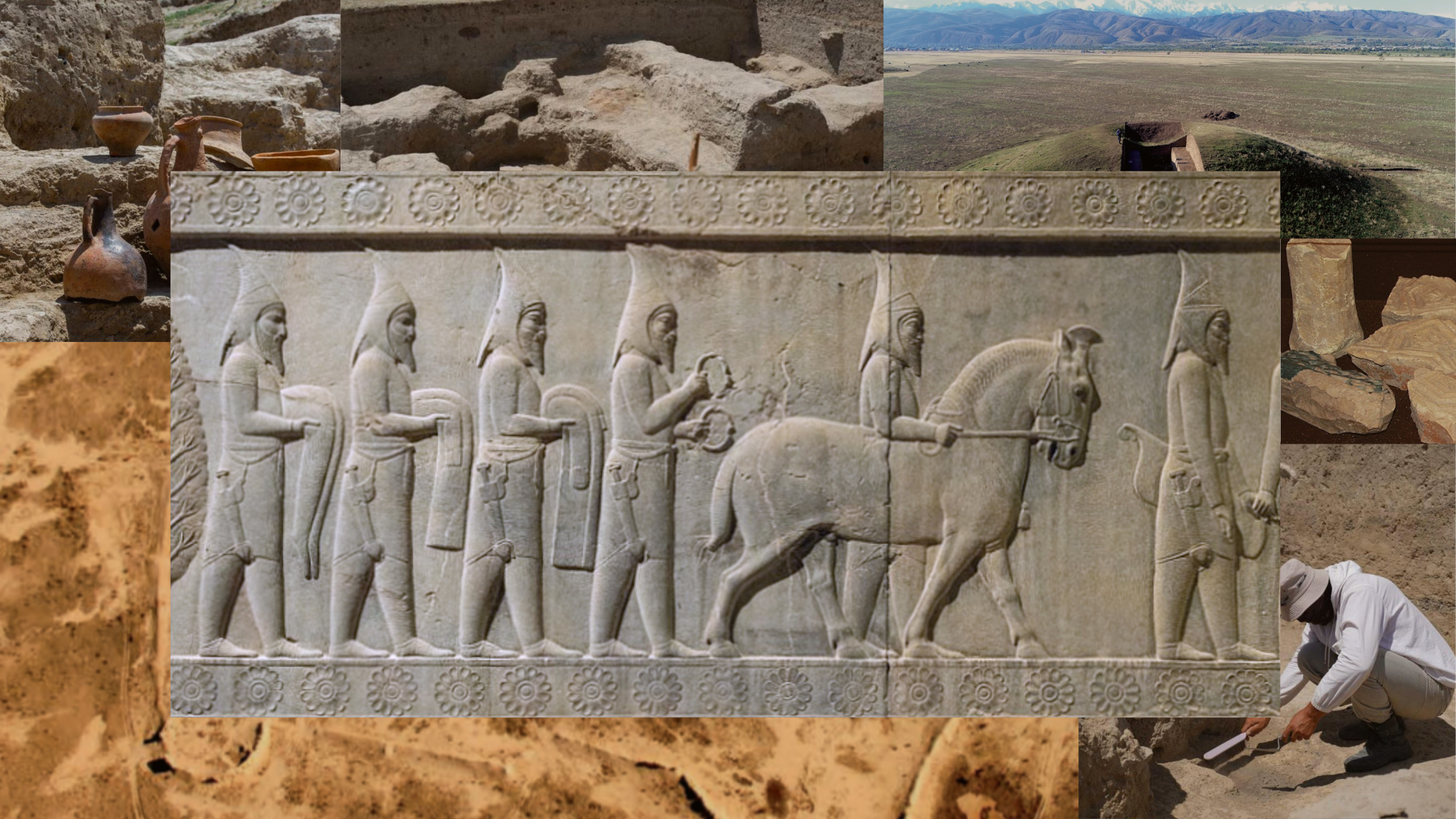
Collage is created by The Astana Times.
At the third meeting of the Association of Research Institutes and Centers of Archaeology of the Turkic World (ARICA) in Bugac, Hungary on Aug. 15, experts discussed the creation of a shared digital infrastructure for archaeological research, reported the Turkic Academy. One of the key proposals is an electronic atlas of archaeological sites of the Turkic countries, which would bring together information on the location and chronology of archaeological sites, research findings, photographs, plans and scientific publications.
A digital information portal and electronic research database are also planned to facilitate the exchange of information on expeditions, research projects, publications, conferences, grants, educational programmes and specialists.
The initiative is substantial because archaeological heritage does not follow today’s political borders. Ancient settlements, burial grounds, trade routes and cultural traditions developed across territories that now belong to different states. A common digital research environment could therefore help scholars look at the history of Central Asia and the Eurasian steppe as a connected process rather than a collection of separate national histories.
Move toward practical cooperation
Founded in 2023, ARICA was created at the initiative of the Turkic Academy with the first meeting held in Shusha in 2024, followed by Ankara and Gaziantep in 2025. Kazakhstan’s Margulan Institute of Archaeology has been among its founding institutions. The association was created as a platform for joint research, exchange of experience and the development of cooperation among archaeological institutions of the Turkic world.
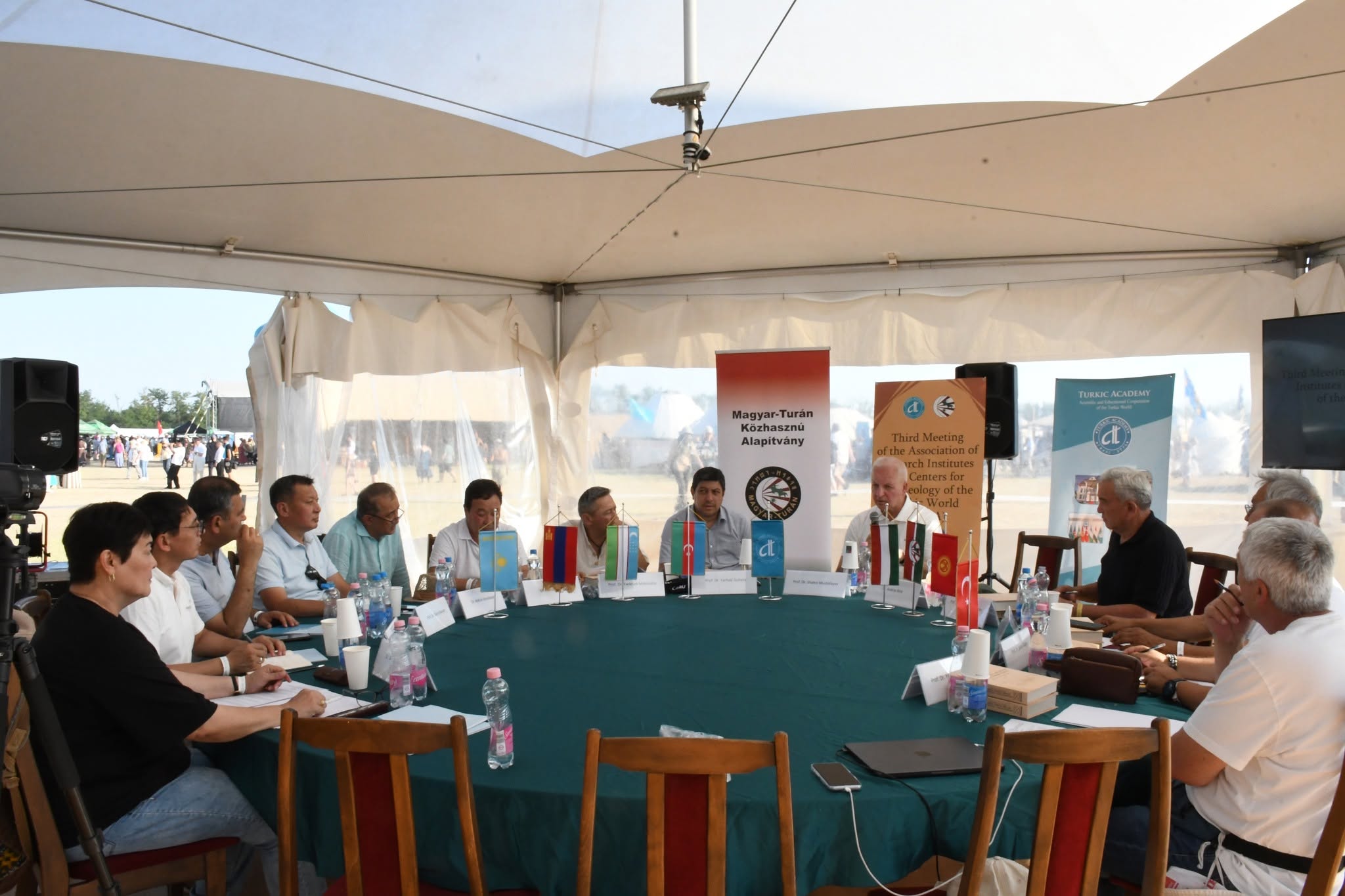
Photo credit: Turkic Academy
The Turkic Academy, headquartered in Astana, has played a coordinating role in this process, bringing together research institutions and specialists from across the Turkic world. ARICA meetings have involved archaeologists and academic institutions from Kazakhstan, Azerbaijan, the Kyrgyz Republic, Türkiye, Uzbekistan and Mongolia, among other countries.
The association’s agenda has gradually moved beyond institutional cooperation towards practical joint research. Proposed areas include joint expeditions, excavations and documentation of archaeological sites, as well as the study of Silk Road cities, early Turkic monuments, ancient irrigation systems, nomadic cultures and medieval production centers.
This gives Kazakhstan a role that goes beyond simply contributing archaeological sites to a future database. Kazakh institutions are themselves generating new archaeological data, developing international partnerships and contributing to projects designed to place the history of the Eurasian steppe in a broader regional context.
Kazakhstan’s vast array of archaeological evidence
For Kazakhstan, this is particularly relevant. The country occupies a vast part of the Eurasian steppe and contains archaeological evidence covering almost the entire history of human settlement in the region from the Stone Age and early metallurgy to the Kangju period, the Turkic era, the Oghuz world and the Golden Horde.
The scale of Kazakhstan’s archaeological record can be seen in discoveries made across the country in recent years. In 2025, the exhibition “New Discoveries in the Archaeology of Kazakhstan” presented finds covering the Stone Age, Eneolithic, Bronze Age, Saka-Sarmatian period and Middle Ages, reported the Ministry of Science and Higher Education. The exhibition also featured 3D reconstructions and digital models, demonstrating how traditional field archaeology is increasingly being combined with modern technologies.

Sakā Tigraxaudā tribute bearers to the Achaemenid Empire, Apadana, Persepolis, 6th century BC. Photo credit: Wikimedia Commons.
One of the discoveries highlighted was the Tian Shan Aurignacian cultural tradition identified in southeastern Kazakhstan. The Stone Age finds provide new material for studying early human communities and technological development in Central Asia and their connections with broader prehistoric processes across Eurasia.
Another important discovery came from the Taisoygan complex in the Atyrau Region, where archaeologists uncovered an Eneolithic burial. The finds add to the archaeological record of western Kazakhstan and provide further evidence for the diversity of prehistoric communities that inhabited the territory of the country.
The Akmaya and Taldysai settlements in central Kazakhstan offer a different perspective. Copper ore and metallurgical remains found at the sites contribute to the understanding of ancient mining and metal production in Saryarka. Such evidence is important not only for reconstructing the economic life of ancient communities, but also for studying the development and spread of technological knowledge across the Eurasian steppe.
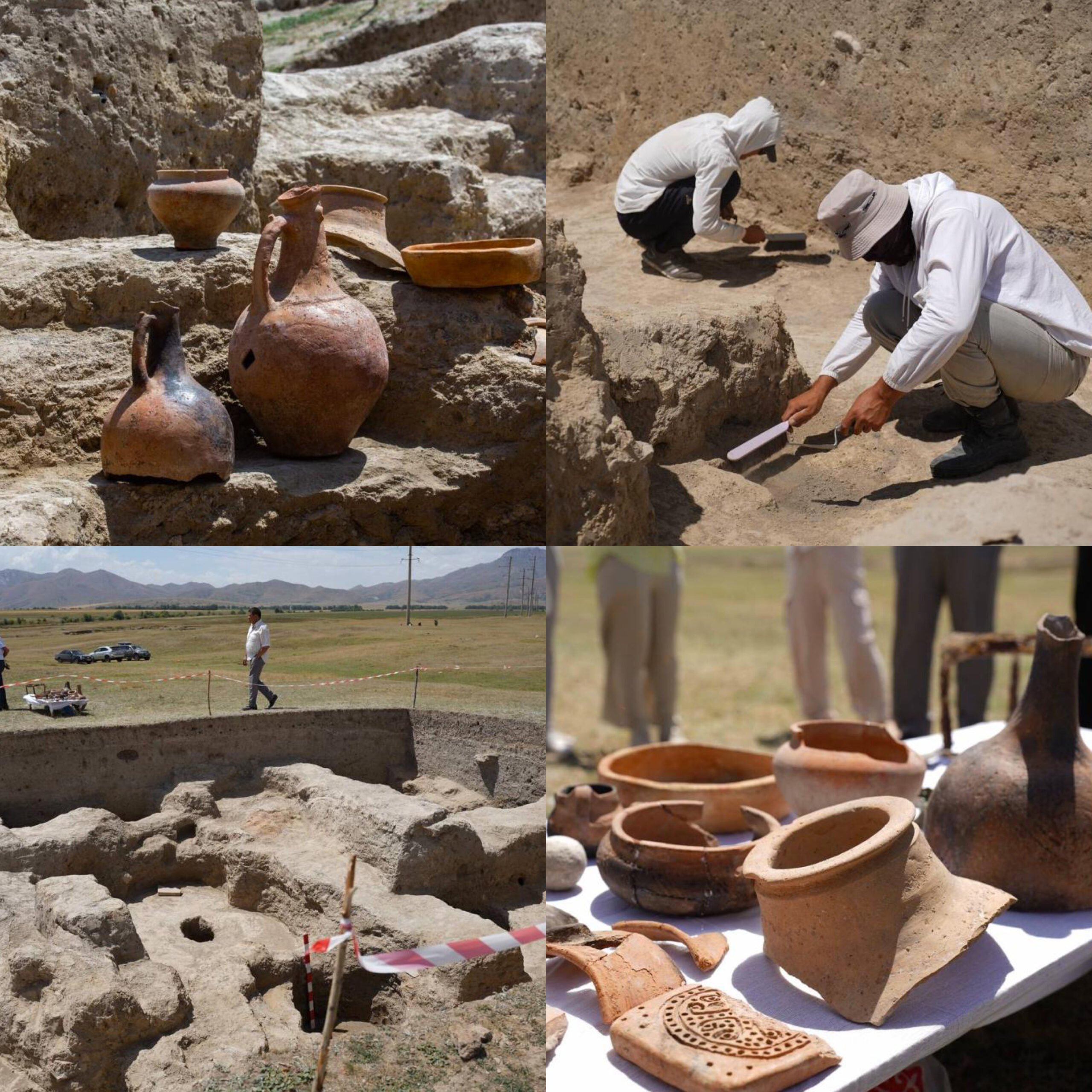
At the medieval settlement of Akzhar, excavations uncovered the remains of structures dating back to the 11th–12th centuries, built from mud bricks. Photo credit: gov.kz
The Kangju period provides another important link between Kazakhstan and the wider history of Central Asia. Archaeologists working in the Turkistan Region have uncovered burial complexes and artefacts associated with the Kangju state, which existed from approximately the first century BC to the fourth century AD.
Among the finds was the burial of an elite warrior, accompanied by weapons, horse equipment, belt fittings and ornaments. The research has involved cooperation with international specialists, including researchers from Leiden University. Such projects demonstrate how archaeological sites in Kazakhstan can serve as platforms for international research into ancient Central Asian societies.
The Kangju archaeological record is particularly valuable because southern Kazakhstan was part of wider political, economic and cultural networks connecting Central Asia with neighbouring regions. Artefacts found at Kangju sites, including imported objects, provide evidence of long-distance contacts and cultural exchange.
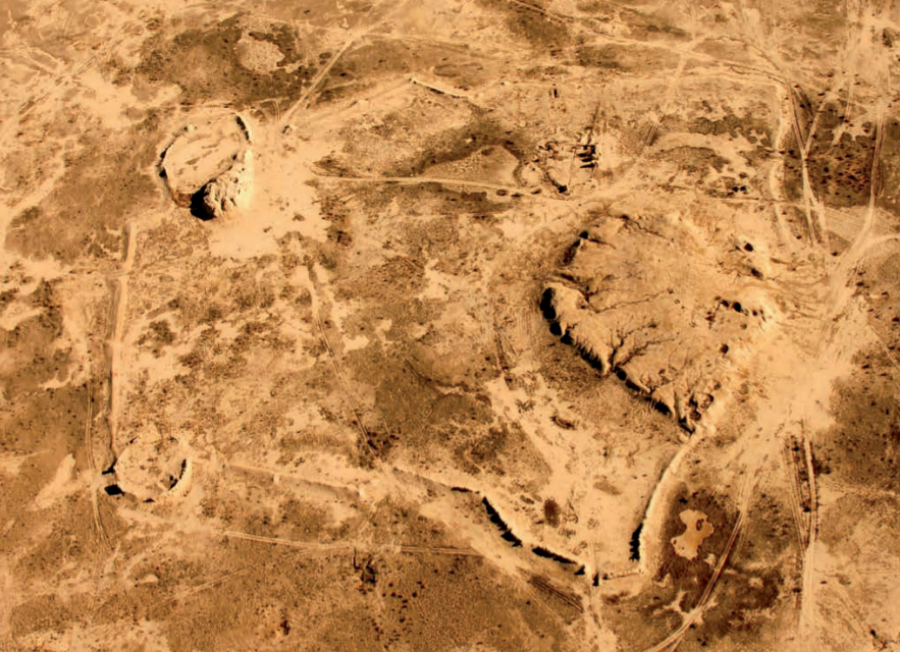
Zhetyasar oasis: fortified legacy of the Kangju state. Photo credit: old.archaeology.kz
Kazakhstan’s medieval heritage adds another layer to this historical picture. Zhankent, located in the lower Syr Darya region, is closely associated with the Oghuz world and is identified with the medieval center of the Oghuz Yabgu State. Archaeological research at the site continues to reveal information about urban life, architecture, craft production and the cultural environment of the medieval Syr Darya.
The site demonstrates why regional archaeological cooperation matters. The history of the Oghuz cannot be confined to a single modern country. Research into Zhankent can contribute to a broader understanding of the movement of people, goods, technologies and cultural practices across the Turkic world.
A more recent example comes from Zhantai in the Pavlodar Region. In 2026, archaeologists identified remains believed to be connected with an elite burial complex dating to the 14th–15th centuries. Researchers used lidar, ground-penetrating radar and 3D documentation to study the site, demonstrating how modern technologies can complement traditional excavation.
Why a shared atlas can matter
The discovery is particularly relevant to the proposed ARICA atlas because it illustrates how archaeological information can already be collected in highly detailed digital formats. Three-dimensional documentation can preserve the appearance and structure of archaeological features and make them available for further analysis by researchers who may not be able to visit the site themselves.
Today, archaeological information is often distributed among museums, universities, research institutes, expedition archives and scientific publications. Different institutions may use different formats, terminology and documentation systems. Important material can therefore remain difficult to locate even for specialists working on related historical periods. The ARICA initiative could help address this fragmentation.
A shared atlas would allow researchers to see archaeological sites in their geographical and chronological context. A scholar studying early Turkic settlements, for example, could compare sites across Kazakhstan, the Kyrgyz Republic, Uzbekistan, Mongolia, Türkiye and other parts of the Turkic world rather than examining each country’s archaeological record separately.
The database could also help identify connections between seemingly unrelated discoveries. Similar pottery, metalworking techniques, burial practices or architectural features could be traced across different territories. Such comparisons may help researchers develop new hypotheses about migration, trade, technological exchange and cultural interaction.
For international expeditions, the benefits could be practical as well. Researchers would have a clearer picture of which sites have already been studied, what publications are available, which projects are underway and which specialists have expertise in particular periods or research methods.
A shared database could also support heritage protection. Detailed records containing photographs, plans, geographic information and 3D documentation can help monitor archaeological sites, document their condition and preserve information about monuments that may be threatened by construction, natural processes or illegal excavations.
Kazakhstan’s efforts
The ARICA initiative comes at a time when Kazakhstan itself is developing its national system for archaeological research and heritage protection. According to Kazakhstan’s Ministry of Culture and Information, the country has 11,846 registered historical and cultural monuments, including 8,877 archaeological sites. The National Archaeological Service is being established on the basis of the Margulan Institute of Archaeology. Its work includes monitoring archaeological activities, providing scientific and methodological support, collecting research reports and developing a unified information system.
This national effort can complement the ARICA initiative. Kazakhstan’s own archaeological databases and documentation can provide a foundation for contributing verified information to a wider regional platform, while the international database can place individual Kazakh sites within a broader archaeological landscape.
The country is experimenting with digital approaches to heritage. In the Kyzylorda Region, for example, an interactive 3D map of historical and cultural heritage sites has been developed, while QR codes have been installed at a number of monuments.
International cooperation is also expanding. Kazakhstan’s Margulan Institute has developed partnerships with foreign archaeological institutions, including France’s National Institute for Preventive Archaeological Research. Cooperation covers areas such as archaeology, research methods and the use of modern technologies.
Together, these developments indicate a broader transformation of Kazakhstan’s archaeological sector from isolated excavations towards systematic documentation, digitalisation, international research and long-term preservation.
