
ASTANA — Kazakhstan’s government has approved an updated master plan for Astana through 2035, effective Aug. 8, setting out how the capital will accommodate a population projected to reach nearly 2.3 million while expanding housing, schools, transport and utilities.
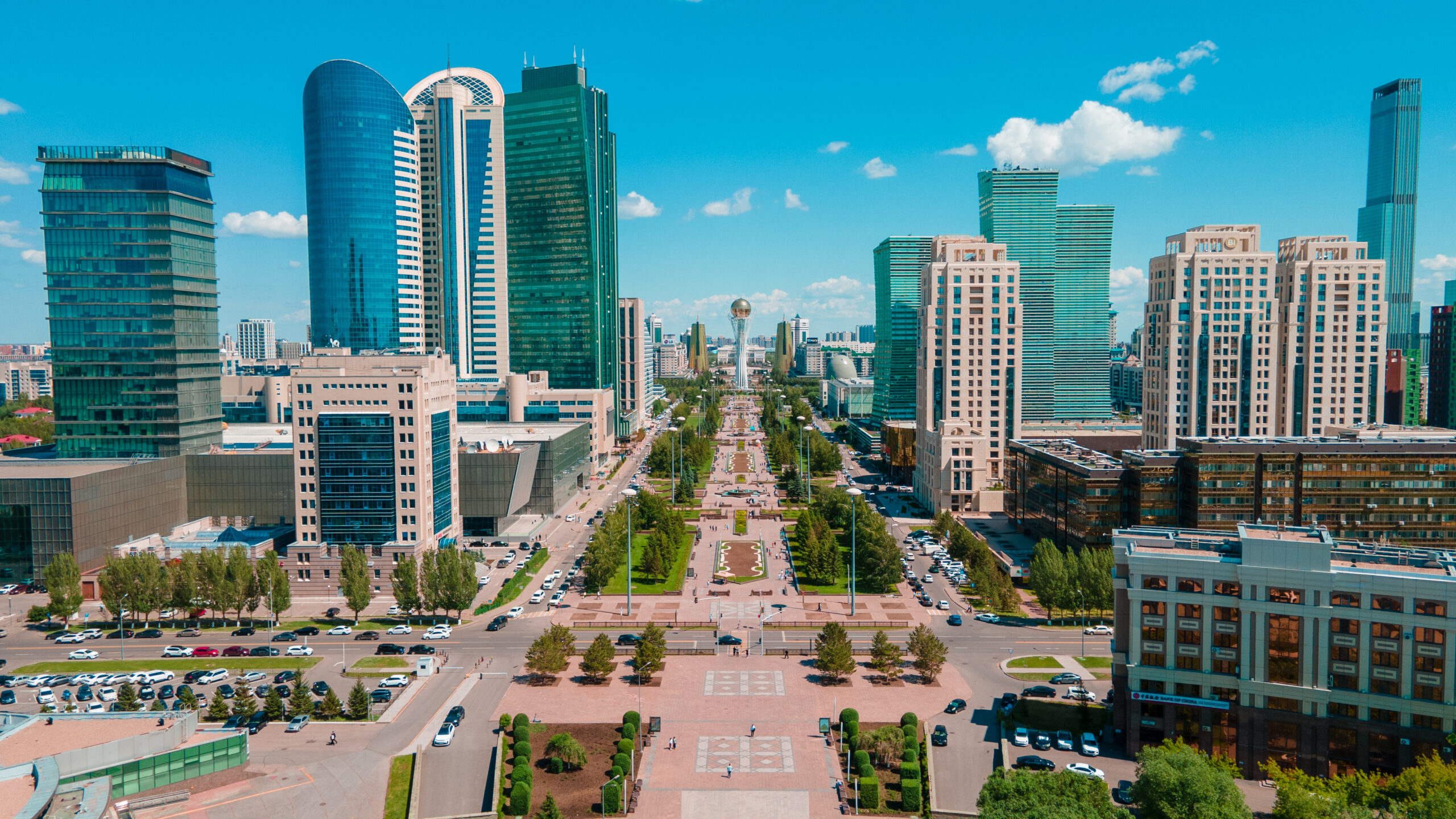
Astana. Photo credit: The Astana Times.
The plan comes as Astana continues to expand rapidly, driven by sustained population growth. The city had approximately 300,000 residents when it became the capital in 1997. According to the Bureau of National Statistics, by June 1, its population had reached nearly 1.67 million.
Government projections now put the population at 1.97 million by 2030 and 2.28 million by 2035, meaning the capital could add nearly 600,000 residents within the next decade.
Planning for a city of more than 2 million
The updated master plan uses Jan. 1, 2025, as its baseline, with 2030 designated as the first construction phase and 2035 as the final planning horizon. The document’s baseline population is 1.528 million, a level Astana has already exceeded.
The plan sets out where residential, social, recreational and industrial areas will develop and how they will be supported by transport and engineering infrastructure. It also covers land-use restrictions, reserve territories, environmental protection, emergency resilience and functional zoning.
By 2035, working-age residents are projected to account for 59.5% of the population.
Planning also extends beyond the city’s administrative boundaries. The document takes into account Astana’s growing links with the surrounding agglomeration, where transport networks, utilities, housing and social infrastructure are increasingly interconnected with the capital.
Fivefold population growth since capital relocation
Astana’s development has accelerated sharply since Kazakhstan moved its capital from Almaty to Akmola on Dec. 10, 1997. The city was renamed Astana the following year and officially presented as the new capital on July 6, 1998.
Its population passed one million in 2018 and reached about 1.35 million by the beginning of 2023. Today, Astana has more than five times as many residents as it did when it became the capital. By 2035, Astana’s population is projected to be more than seven times its 1997 level.
Internal migration has contributed significantly to that expansion, with Astana remaining one of Kazakhstan’s main destinations for people relocating from other regions.
Housing, utilities and redevelopment
Housing construction will remain central to accommodating the city’s growth. The master plan sets a target of 30 square meters of housing per resident by 2035, requiring the total housing stock to reach approximately 68.3 million square meters.
Expansion will include both new construction and redevelopment of existing areas. The plan provides for the removal of dilapidated and unsafe housing where necessary, along with garages and some low-rise buildings in districts designated for renovation.
The master plan will also underpin more detailed development programs for electricity, heating, gas, water supply, sewage and stormwater systems, as well as Astana’s comprehensive transport scheme.
The master plan will also serve as the basis for more detailed programs covering electricity, heating, gas, water supply, sewage and stormwater systems, as well as the city’s comprehensive transport scheme. These plans will guide future construction, neighborhood renovation and the redevelopment of residential, industrial and utility areas.
Schools, public spaces and the next stage of growth
Population growth will place particularly strong pressure on schools and kindergartens.
By 2035, Astana is expected to require preschool capacity for 159,194 children. The plan provides for the construction of 206 kindergartens.
School demand is projected to reach 182,423 additional places by 2030 and 256,170 by 2035. To address that need, the plan envisages 123 schools during the first construction phase and another 55 by the end of the planning period.
Beyond new housing and infrastructure, the plan sets a framework for green and recreational areas, public spaces, renovation of established districts and the preservation of historic buildings and cultural heritage sites.
It also includes measures to protect water bodies, improve environmental conditions and guide future rules on compact development and neighborhood renewal.
