
ASTANA – What began as a small family horse farm in northern Kazakhstan has evolved into an inclusive social initiative that combines traditional kumys production with opportunities for young adults with developmental disabilities. The project was among the participants at the BaiQymyz 2026 international gastronomic festival, held on July 11-12 at Astana’s Kazanat Hippodrome, where producers from across Kazakhstan gathered to celebrate the country’s centuries-old kumys-making traditions.
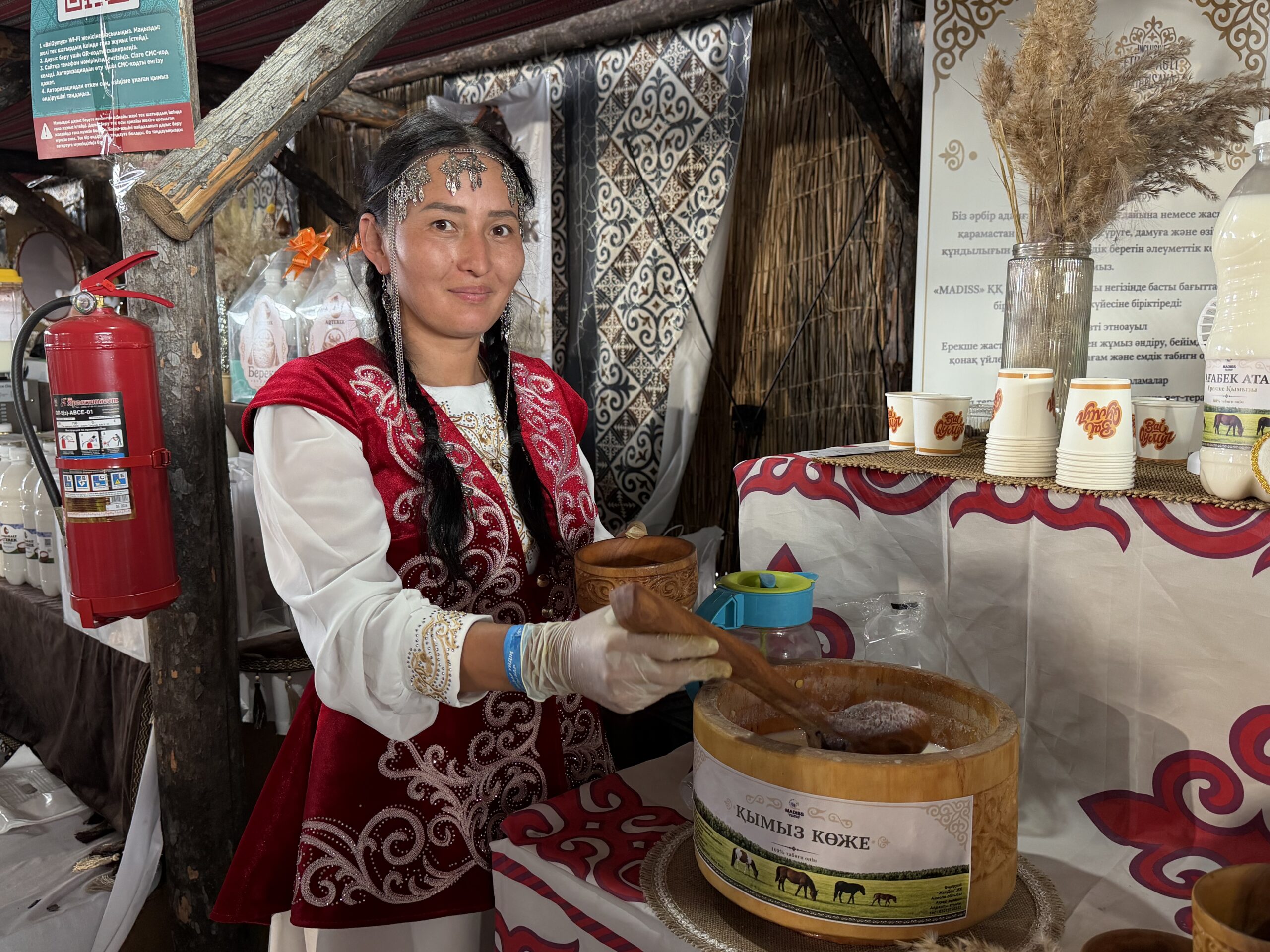
The family presented its kumys brand and inclusive initiative at BaiQymyz 2026. Photo credit: The Astana Times/ Nargiz Raimbekova
The farm was founded more than 15 years ago by Agabek Abdiorazov after he and his wife moved to the village of Akkol in the Akmola Region. Initially established as a family household, the farm gradually shifted its focus to horse breeding, reflecting Abdiorazov’s lifelong passion for animals.
According to his daughters, every horse on the farm had a name, and Abdiorazov was known for his close bond with the animals. Family members recall that he often rescued injured wild animals and believed horses deserved to roam freely rather than be kept in confined spaces.
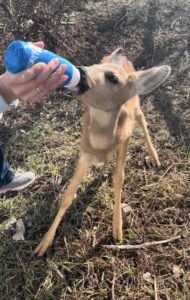
Family members recall that he often rescued injured wild animals. Photo credit: Aigerim Abdiorazova
Alongside developing the farm, Abdiorazov created his own kumys-making technique. While the mares graze on northern Kazakhstan’s pastures, the production process incorporates herbs brought from southern Kazakhstan, combining ingredients from two regions to create a distinctive flavor. The family also preserves their traditional smoking method, which gives the drink its subtle aroma without adding artificial ingredients.
“People often ask what we add to kumys, but we don’t add anything. It’s simply the smoking technique,” said Zhanat Zhailau, founder of the Agabek Ata Erekshe Kymyzy project.
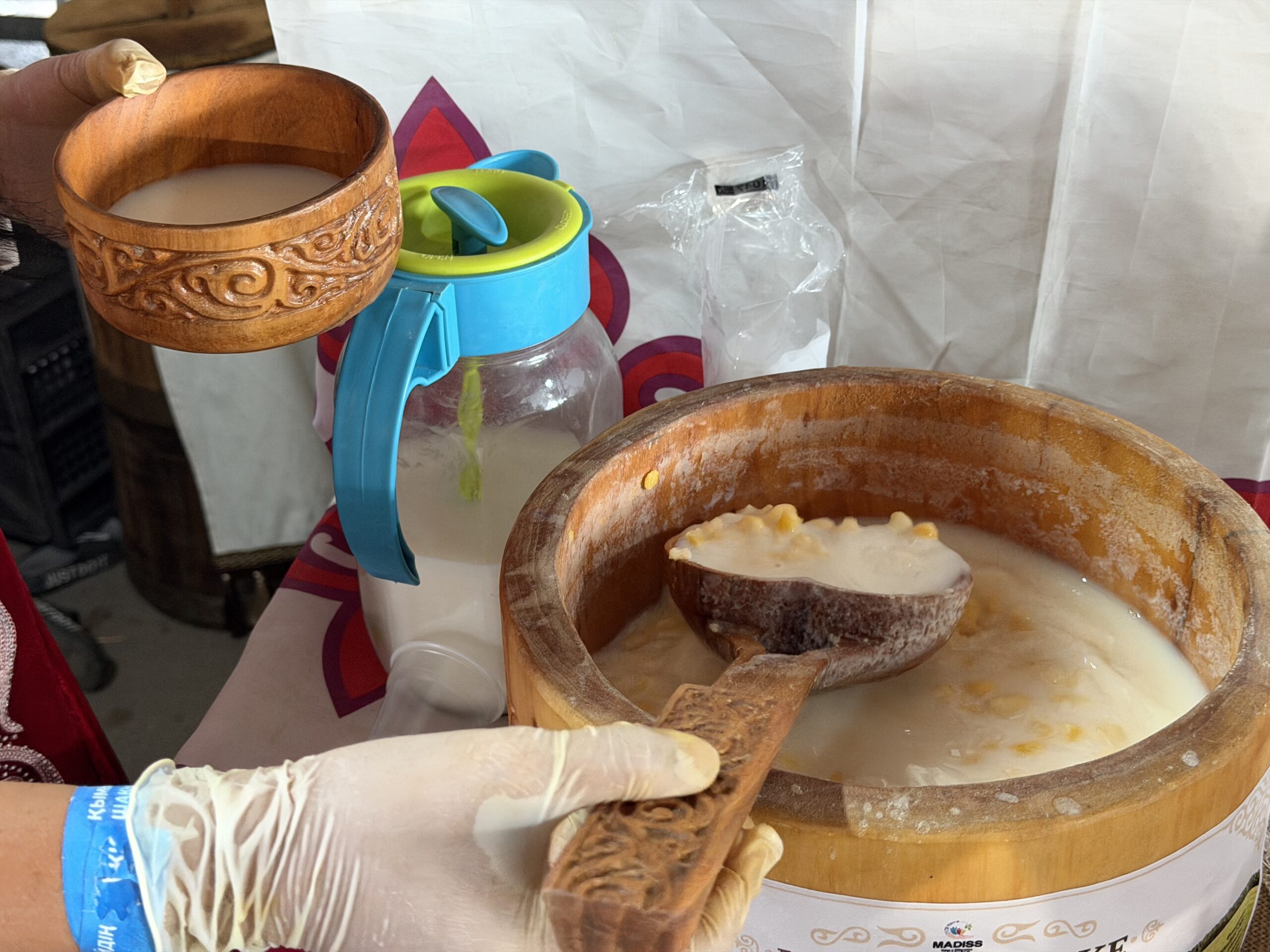
Alongside developing the farm, Abdiorazov created his own kumys-making technique. Photo credit: The Astana Times/Nargiz Raimbekova
Following Abdiorazov’s death last year, his family decided to continue not only his agricultural work but also expand its purpose. Inspired by his granddaughter Zhansaya, who has developmental disabilities, they transformed the farm into the foundation for an inclusive ethnovillage designed to help young adults develop practical skills and participate in meaningful work.
The idea grew from the family’s own experience. After turning 18, they found that opportunities for people with disabilities became significantly more limited. Working on the farm, however, gave Zhansaya a sense of independence and belonging, her relatives said.
According to the family, caring for animals and taking part in everyday farm activities helped her build confidence, improve motor skills and feel that her work contributed to something larger than herself. They now hope to create similar opportunities for other young adults facing the same challenges.
“Our goal is not to make money. We want young people with special needs to learn a craft, become more independent and have the skills to support themselves in the future,” Zhailau said.
The family presented its kumys brand and inclusive initiative at BaiQymyz 2026, where 59 kumys producers from across Kazakhstan and Russia took part. The festival also featured traditional cuisine, folk crafts and cultural performances, and it attempted to set a new Kazakhstan record by presenting 56 tons of kumys.
Looking ahead, the family hopes the project will continue to preserve traditional kumys-making while expanding into a permanent inclusive space where young adults with developmental disabilities can learn, work and remain actively involved in their communities.
