
ASTANA – The Steering Committee of the United Nations Sustainable Development Cooperation Framework presented the main parameters of a new cooperation program for 2026-2030 on Feb. 27 at Kazakhstan’s Ministry of Foreign Affairs.
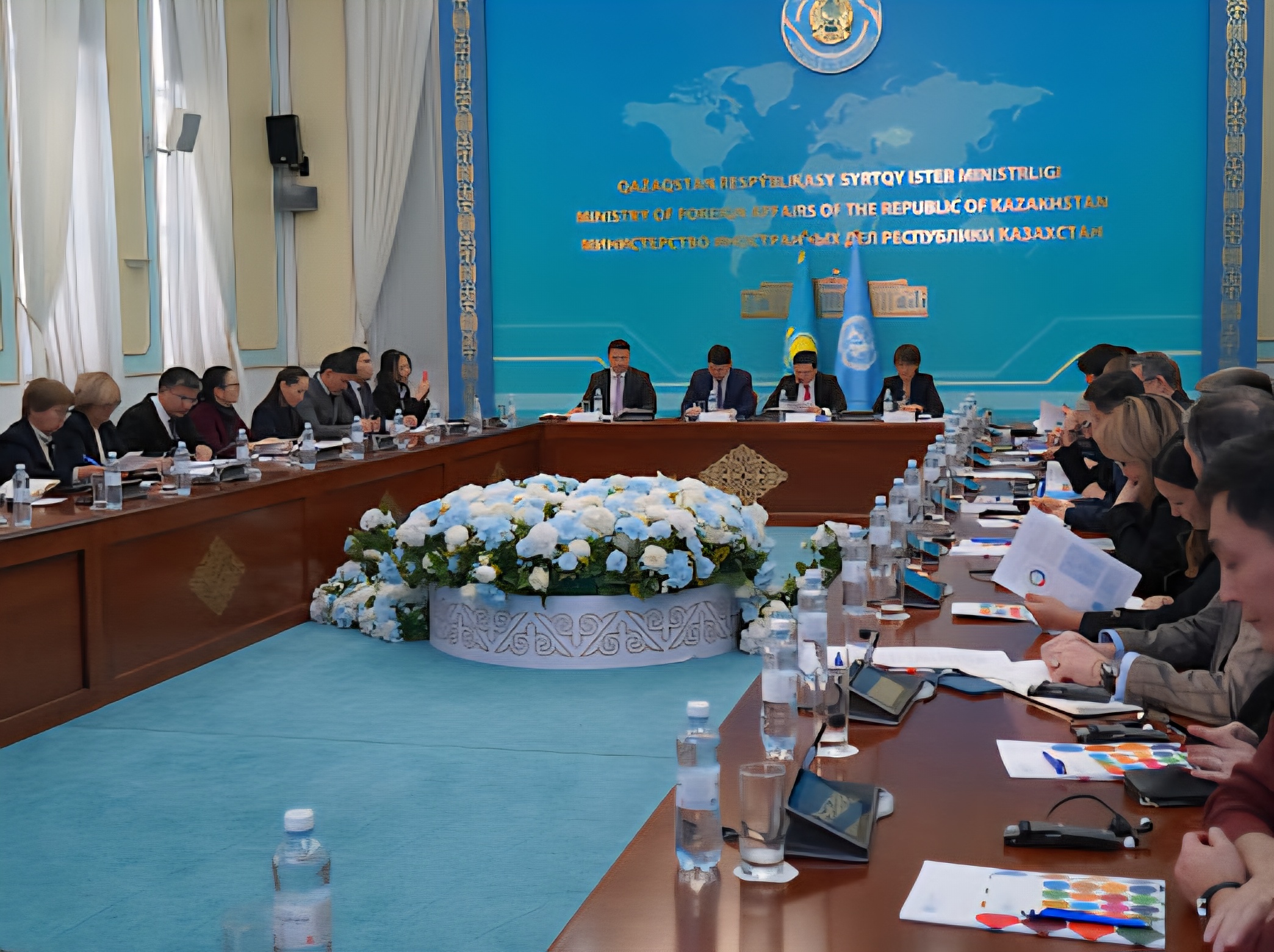
Meeting with the Steering Committee of the United Nations Sustainable Development Cooperation Framework in Astana on Feb.27 Photo credit: The Astana Times
The framework outlines four priority areas: human development, including health care, education and social protection; economic diversification and decent work; sustainable environmental development; and social cohesion.
Vice Minister of National Economy Asan Darbayev said the new framework reflects Kazakhstan’s commitment to strengthening cooperation with the United Nations and advancing the Sustainable Development Goals (SDGs).
He noted that the program includes 69 measurable indicators aligned with national development priorities. Progress will be monitored jointly with government agencies to ensure consistency with Kazakhstan’s long-term economic and social objectives.
According to Darbayev, Kazakhstan has demonstrated steady economic performance in recent years, supported by reforms and new development instruments aimed at diversification and sustainability.
Strategic partnership for sustainable development
UN Resident Coordinator in Kazakhstan Sarangoo Radnaaragchaa said Kazakhstan is making significant progress toward achieving the SDGs compared with global averages.
“Today we are presenting the results achieved under the Cooperation Framework for 2021-2025, including progress made in 2025. We will also outline plans for our joint work in 2026 and the years ahead,” she said.
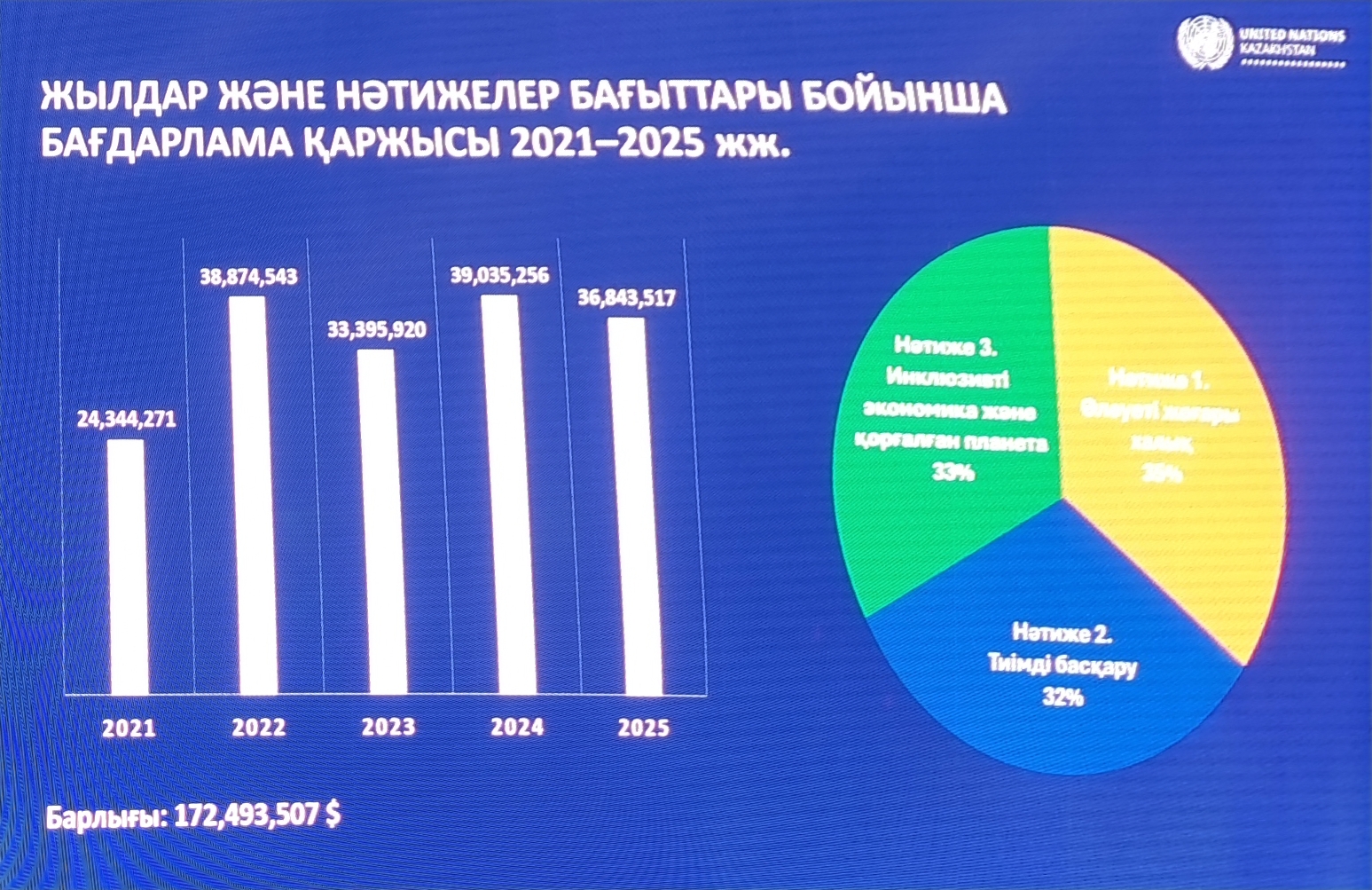
UN program resources delivered by year and result area, 2021-2025. Photo credit: The Astana Times
Radnaaragchaa noted that Kazakhstan and the United Nations signed a new Cooperation Framework for 2026-2030 last year, which was formally presented at the meeting.
“Our gathering today reflects a strong and enduring partnership. This collaboration calls on us to work together to achieve the SDGs and ensure that no one is left behind in our shared mission for a more inclusive, prosperous and sustainable future,” she said.
She described the 2026-2030 framework as a strategic partnership between the UN country team and the government, aligned with national priorities and the 2030 Agenda for Sustainable Development.
Radnaaragchaa also highlighted results achieved under the current cooperation cycle, including support for justice and rule-of-law reforms, crime prevention initiatives and strengthened gender equality policies. The UN has contributed to legal reforms, social protection measures and efforts to prevent and address gender-based violence. From 2021 to 2025, the U.N. allocated more than $172 million to program implementation. The largest shares supported SDG 3 (Good Health and Well-Being) at 27.9%, SDG 16 (Peace, Justice and Strong Institutions) at 14.6% and SDG 5 (Gender Equality) at 9.6%.
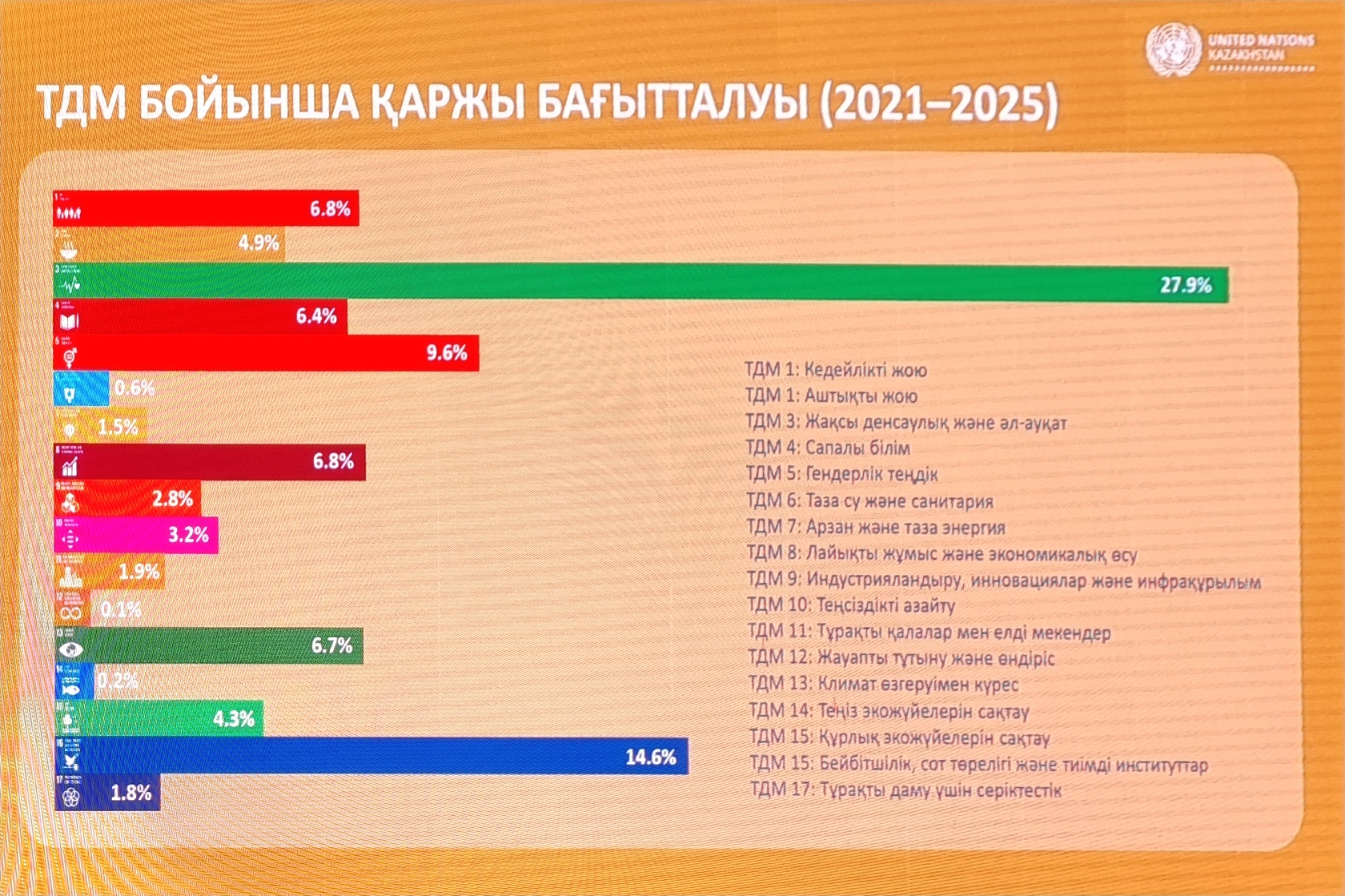
UN expenditures by SDG in 2021–2025: largest shares to SDG 3 (27.9%), SDG 16 (14.6%) and SDG 5 (9.6%). Photo credit: The Astana Times
In the environmental sphere, the UN supported Kazakhstan’s green economy transition and climate policy development, including national adaptation planning.
Climate and green transition priorities
Katarzyna Wawiernia, UNDP Resident Representative in Kazakhstan, emphasized that the new cooperation cycle marks a shift from policy design to implementation.
“In previous years, we focused on building foundations, including strategies, policy frameworks and pilot initiatives. Now Kazakhstan has a clear strategic direction. The question is how to deliver results systematically and sustainably,” she said.
She noted that the environmental pillar will focus on integrated governance of climate, land and water systems, strengthening data systems and institutional capacity for evidence-based decision-making.
Another priority is financing the green transition. UNDP plans to work with national institutions to operationalize climate finance mechanisms, particularly in water management and biodiversity protection.
The framework also emphasizes infrastructure modernization and disaster risk reduction, including improved early warning systems and integration of climate risks into planning standards.
Wawiernia highlighted plans to localize Kazakhstan’s updated Nationally Determined Contribution by linking national climate targets with regional development strategies and investment-ready projects.
She added that the framework will align climate priorities with regional development strategies and budgets and support the identification of investment-ready regional climate projects.
“This initiative is not only environmental, it is institutional, financial and developmental. In short, it will make climate ambition executable,” Wawiernia said.
