
ASTANA — Kazakhstan is positioning AI as a cornerstone of its economic future, with Prime Minister Olzhas Bektenov saying the technology could help drive sustainable growth as its global impact accelerates during his speech at the Digital Qazaqstan 2026 forum in Shymkent on March 27.
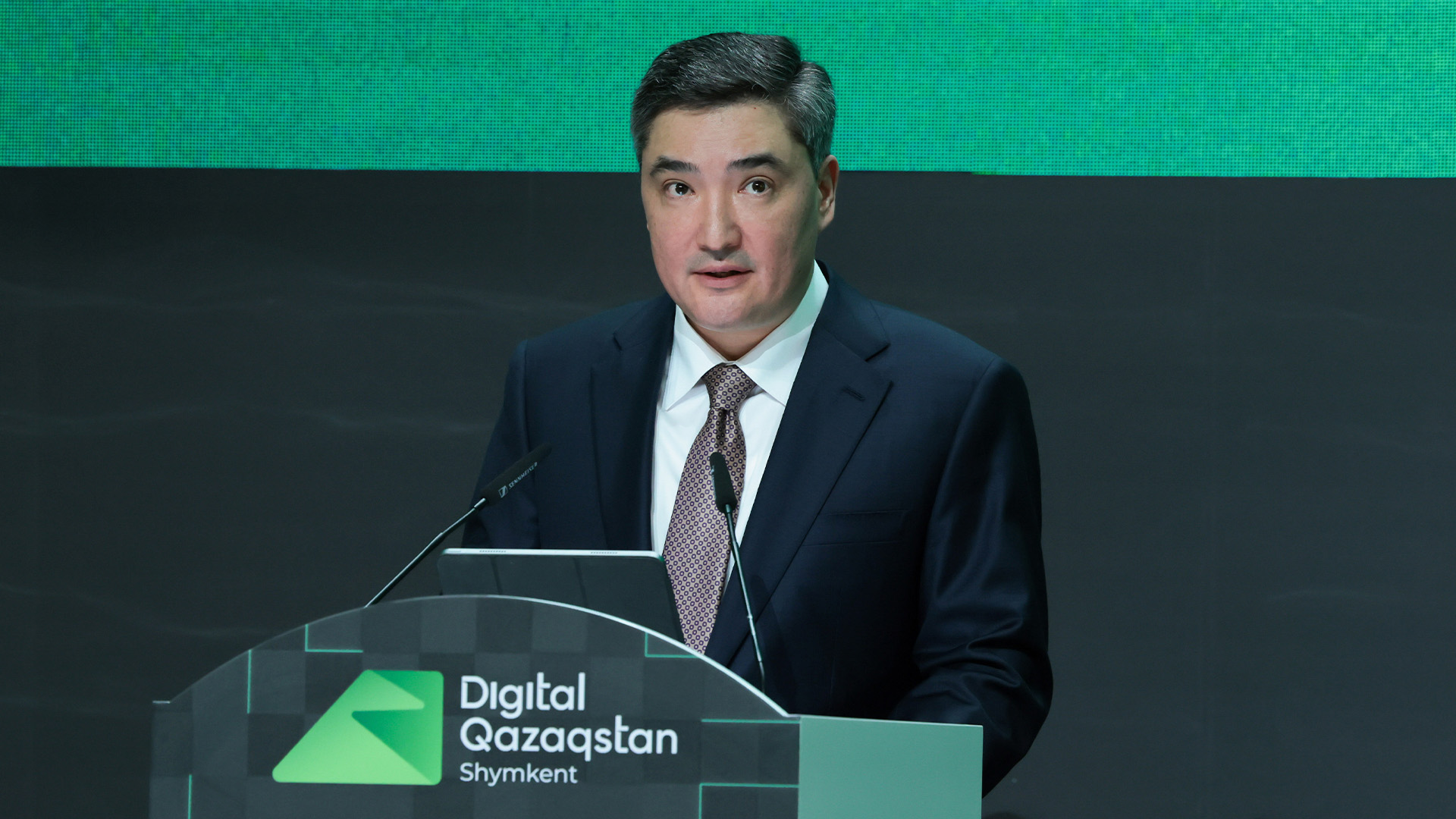
Prime Minister Olzhas Bektenov. Photo credit: primeminister.kz
Opening the plenary session, Bektenov said AI is rapidly becoming a foundational component of modern economies, comparable to energy and transport infrastructure. He outlined three priorities for the development of artificial intelligence: institutional foundations, digital infrastructure and human capital.
According to the Prime Minister’s press service, Bektenov noted that digitalization and artificial intelligence will become the backbone of the country’s new economic model. He linked the government’s digital agenda to broader political reforms, noting that a newly adopted Constitution enshrines digital rights at the highest legal level. Kazakhstan has already established a legislative framework to support AI adoption, including a law on artificial intelligence and a Digital Code designed to balance innovation with security.
“This not only provides a powerful stimulus for further sectoral development, but also reflects the state’s long-term priorities. Embedding digital rights at the highest legal level signals that our digital transformation is not only about technology, but also about clear legal guarantees, data protection, and trust,” he said.
Kazakhstan ranks 24th out of 193 countries in the UN E-Government Development Index and is among the top 10 globally for the quality of online public services. The government has set a target to transform the country into a fully digital state within three years.
Bektenov cited international estimates that AI could contribute up to $22 trillion to the global economy by 2030, describing it as a window of opportunity for Eurasian Economic Union (EAEU) economies to accelerate growth.
Infrastructure development remains a key focus. The country has deployed high-performance computing capacity, including the Alem.Cloud and Al Farabium supercomputing clusters, and is working with international partners to develop a sovereign computing hub.
A major project under development is the Data Center Valley in the Pavlodar Region, with a projected capacity of up to 1 gigawatt. The facility is expected to become one of the region’s largest data storage and processing hubs, offering international partners access to digital infrastructure through a range of cooperation models.
Bektenov also highlighted plans to introduce “data embassies,” allowing foreign governments to host digital assets in Kazakhstan while retaining full legal sovereignty over them.
The government is placing particular emphasis on industrial applications of AI. Autonomous machinery, unmanned systems and industrial robotics are already being introduced across sectors to improve safety and productivity.
In 2026, Kazakhstan plans to develop sector-specific datasets and specialized language models for industries including energy, mining, agriculture and logistics. Authorities are also introducing incentives for companies developing industrial internet of things technologies and real-time data systems.
Human capital development remains a central pillar of the strategy. A specialized university focused on artificial intelligence is expected to be established this year, alongside the rollout of the national AI-Sana program, which aims to build a multi-level education ecosystem spanning schools, professional training and tech entrepreneurship. International partnerships are also expanding. In cooperation with Google for Startups, acceleration programs are being implemented to help Kazakh startups scale globally.
“Kazakhstan has clear competitive advantages: affordable electricity and low latency make our country one of the most attractive locations for high-performance computing systems. We invite international companies to establish research hubs here, offering access to talent, data, and industrial use cases,” Bektenov concluded.
Held under the theme Industry 5.0: The Power of Collaboration, the event marked a shift from the Digital Almaty platform toward a more applied focus on digitizing key industries and integrating regions into a single technological space. More than 3,000 delegates attended, including heads of government from the EAEU, as well as representatives of global IT companies, investors and policy experts.
