
ASTANA – UNESCO’s Evaluation Body has recommended adding Kazakhstan’s Salburyny hunting festival, traditional embroidery and feltmaking to the Representative List of the Intangible Cultural Heritage of Humanity, according to a document published by the organization.
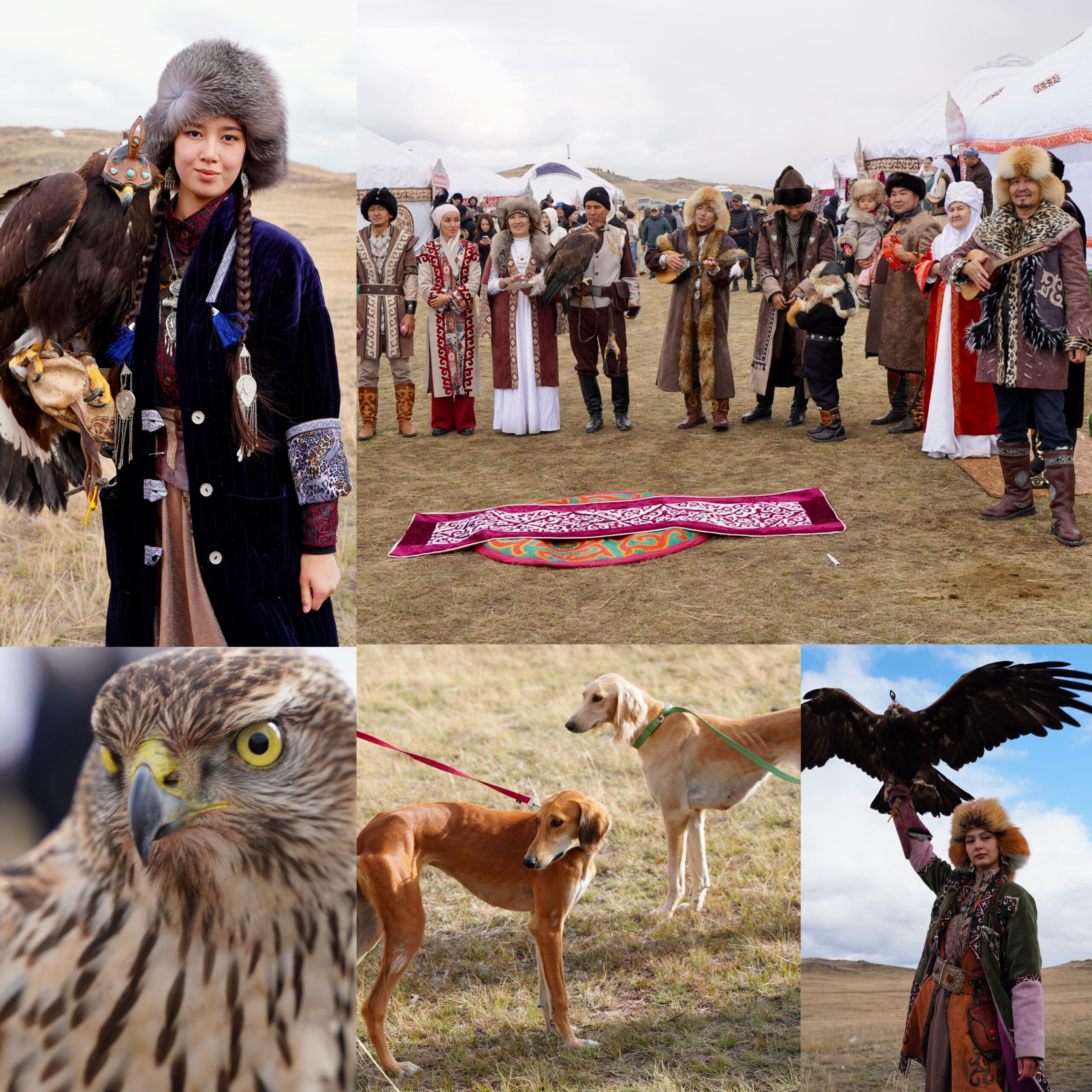
Photo credit: Fatima Kemelova/ The Astana Times
Salburyn
Rooted in nomadic traditions, Salburyny is an annual equestrian festival featuring Tazy hunting dogs and golden eagle falconry. Usually held between late autumn and early winter, the weeklong celebration brings together falconers, musicians, storytellers and young people.
Participants learn horseback riding, falconry, dog care and hunting, while the tradition promotes respect for animals, environmental awareness and cooperation across generations.
The UNESCO document said the inscription would raise awareness of an ancient tradition that combines falconry, dog breeding, horsemanship, oral traditions, music and close interaction with nature. It would also promote wildlife conservation, sustainable tourism and traditional crafts while strengthening cultural identity and intergenerational knowledge-sharing.
Salburyny was added to Kazakhstan’s National List of Intangible Cultural Heritage in 2013. The Kiran Federation, Zhalayr Shora and the Kansonar Association took part in preparing the nomination.
Art of embroidery
Kazakhstan submitted the nomination for the art of embroidery jointly with Tajikistan and Uzbekistan.
Embroidery is a traditional craft involving decorative and symbolic patterns sewn with colorful threads onto cotton, wool, silk and, in some cases, leather. It is used to decorate wall hangings, pillows, clothing, accessories, headdresses and household textiles.
Techniques vary across regions, while patterns often draw on nature and mythology, featuring flowers, animals and celestial symbols with meanings specific to local communities. The craft is practiced mainly by women, who work individually or in groups. Beyond decorating clothing and household items, embroidery provides a source of income.
Traditional feltmaking
Kazakhstan joined Azerbaijan, Iran, the Kyrgyz Republic, Mongolia, Tajikistan, Türkiye and Uzbekistan in submitting a joint nomination for traditional feltmaking. The UNESCO document praised the countries’ “exemplary cooperation” in promoting a shared cultural tradition that transcends geographical boundaries.
Felt, traditionally made from wool, is used for carpets, prayer mats, yurt coverings, clothing and accessories. The labor-intensive process involves cleaning and dyeing wool, laying it on a mat, rolling and tightening it, and then stretching and drying the material.
Feltmaking is closely linked to the cultural identity of the communities that practice it. The collective process strengthens social ties and connects generations.
A total of 59 nominations were submitted for inclusion on the Representative List this year. The Evaluation Body recommended 56 for inscription, while returning three others to the submitting countries for revisions.
The final decision is expected to be made at the session of UNESCO’s Intergovernmental Committee for the Safeguarding of the Intangible Cultural Heritage, scheduled for Nov. 30-Dec. 5 in Xiamen, China.
