
ASTANA – Autumn brings one of nature’s most remarkable seasonal events to Kazakhstan, as migratory birds cross the country on their way to warmer wintering grounds. Its diverse landscapes serve as an important corridor for numerous species, including rare birds listed in Kazakhstan’s Red Book.
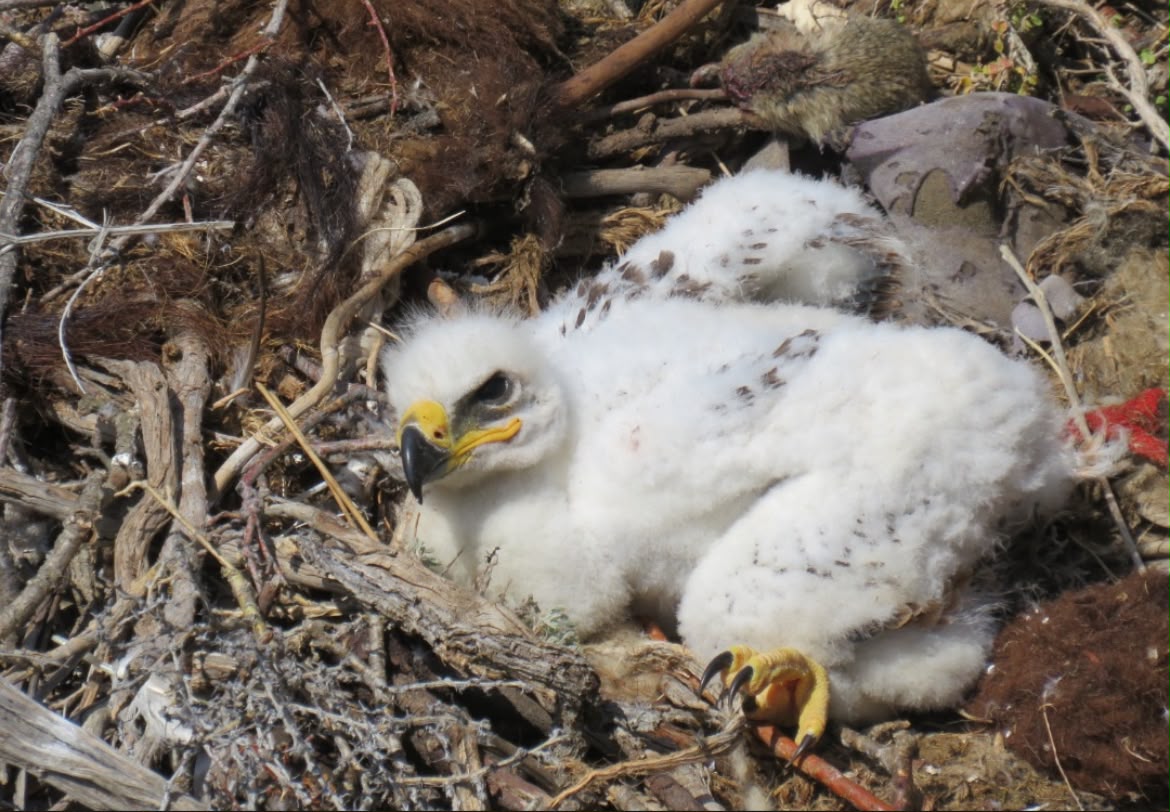
A young steppe eagle named Tungysh, born in Altyn-Emel National Park. Photo credit: the park’s press service
Whooper swans fly over Katon-Karagai National Park

Flocks of whooper swans have been spotted flying over Katon-Karagai National Park. Photo credit: gov.kz
In East Kazakhstan, flocks of whooper swans have been spotted flying over Katon-Karagai National Park, adding to the region’s autumn scenery, reported the Forestry and Wildlife Committee of the Ministry of Ecology and Natural Resources on Nov.3.
Kazakhstan is an important stopover along the migration route of northern whooper swan populations. After raising their young in wetlands across western and eastern Siberia, the birds head toward Central and South Asia as winter approaches.
The committee has also highlighted the swans’ distinctive behavior, which has inspired legends for centuries. The birds form strong pairs that can remain together for many years and often for life, although they may find new mates after losing a partner.
“Whooper swans are indeed monogamous. They form strong pairs that can last for many years and often for life. However, after a period of loss, a swan can eventually find a new mate. This is a natural part of life in the harsh conditions of the wild,” the committee said.
Experts encourage residents and visitors to look up while walking through the region’s mountain valleys. The flocks’ distinctive trumpet-like calls can be heard until the lakes and rivers freeze over.
Young steppe eagle begins its first migration
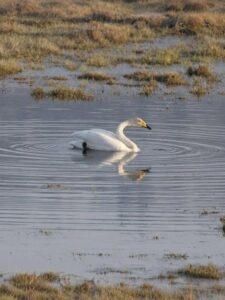
Kazakhstan is an important stopover along the migration route of northern whooper swan populations. Photo credit: gov.kz
While the swans follow established seasonal routes, researchers are also tracking the first migration of a young steppe eagle named Tungysh, whose journey offers a closer look at how individual birds navigate the region.
Born in Altyn-Emel National Park, Tungysh was still a nestling earlier this summer. On July 20, park staff and specialists from the Institute of Zoology fitted the young eagle with a solar-powered GPS tracker to monitor its movements.
“Now it has begun its migration. Alone, without its parents, without a map, for the first time in its life,” the national park said.
The eagle’s route has taken it through Altyn-Emel, Konayev, Almaty, Bishkek, Taraz, Shymkent and Samarkand.
According to the latest GPS data, Tungysh is now in Uzbekistan’s Kashkadarya Region, near Karshi. The bird has traveled around 1,400 kilometers since beginning its journey.
Tracking the eagle’s movements also has scientific value. The steppe eagle is listed in Kazakhstan’s Red Book, and GPS monitoring helps specialists study migration routes, identify stopover sites and determine where the birds may face threats.
Young black vulture reaches the Kyrgyz Republic
Tungysh is not the only young bird whose journey is being followed by researchers. A young black vulture named Emel has also begun exploring new territory, recently crossing into the Kyrgyz Republic as part of a satellite-tracking project called Emel’s Diary.
Emel’s story began in July 2026, when staff at Altyn-Emel National Park discovered a black vulture chick. The species typically nests on high cliffs and raises only one chick a year, making each young bird that survives to independent flight important for the population.
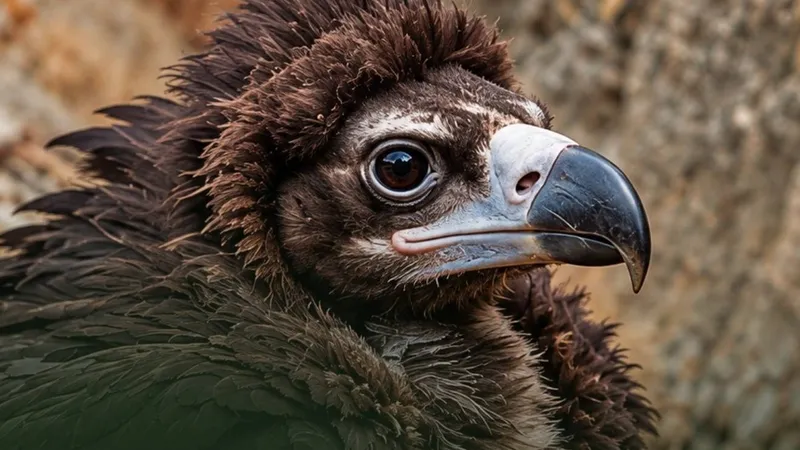
A young black vulture named Emel has begun exploring new territory. Photo credit: gov.kz
To monitor the chick’s development and activity at the nest, specialists installed a camera trap. It recorded the parents bringing food and the chick growing. Researchers later fitted Emel with a satellite tracker, allowing them to follow its movements after it left the nest.
In October, experts reported that Emel had begun flying independently and gradually exploring the surrounding area. Satellite data showed that the bird had traveled around Basshi and Aktobe, the Kapchagai Reservoir area and the Ili River valley.
With each flight, the young vulture is exploring more distant territory. Scientists say it may continue south through Central Asia and could eventually reach India.
Satellite monitoring allows specialists to track Emel’s route and study the species’ migration patterns. The Kyrgyz Republic is the latest stop on the bird’s journey, while its next destination remains uncertain.
