
ASTANA – Educators and higher education experts worldwide gathered in Astana on Oct. 27-28 for Nazarbayev University’s Teaching Conference 2026 to discuss ways to improve teaching quality, support faculty development and address the challenges posed by artificial intelligence, reported the university’s press service.
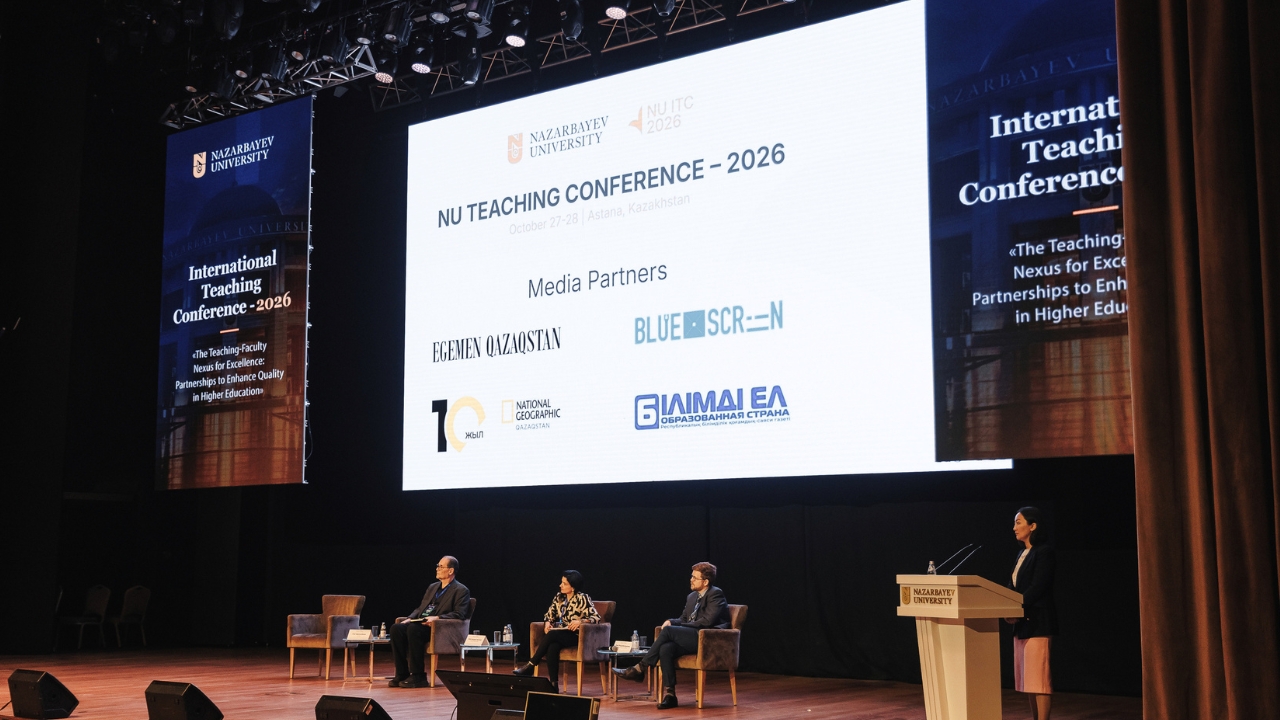
Teaching Conference at Nazarbayev University on Oct.27-28. Photo credit: Press Office Nazarbayev University
The conference brought together around 200 participants from Kazakhstan, the Kyrgyz Republic, Uzbekistan, the United Kingdom, the United States, India, the Philippines, Pakistan, the United Arab Emirates, Mexico and Türkiye.
Discussions focused on strengthening teaching skills, advancing academic leadership, making student assessments more inclusive, using AI responsibly, and improving quality assurance in higher education.
In her opening remarks, Dr. Aida Sagintayeva, Dean of NU Graduate School of Education and Vice Provost for Academic Planning and Budget, emphasized that teaching quality depends not only on faculty expertise but also on the conditions universities create to support professional growth.
“Many of the challenges we describe as problems with teaching quality are, at least in part, rooted in how universities themselves are structured,” Sagintayeva said.
She noted that universities expect faculty members to excel in research, teaching and student supervision but do not always provide enough time or opportunities to improve their teaching practices. Universities should go beyond assessing educational quality by fostering professional exchange, collaboration and ongoing faculty development.
Representatives of the U.K.-based organizations Advance HE and the Quality Assurance Agency for Higher Education shared approaches to strengthening teaching skills, encouraging professional reflection and improving educational processes.
Professor Roger Dalrymple, Oxford University, UK, highlighted the value of faculty learning from one another.
“Teachers can learn a great deal from one another, especially when they use reflective tools that allow them to discuss their teaching experiences together,” he said.
Dalrymple recommended Advance HE’s Professional Standards Framework (PSF) as a tool to help educators reflect on their teaching practices and discuss approaches to learning with colleagues.
The use of generative AI in education was another major topic. Douglas Hartman, a professor at Michigan State University, said AI should be used to address students’ individual needs, support their independence and strengthen critical thinking.
He said faculty members should learn to use new technologies and also discuss with students how to apply them effectively and ethically. Hartman encouraged educators to experiment with new approaches and make deliberate decisions about where and how generative AI should be used in teaching and learning.
Participants also discussed how external reviews, accreditation and student feedback can help universities meet quality standards while identifying ways to improve teaching and learning.
The conference highlighted the importance of international collaboration and professional dialogue in advancing higher education. Sharing experiences across universities and countries can help educators address common challenges and adapt effective practices to their own national contexts.
