
ASTANA – Kazakhstan plans to expand domestic pharmaceutical production through eight major investment projects worth a combined $862 million, with plans to manufacture 494 types of medicines and create more than 1,200 jobs, Health Minister Akmaral Alnazarova said at a government meeting on Nov.3.

Photo credit: Shutterstock
The projects are expected to strengthen the country’s pharmaceutical industry, expand the range of locally produced medicines and reduce reliance on imports. Production will be introduced in stages, with the first 300 types of medicines scheduled to be manufactured between 2027 and 2030.
Digital monitoring of vaccine supplies
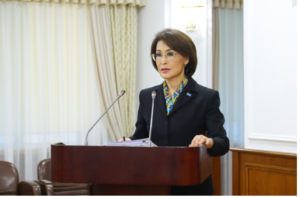
Health Minister Akmaral Alnazarova at an Oct.3 government meeting. Photo credit: Ukimet Telegram channel
Kazakhstan is also developing a unified digital system to monitor the storage and transportation of vaccines. According to Alnazarova, the system will detect temperature deviations in real time, help maintain vaccine quality and improve oversight of immunization programs.
The system is expected to connect more than 3,500 facilities and over 800 vehicles, enabling authorities to monitor temperature conditions throughout the delivery process, from warehouses operated by the single distributor to medical organizations.
Kazakhtelecom has been selected to operate the system. Its rollout will be phased, with 50% of logistics chains expected to be covered in 2026 and full coverage targeted by 2029.
Kazakhstan allocates around 38 billion tenge (US$84 million) annually to purchase vaccines and other immunobiological products. The government expects digital monitoring to reduce vaccine losses and improve inventory management.
Expanded access to medicines
The government also plans to expand the list of medicines provided free of charge to patients through outpatient care. The updated list is expected to include 22 medicines for the treatment of 14 diseases.
Meanwhile, Kazakhstan began its procurement campaign for 2027 medicines three months earlier than usual. By early October, the first stage of procurement procedures had been completed, with contracts signed for more than 84% of the planned list of medicines. The figure is expected to reach 95% by the end of the year. Deliveries to hospitals are scheduled to begin Jan. 5, 2027.
Nurlybek Assylbekov, chairman of the board of SK-Pharmacy, said purchases under long-term contracts with domestic manufacturers had increased by 30%.
Direct procurement agreements with foreign manufacturers have also expanded, with 18 new companies from Germany, Poland and Finland joining the process. The number of medicines purchased directly has nearly tripled, generating savings of more than 40 billion tenge (US$88 million), 10 times the amount recorded in 2025.
“Total savings in 2024-2026 amounted to 223 billion tenge (US$493 million), including 84 billion tenge (US$ 185 million) this year. Procurement through the United Nations agencies generated savings of 16 billion tenge (US$35.3 million) in 2026, compared with 5.7 billion tenge (US$ 12.6 million) a year earlier,” Assylbekov said.
A new pharmaceutical plant is also planned in Almaty, with investment exceeding 39 billion tenge (US$86 million). The facility is expected to expand domestic drug production, increase the localization of international medicines and lay the groundwork for manufacturing pharmaceutical ingredients in Kazakhstan.
The plant will be developed in stages. From 2030 to 2033, the project provides for the production of finished dosage forms, technology transfers and the development of full-cycle manufacturing. The next phase, scheduled for 2034-2036, will focus on producing active pharmaceutical ingredients to gradually reduce reliance on imported raw materials.
Under the investment agreement, the project provides for the localization of 40 medicines identified by their international nonproprietary names, representing 68 production items across 12 therapeutic areas. The main focus will be oncology and hematology, which account for 17 and seven of the medicines, respectively.
The first production launches are scheduled for 2029. Between 2029 and 2032, the plant is expected to begin manufacturing 23 of the 40 medicines. New production lines for rheumatology, immunology and pulmonary arterial hypertension treatments are planned for 2030. In 2032, the facility is expected to launch production of six biologic medicines, including five for oncology and one for hematology.
