
ASTANA – Kazakhstan has retained its position as Central Asia’s leading higher education system in the QS World University Rankings: Asia 2027, with three universities placing among the region’s top 100. Nazarbayev University recorded the country’s most significant improvement, rising 62 places to 139th.
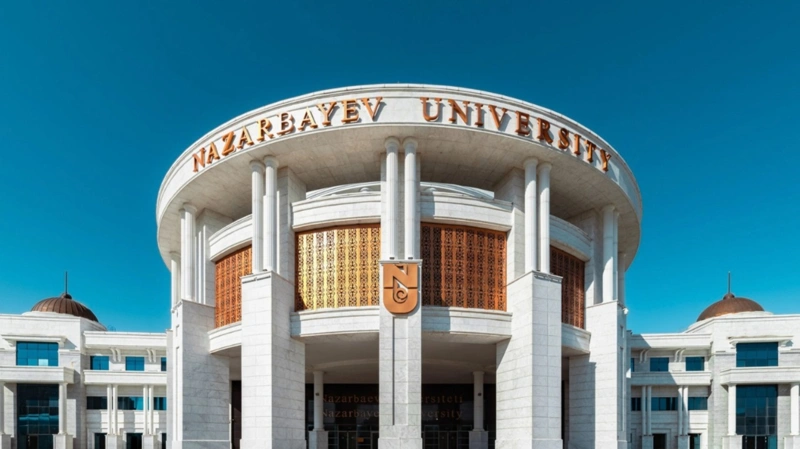
Photo credit: Nazarbayev University.
The rankings, released on Nov. 3 by international higher education analysts QS Quacquarelli Symonds, feature 1,722 universities from 26 higher education systems across Asia.
Farabi University remains Kazakhstan’s highest-ranked institution, placing 46th, although it dropped eight positions from last year. Gumilyov Eurasian National University ranked 62nd, while Satbayev University took 89th place, down 10 positions.
Kazakhstan has 51 universities in this year’s rankings, including seven new entrants, giving it the 10th-largest representation among Asian higher education systems.
Nazarbayev University was the country’s standout performer, climbing from 201st to 139th place in its second appearance in the rankings. It recorded particularly strong results in research collaboration and international faculty.
Sarsen Amanzholov East Kazakhstan University also made notable progress, rising 64 places to 618th. Meanwhile, SDU University experienced the sharpest decline among Kazakh institutions, falling 149 places to 691st.
Strengths in internationalisation, challenges in research
Kazakhstan’s universities performed above the Asian average in seven of the ranking’s 11 indicators. The country showed particular strength in student mobility, employer reputation and faculty-to-student ratios.
Its strongest result was in outbound exchange students, where Kazakhstan scored 58.8 against the regional average of 22.6. The country also exceeded the Asian average in employer reputation, with a score of 38.8 compared with 24.9, and faculty-to-student ratio, scoring 52 against 34.6.
Farabi University ranked 12th in Asia for both faculty-to-student ratio and outbound exchange students. Nazarbayev University placed 24th for international research network and 26th for international faculty.
The results reflect Kazakhstan’s continued efforts to strengthen international links in higher education, including the expansion of foreign university branches. More than 30 foreign university branches have opened in the country.
Research performance, however, remains a major challenge. Kazakhstan recorded an average score of 3.8 for citations per paper, significantly below the Asian average of 35.2. According to QS, 97% of Kazakh universities recorded weak results in this indicator. The country also saw widespread declines in research productivity, measured by papers per faculty member.
QS Senior Vice President Ben Sowter said Kazakhstan continued to lead Central Asia, but the latest results highlighted the need to turn increased research investment into stronger academic impact.
“Nazarbayev University’s rise into the top 200 shows what a research-intensive, internationally connected university can achieve. The challenge now is to translate rising R&D spending into research impact across the wider system,” he said.
The government has been increasing its focus on research development, with spending on research and development more than doubling since 2023.
Kazakhstan’s position in the regional rankings
The University of Hong Kong retained first place in Asia for the second consecutive year, followed by Peking University. Tsinghua University climbed from ninth to third, giving China two universities among the top three for the first time since 2023.
The National University of Singapore and Nanyang Technological University, which shared third place last year, fell to sixth and eighth, respectively.
China led the region in the number of universities in the top 20 and new entries, while Hong Kong SAR had the strongest improvement rate among higher education systems with at least five ranked institutions.
The QS World University Rankings: Asia assess universities using 11 indicators tailored to the region, including academic and employer reputation, research performance, teaching resources, internationalization and student mobility.
