
ASTANA – In 1864, a school with just 16 boys opened in Turgai, marking an important step toward expanding secular education across the Kazakh steppe. Its founder, Ybyrai Altynsarin, would become one of the most influential figures in Kazakh educational history, a legacy Kazakhstan honors on the 185th anniversary of his birth on Nov. 2.
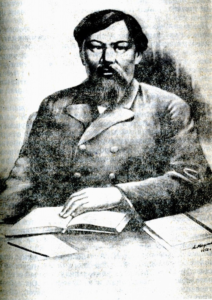
Ybray Altynsarin, a pioneering Kazakh educator, writer and ethnographer. Photo credit: ratel.kz
Altynsarin’s efforts to expand access to schooling, develop educational materials in the Kazakh language and promote learning among girls transformed education across the Kazakh steppe.
Born on Nov. 2, 1841, in what is now the Kostanai Region, Altynsarin lost his father at an early age and was raised by his grandfather, Balgozhy Zhanburchin. In 1850, he enrolled in a boarding school for Kazakh children under the Orenburg Border Commission, graduating seven years later.
In 1860, he was appointed to establish a primary school for Kazakh children in a small town of Turgai. Despite limited funding and a resistance from local authorities, Altynssrin pursued the project, and the school finally opened on Jan. 8, 1864, with 16 boys enrolled.
Altynsarin was committed not only to teaching but also to improving students’ moral and intellectual development. In a letter dated March 16, 1864, he described his enthusiasm for the work, writing that the boys had learned to read and write in Russian and Tatar within just three months.
Building a modern education system
In 1879, Altynsarin was appointed inspector of schools in the Turgai Region, a position he held until his death. From that position, he helped lay the foundations of a broader and more modern education system, opening four two-class Russian-Kazakh schools across the region and supporting the establishment of vocational, agricultural and girls’ schools, as well as schools for the children of Russian settlers.
He placed particular emphasis on the quality of school facilities and the availability of books. Altynsarin planned to establish libraries for teachers and students at schools throughout the region, raising money for the initiative.
“The purpose of these libraries is not only for students and teachers to use the books,” he wrote, “but also for graduates and literate people in general to have places in the steppe from which they can borrow useful books and guides for further self-education.”
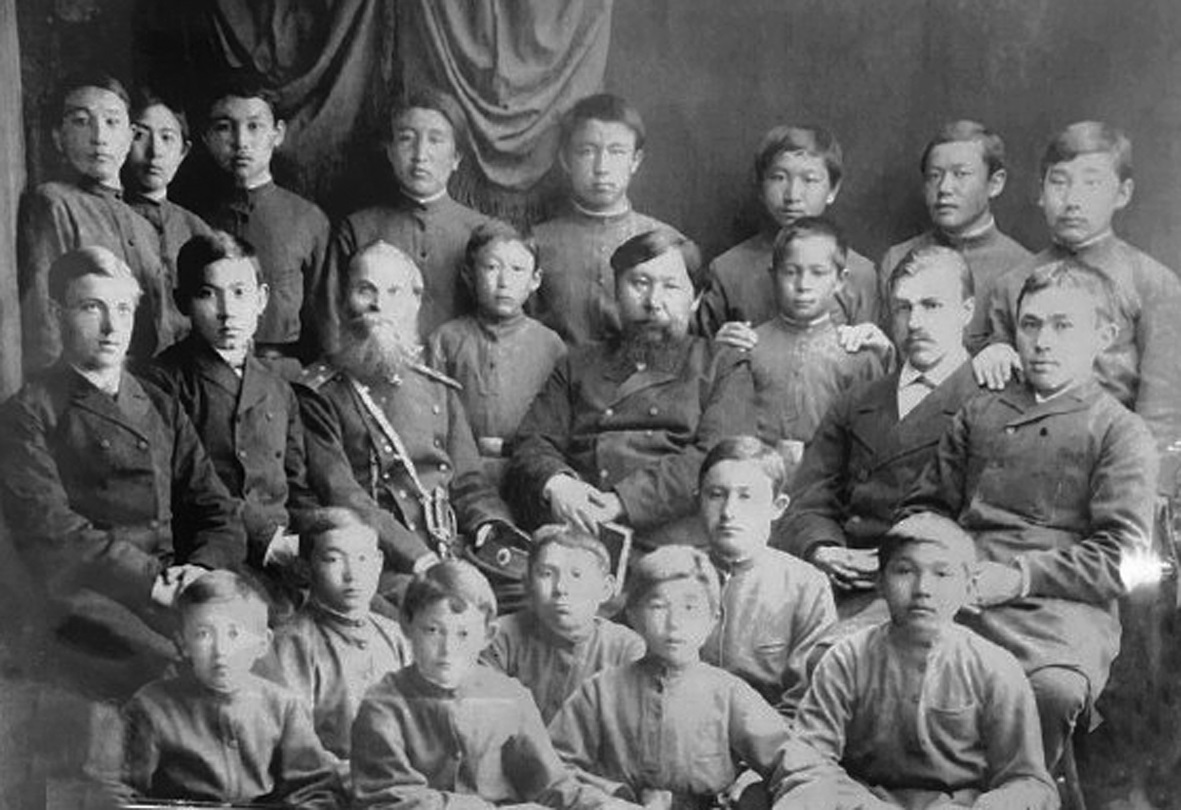
Altynsarin was committed not only to teaching but also to improving students’ moral and intellectual development. Photo credit: okmpu.kz
Altynsarin was also a strong advocate for expanding educational opportunities for girls. With his support, a girls’ school opened in Irgiz, followed by similar institutions in Turgai, Kostanai and Aktobe in the years after his death.
Recognizing the importance of teacher training, Altynsarin supported the establishment of a teachers’ school to prepare Kazakh educators. He also promoted libraries at schools, raising funds to provide books and learning materials for both students and teachers. He believed these libraries should serve not only pupils but also people who had completed their studies and wished to continue learning independently.
These efforts reflected his broader vision: an education system supported by trained teachers, accessible learning materials and institutions that could serve the community.
Contribution to Kazakh literature
Beyond his work in education, Altynsarin helped shape the development of Kazakh written literature. He adapted the Cyrillic script for writing Kazakh and translated works by Russian authors, including Lev Tolstoy, Ivan Krylov and Konstantin Ushinsky, making their writings accessible to Kazakh readers.
His own literary works included stories, fables, poems and adaptations of folklore. Among his best-known stories are “The Son of a Rich Man and the Son of a Poor Man,” “Mother and Son” and “The Clean Spring”. Through his writing, he promoted education, ethical conduct and the ideals of enlightenment.
Altynsarin also documented Kazakh customs and traditions as an ethnographer. In 1868, he presented a study of courtship and wedding traditions in the Orenburg region to the local branch of the Imperial Russian Geographical Society. His research combined observations of everyday life with criticism of practices he considered outdated.
A lasting legacy
Altynsarin died at 47 on July 29, 1889, and was buried near his home on the banks of the Tobol River in what is now Kostanai.
His influence extended far beyond the schools he established. Through his textbooks, literary works and efforts to expand access to education, including opportunities for girls, Altynsarin helped make learning more accessible to generations of Kazakh children. He id remembered as one of Kazakhstan’s foremost educators and enlightenment figures, whose belief in learning and the development of local expertise helped shape the country’s modern educational tradition.
