
ASTANA — A premature baby flown more than 4,000 kilometers from Thailand to Kazakhstan for emergency medical care was discharged from an Almaty hospital on July 21 after two months of treatment. Aslan Aliyev was just one month and 18 days old when a medical aviation team transported him from Phuket to Almaty with severe complications and an extremely low body weight, according to Kazakhstan’s Health Ministry.
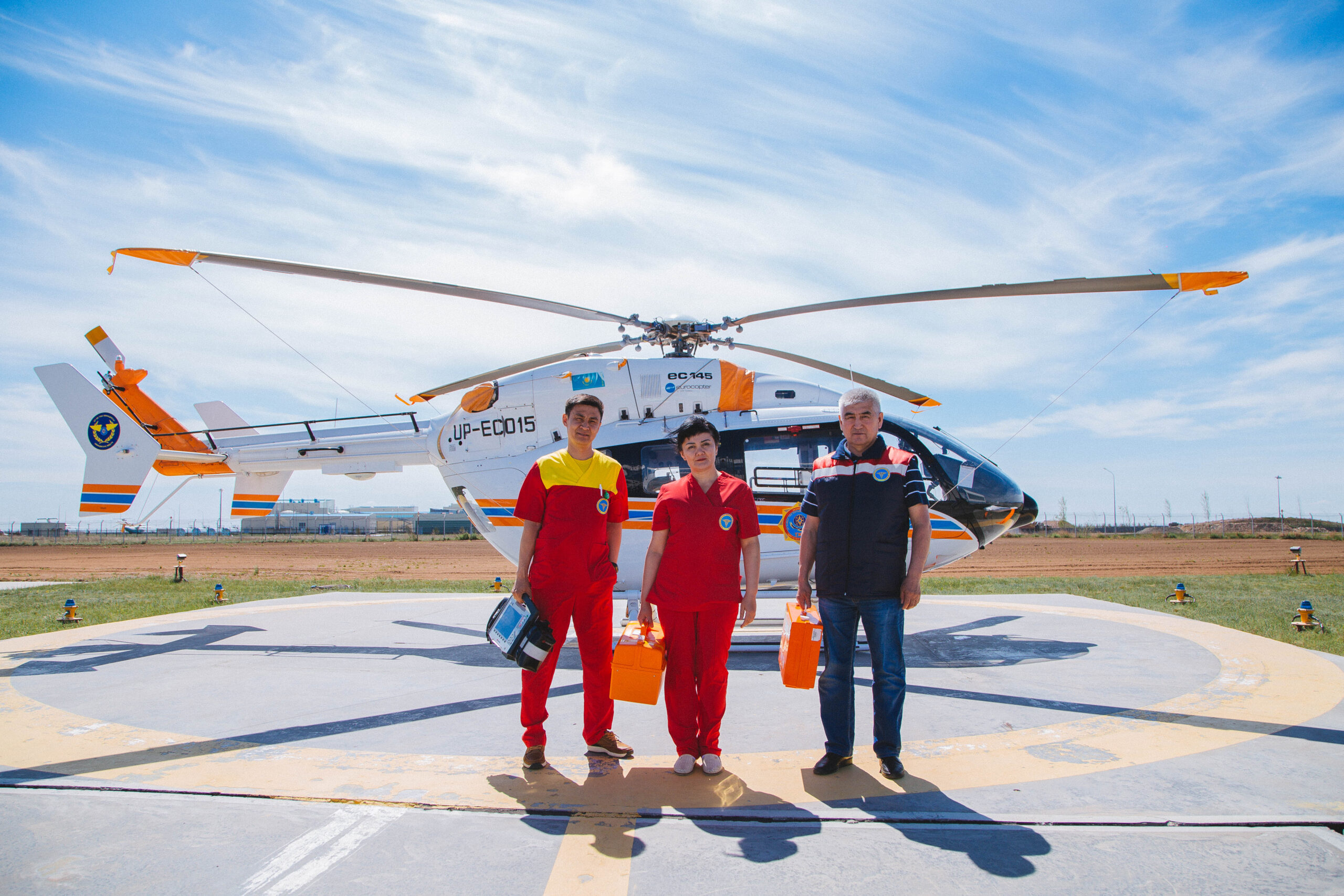
Medical aviation crew in Kazakhstan. Photo credit: National Coordination Center for Emergency Medicine
After emergency surgery and intensive treatment, he gained 1.2 kilograms, reaching 2.5 kilograms by the time he was discharged.
Aliyev’s evacuation illustrates the broader role of Kazakhstan’s medical aviation system, which connects critically ill and injured patients with specialized treatment when distance, geography or the lack of appropriate care nearby makes ground transport impractical.
In the first eight months of 2026, it transported 1,543 patients on 1,495 flights.
“A significant share of cases involves pediatric patients, including newborns, patients with obstetric and gynecological conditions, as well as people with various types of injuries,” Yerzhan Adilbekov, chairman of the National Coordination Center for Emergency Medicine, told The Astana Times.

Aslan Aliyev receives treatment after his medical evacuation from Thailand to Kazakhstan. Photo credit: Ministry of Health
For a country spanning vast distances and containing remote settlements hundreds of kilometers from major hospitals, the service is designed to close one of the most consequential gaps in emergency care: getting patients to the right specialists in time.
“The need to involve medical aviation is determined primarily by the severity of the patient’s condition, the need for specialized medical care, the absence of the required type of care at the patient’s location, and the impossibility or inadvisability of transportation by ground,” he added.
Connecting patients with specialized care
According to the ministry’s Sept. 21 statement, medical aviation performs up to 2,000 flights annually. In addition to transporting patients, medical teams provide care during flights, deliver specialists to patients and, when necessary, perform operations at the patient’s location.
Doctors also conducted 4,703 remote consultations in the first eight months of 2026, connecting regional medical teams with specialist support without requiring patient transfer.
The World Health Organization’s 2025 operational guidance for ambulance systems emphasizes coordinated dispatch, medical oversight, clinical protocols, communication and safe patient transfer as components of prehospital emergency care. The guidance also provides a framework for remote medical advice to support clinical decisions in the field.
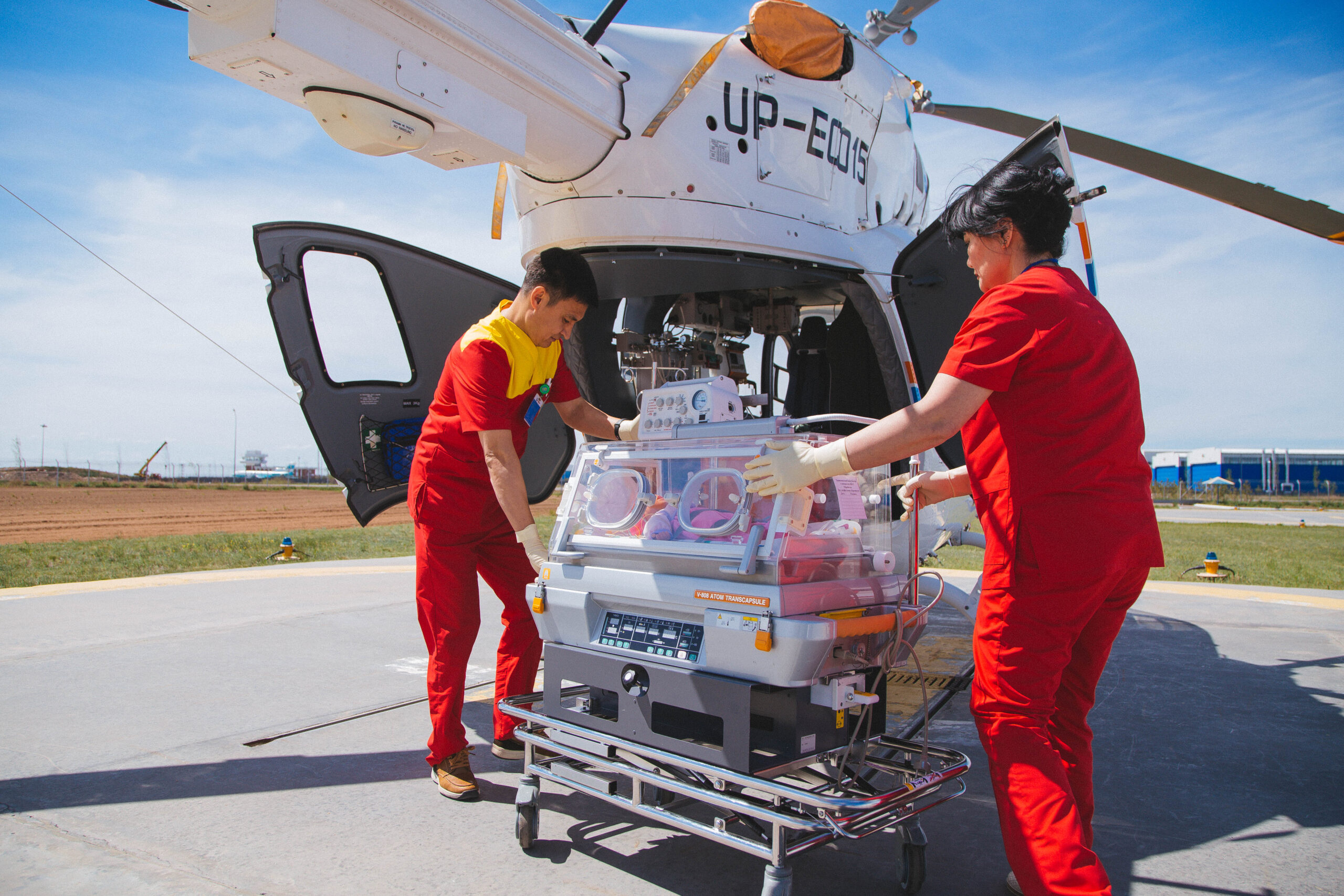
Medical team prepares a neonatal transport incubator. Photo credit: National Coordination Center for Emergency Medicine
According to Adilbekov, Aktobe, Abai, Zhambyl, and Kyzylorda Regions have recorded some of the highest levels of medical aviation use in recent years.
“The high demand for medical aviation in these regions is associated with the large territorial extent of the regions, the presence of remote and hard-to-reach settlements and significant distances to medical organizations of the required level. Long travel distances can negatively affect a patient’s condition, while there is also demand for particular types of specialized medical care and relevant specialists,” he said.
Medical aviation also operates beyond Kazakhstan’s borders. According to the ministry, during the first eight months of 2026, medical aviation teams carried out nine international flights to assist and transport Kazakh citizens from Albania, China, Italy, Russia, Thailand, Türkiye and Uzbekistan.
In 2025, nine such flights brought patients back from Türkiye, Germany, South Korea, Vietnam, the Kyrgyz Republic and Egypt.
Adilbekov said a medical executive committee reviews such cases based on records and information provided by the foreign medical institution. The committee determines whether transportation is medically necessary and possible under Kazakhstan’s regulations.
“Financing for the transportation of Kazakhstan’s citizens from abroad through medical aviation is provided from the state budget within the framework of designated public expenditures,” he said.
Response time and weather constraints
Under contracts governing medical aviation services, an aircraft and crew must be ready for an operational request within one hour from May 15 to Oct. 15 and within one hour and 30 minutes from Oct. 16 to May 14.
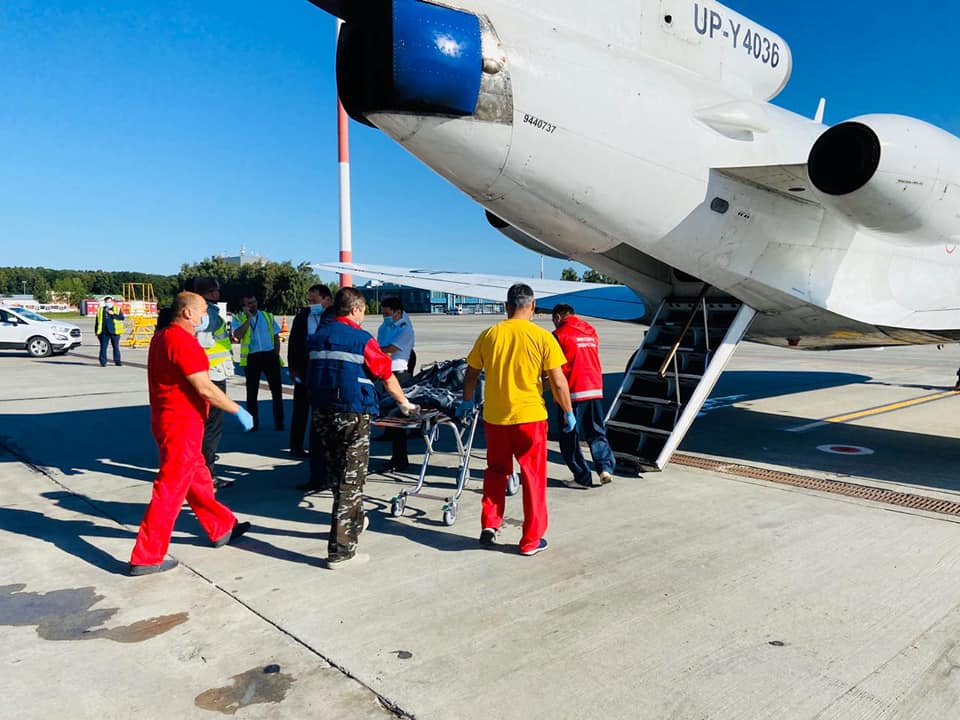
Medical team transports a patient by air. Photo credit: National Coordination Center for Emergency Medicine
“The total time required to transport a patient to a medical organization is not fixed and depends on flight duration, distance, weather conditions, the route and the need for medical interventions during transportation,” said Adilbekov.
“Thus, the time standard primarily provides for the aircraft’s operational readiness for departure, while the duration of the entire medical transportation is determined by the specific clinical and logistical situation,” he added.
According to data provided by the center, weather accounted for 236 of 302 canceled medical aviation requests in 2025.
The center monitors forecasts, airfields, landing sites, routes and aircraft capabilities when planning flights. When aviation is not possible, alternatives may include ground transportation, another route or landing site, or remote medical support.
“Patient, medical team and crew safety is an unconditional priority in organizing every flight. At the same time, it is impossible to completely eliminate cancellations associated with adverse weather conditions, since any decision to operate a flight must comply with aviation safety requirements,” said Adilbekov.
Measuring outcomes
The center assesses the timeliness of care, whether patients reach facilities capable of providing the required treatment and their subsequent outcomes. Receiving medical organizations provide the center with follow-up information on transported patients.
According to the center, 92% of patients treated in 2025 had a favorable outcome.
“The patient’s outcome depends not only on the fact and method of transportation, but also on the severity of the disease or injury, the patient’s initial condition, the timeliness of seeking medical care, the amount of care provided at the prehospital and hospital stages and other clinical factors,” said Adilbekov.
The figures place the number of flights in a broader clinical context: reaching a hospital is one stage in a chain of care that begins before departure and continues after handover.
International models
For comparison, other countries with large territories, difficult geography or sparsely populated regions have developed different models of aeromedical care to address similar challenges of distance and access.
Norway’s nationwide air ambulance service is part of the country’s national prehospital chain of care. It is publicly financed and owned by four regional health authorities, while private operators handle aviation operations and public hospitals employ the doctors and nurses aboard the aircraft. According to Air Ambulance Services of Norway, the service supports approximately 20,000 patients annually and operates 14 helicopters from 13 bases and 10 fixed-wing aircraft from seven bases.
Kazakhstan similarly relies on contracted aviation capacity. Adilbekov said eight airlines currently provide aircraft for medical aviation services across the country.
The fleet is being renewed gradually. Some An-2 aircraft have been replaced by helicopters operated by Kazaviaspas, the aviation service of Kazakhstan’s Ministry of Emergency Situations, while Yak-40 aircraft have been replaced by Bombardier CRJ-200 aircraft for interregional and long-distance medical transportation, according to the center.
Australia provides another example of aeromedical care shaped by geography. The Royal Flying Doctor Service in Western Australia covers more than 2.5 million square kilometers, an area close in scale to Kazakhstan, providing primary emergency evacuations and transfers between hospitals. The service says it transports more than 9,000 patients annually, with aircraft available around the clock.
Developing Kazakhstan’s system
Kazakhstan established its modern national medical aviation service in 2011. From 2011 through 2025, it carried out 29,736 flights, provided 52,872 medical services and assisted 44,872 patients, according to the center.
Its roots go back further. According to the center’s historical records, aircraft provided urgent medical assistance in remote areas as aviation developed in Kazakhstan and Central Asia in the 20th century. During the Soviet period, local aviation transported patients, women in labor and medical specialists.
The modern system was reorganized around centralized coordination beginning in 2011 and was later incorporated into the center.
The center is also expanding international cooperation. In June, it signed a memorandum with Russia’s Federal Center for Disaster Medicine covering training, research and exchange of experience, followed by an agreement with China’s Tuodao Medical Technology focused on robotic medical technologies, innovation and exchange of expertise.
Since April 2025, the center has also served as a platform for cooperation among member states of the Organization of Turkic States in emergency medicine and emergency response.
