
ASTANA – South Korean President Lee Jae Myung and the leaders of all five Central Asian states will meet in Seoul on Sept. 16 for their first summit, seeking to turn nearly two decades of ministerial dialogue into a leader-level partnership focused on critical minerals, energy and resilient supply chains.
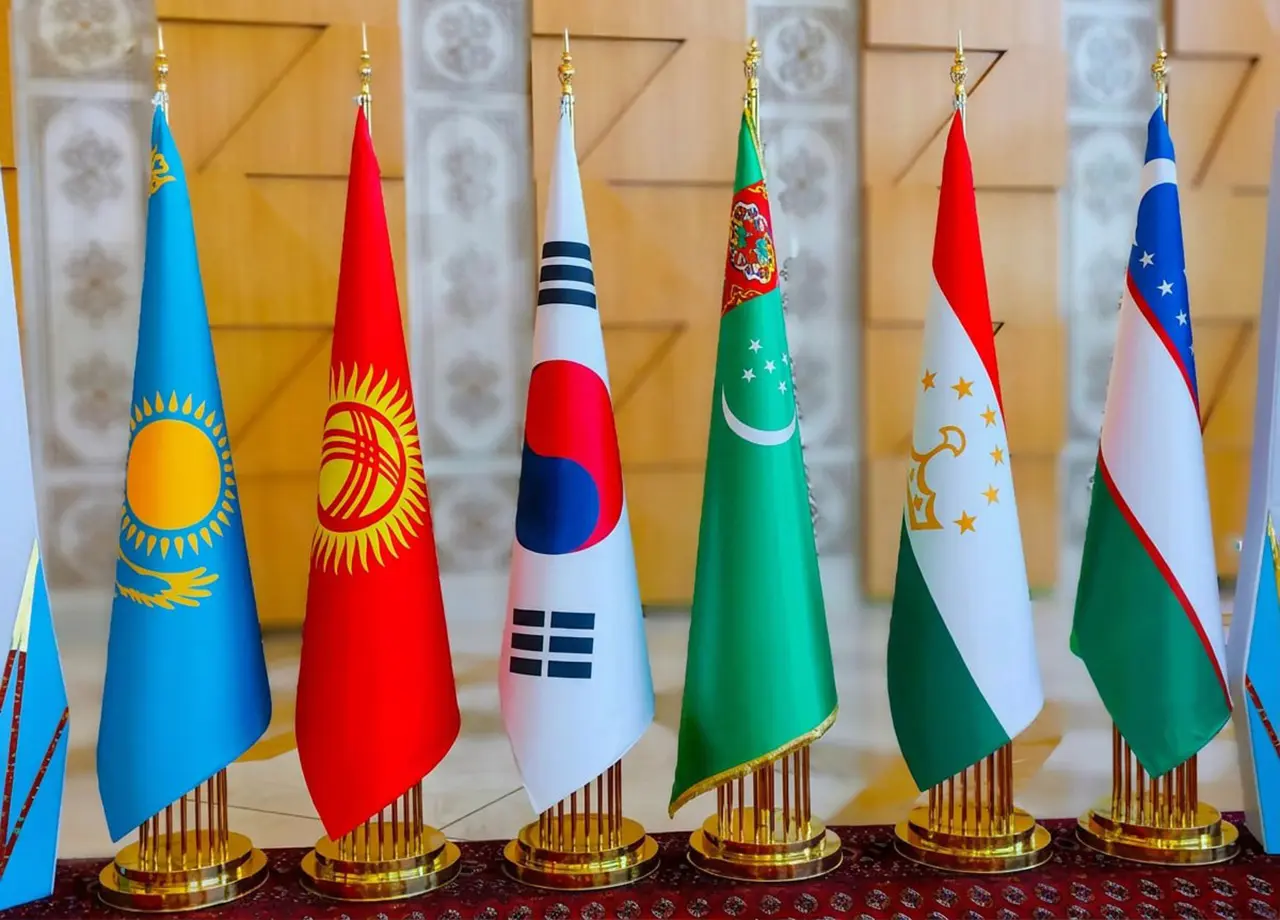
Photo credit: Marcus Friedrich Schneider
Lee has described Central Asia as a region of considerable growth potential, reported his press office. His office said the summit would establish a leader-level multilateral framework, diversify South Korea’s supply chains and give new momentum to its New Northern Policy, which seeks to deepen ties across Eurasia.
The summit’s significance, however, will hinge on whether the six governments can translate those ambitions into commercially viable projects with buyers, financing, transport routes and institutions responsible for implementation.
The Korea–Central Asia Cooperation Forum was launched in 2007, followed by the establishment of a permanent secretariat in Seoul in 2017. The Sept. 16 meeting marks the first time the dialogue will be elevated to the leaders’ level. Tokayev arrived in Seoul on Sept. 14 and is expected to meet Lee ahead of the multilateral gathering.
One region, five different partnerships
Nargiza Murataliyeva, an associate professor at the American University of Central Asia in Bishkek, said the mechanism has demonstrated its value in trade, official development assistance and environmental cooperation.
“Previous meetings, however, were largely sector-specific and practical in scope,” she told The Astana Times.
“The shift from ministerial meetings to full-fledged leaders’ summits, along with the dialogue’s alignment with the K-Silk Road initiative, marks an effort to move beyond individual projects toward a more systematic geoeconomic partnership,” said the professor.
The regional format, however, brings together five countries with different economic relationships with South Korea.
Mehmet Fatih Oztarsu, a professor at Joongbu University and deputy director of the Seoul Institute of Global Affairs, said South Korea has gradually moved away from treating Central Asia as a single economic space since the forum was established in 2007. Although the regional format provides an institutional umbrella, Seoul has increasingly tailored its bilateral ties to the different strengths and opportunities each country offers.
“This is why I would be careful about speaking of a single Korean strategy for Central Asia. Korea is actually developing several different relationships under the same regional framework,” Oztarsu told The Astana Times.
Kazakhstan has emerged as South Korea’s leading resource and energy partner in Central Asia, the expert said. He estimated that South Korean imports of Kazakh mineral fuels could reach nearly $1 billion.
The relationship is now expanding into new areas, including lithium exploration and potential nuclear energy cooperation.
“Uzbekistan is a very different story. Its significance does not come mainly from what Korea imports from it. The relationship is built around industrial cooperation, technology transfer and local production. More than 700 Korean companies operate there, and projects such as the Ustyurt Gas Chemical Complex created a level of industrial integration that Korea has not achieved elsewhere in the region,” said Oztarsu.
The Kyrgyz Republic and Tajikistan have gained strategic importance as demand for critical minerals has grown, the expert said. Tajikistan holds significant antimony reserves, while the Kyrgyz Republic offers rare earth potential and substantial hydropower capacity. Turkmenistan, by contrast, remains primarily a market for South Korean engineering and petrochemical companies.
“This differentiation is actually one of the strengths of Korea’s regional policy. Seoul does not need to offer the same model to every country. It can provide mining technology in one case, industrial processing in another, and digital infrastructure or education elsewhere,” said Oztarsu.
“Therefore, what makes this interesting is that Korea does not necessarily need to compete with Russia or China everywhere and in the same way. Its strength is specialization,” he added.
Moving beyond raw material exports
Across these relationships, Central Asian governments share a common objective: attracting Korean capital without remaining merely suppliers of raw materials or markets for finished products.
“Kazakhstan should use the summit to strengthen its capacity to produce and export higher-value goods. The most substantial outcomes would connect Korean investment with production in Kazakhstan and give local enterprises a realistic route into supply chains,” Aidar Kurmashev, head of the Asian Studies Department at the Kazakhstan Institute for Strategic Studies, told The Astana Times.
He pointed to the KIA plant in Kostanai in northern Kazakhstan as an example.
“According to the Kazakh government’s June 2026 report, the plant represents an investment of $310 million and employed around 800 people at that time. The next task is to develop suppliers around such enterprises and connect technical education with their production needs. This is how an individual investment can generate wider industrial activity,” Kurmashev explained.
Bilateral trade between Kazakhstan and the South Korea reached $3.17 billion in 2025, up 1.3% from $3.13 billion in 2024, according to government figures. Trade between the two countries was $1.3 billion from January through June, while Kazakhstan’s exports to South Korea increased by 17.2%.
Since 2005, gross investments from South Korea to Kazakhstan have surpassed $12 billion, according to figures from the National Bank.
In an August interview with The Astana Times, Ambassador of the Republic of Korea Jung Ki-Hong said critical minerals would be featured prominently in talks in Seoul .
In this area, Kazakhstan also wants foreign investment to support domestic processing rather than extraction alone. Kurmashev said the country will benefit from “partnerships that include commercially viable processing and access to Korean buyers.”
“A long-term purchase contract can give a processing project a stronger basis for financing, provided that the plant can meet the buyer’s requirements at a competitive cost. The location of a deposit alone does not establish the case for building a factory,” he said.
Transport cooperation goes hand in hand and should support these production decisions. “A manufacturer needs to know whether it can receive components and deliver finished goods reliably. An agreement that reduces uncertainty on an existing route could therefore have immediate economic value,” said Kurmashev.
“For Kazakhstan, the strategic gain would be a broader choice of technologies and export markets. That would give its policy of diversifying external partnerships a stronger economic foundation,” he added.
Energy security
Energy has emerged as a common thread in South Korea’s engagement across Central Asia. The region’s resources increasingly complement Seoul’s search for secure and diversified energy supplies.
“The energy relationship is becoming more interesting because Central Asian governments increasingly want something beyond selling resources. Ten or fifteen years ago, discussions were often dominated by oil, gas and uranium. Today, the more important question is what can actually be built around those resources,” Oztarsu said.
“It [Kazakhstan] is already important for South Korea’s uranium and energy security but Astana is also looking for technology, investment and processing capacity. The lithium cooperation now being developed is important for exactly this reason. Kazakhstan does not want to remain only an exporter of raw materials. It wants a larger part of the value chain to stay inside the country,” said Oztarsu.
Uzbekistan has moved furthest toward this model, the expert said, pointing to the Ustyurt Gas Chemical Complex located in Karakalpakstan, Uzbekistan, where domestic gas is processed into polyethylene and polypropylene rather than exported as a raw commodity.
The project illustrates the potential value of Korean engagement: South Korea provides engineering expertise and industrial technology, while its partner gains production capacity, jobs and a foothold in higher-value industries.
The incentives for deeper energy cooperation run in both directions, but ambitions are constrained by geography and infrastructure.
“The recent closure of the Strait of Hormuz showed how vulnerable South Korea remains to disruptions in its traditional energy routes. Even a disruption in one strategic chokepoint was enough to push Korea into an energy crisis lasting for months and intensified the search for alternative markets and supply routes,” said Oztarsu.
While Central Asia could help South Korea diversify away from vulnerable maritime supply routes, realizing that potential would require major infrastructure investment and navigating a region whose export corridors remain shaped by geography, geopolitics and dependence on neighboring powers.
“This is also why I increasingly see energy, critical minerals and connectivity as one single strategic discussion. Central Asia can become a serious alternative for Korea, but geological potential alone is not enough. The real opportunity begins when resources can be processed locally and moved reliably to international markets,” Oztarsu said.
Why a regional summit is needed
Solid bilateral ties alone cannot resolve many of the cross-border obstacles facing Korean-backed projects in Central Asia.
Kurmashev said a Korean-backed plant in Kazakhstan might rely on Uzbek components or sell to customers elsewhere in Central Asia. Its viability could therefore depend on common customs procedures, mutually recognized documents and transport rules that no bilateral agreement between Seoul and Astana could establish on its own.
“The summit can bring the relevant governments into one discussion and give their agencies a mandate to work through the obstacle,” he explained.
The expert said greater predictability across neighboring markets could make investments commercially viable for South Korean companies when no single national market offers sufficient scale. Kazakhstan could become a production base serving regional demand, while neighboring countries could secure supplier contracts and access to processing facilities.
Beyond minerals: technology and skills
The partnership also extends to technology and human capital. Oztarsu expected digital cooperation to follow the same differentiated model as energy and industry. Kazakhstan and Uzbekistan are better positioned for advanced AI applications, he said, while the other countries may initially benefit more from digital infrastructure, training and public-sector technology.
Murataliyeva also pointed to labor migration as an essential component of South Korea’s relations with Central Asia. Its Employment Permit System allows workers from designated countries to take jobs in South Korea through a government-managed process.
Uzbekistan, the Kyrgyz Republic and Tajikistan participate in the program. South Korea designated Kazakhstan as the system’s 18th labor-sending country on Aug. 14, with the first Kazakh workers expected to arrive in 2028. The relevant agreement is expected to be signed in Seoul.
For the Kyrgyz Republic, Murataliyeva said there were growing expectations that labor cooperation could evolve from the movement of workers into a channel for transferring technology and expertise. “Joint IT hubs and training centers could enable returning specialists to contribute to the development of Kyrgyzstan’s digital economy,” she added.
From declarations to delivery
The summit alone may not automatically elevate relations to a strategic level. “It is still premature, however, to expect the summit alone to automatically elevate relations to a strategic level. Without joint investment funds and stronger mechanisms for economic cooperation, high-level declarations risk amounting to little more than political symbolism,” Murataliyeva said.
The forum’s permanent secretariat gives the participants an institution capable of monitoring progress after the leaders leave Seoul. But Kurmashev said each proposed project should have an identifiable buyer or user, a responsible institution, a preparation schedule and a transparent account of the financing still required.
“Responsibility for implementation needs to be clear from the moment leaders endorse a proposal. The summit can set priorities and resolve political obstacles. Ministries, regulators and companies must then carry out the decisions within their respective powers,” Kurmashev said.
“A signed memorandum should not be counted as money already invested,” he added.
For Oztarsu, the next stage may entail matching South Korean capabilities with each country’s needs, not just announcing a single policy for Central Asia.
