
ASTANA — Kazakhstan’s first Kurultai election has shifted the focus from winning votes to how effectively political parties can represent voters, develop clear political agendas and deliver results in parliament, experts said following the Aug. 23 vote.
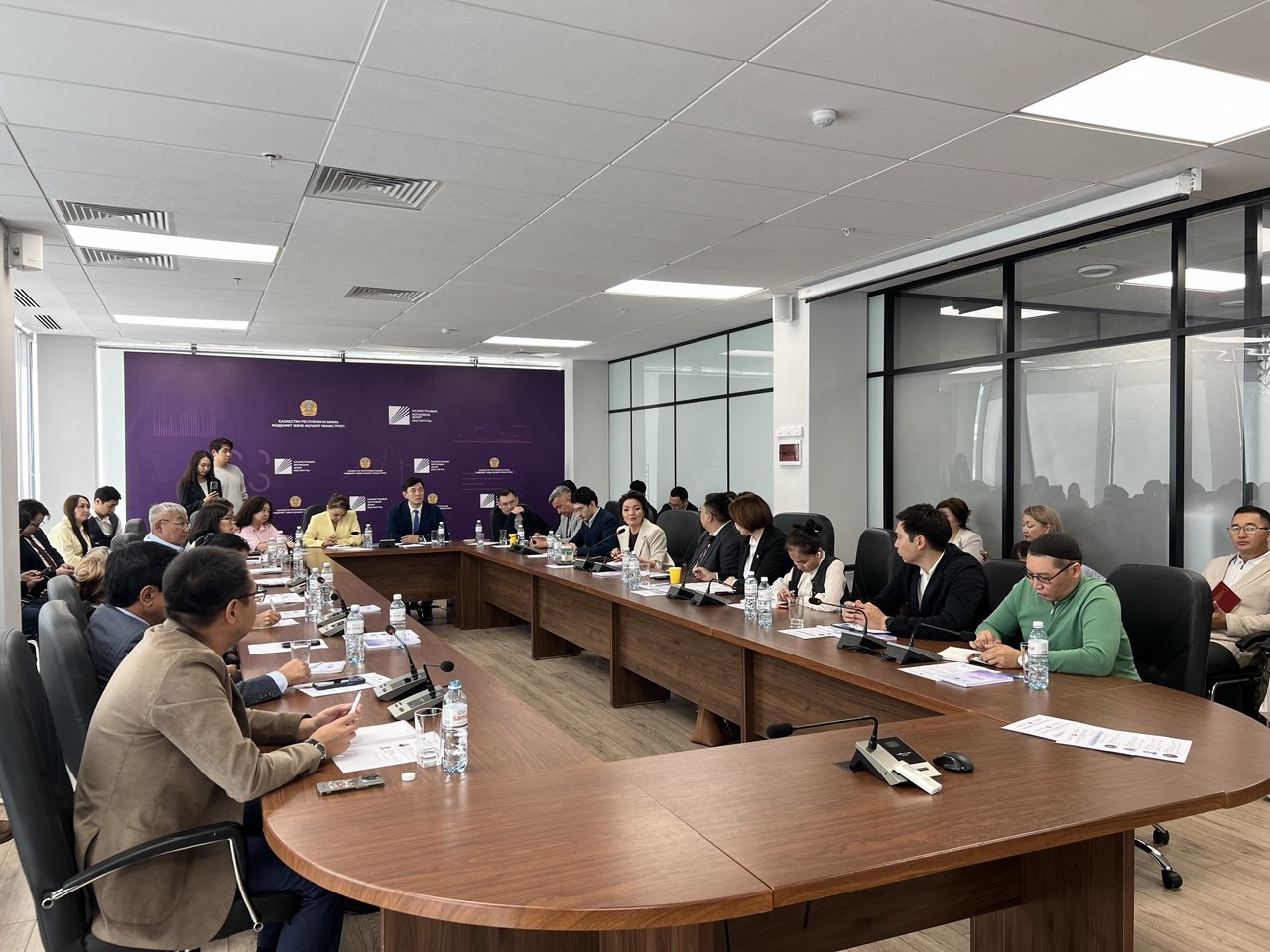
Experts at Sarap meeting on Aug.25. Photo credit: Nagima Abuova
The Central Election Commission (СEC) confirmed final results on Aug. 25. Five parties entered the 145-seat Kurultai after clearing the 5% threshold, with Adilet securing three-quarters of the seats. The People’s Party of Kazakhstan received 3.11% and Baytaq 1.07%, while 2.51% of voters selected “against all.”
Dominant majority, higher responsibility
Political scientist Gaziz Abishev. Photo credit: Abishev Analytics Telegram channel
Political scientist Gaziz Abishev said the scale of Adilet’s majority places greater responsibility on the party to deliver results in Kurultai’s inaugural term.
“In other words, everything that will be done by the Kurultai and the institutions stemming from it during its first convocation will rest fully with the Adilet party and its leadership, given the vertical nature of management in Parliament,” Abishev wrote in his Telegram channel.
In his remarks to Kazakhstanskaya Pravda newspaper, Kazakh statesman Yerlan Koshanov said the campaign showed voters increasingly assessing parties by the substance of their programs and proposals rather than slogans alone. He said the first Kurultai’s lawmakers would be responsible for translating the new Constitution’s principles into legislation.
“Party programs became a subject of comparison and analysis, rather than simply a backdrop to the election campaign. People began to understand more deeply the role and place of such an important political institution as a party and to view it as a pillar of civil society,” said Koshanov.
Turnout rises, voter preferences consolidate
Participation was one of the clearest differences from the previous parliamentary election. Turnout in 2023 stood at 54.19%, compared with 74.08% in the first Kurultai election. Turnout was also close to the 73.12% recorded during the March referendum on the new Constitution.
Marian Abisheva, deputy director of the Presidential Center of Kazakhstan, said pre-election polling consistently pointed to high participation, with different surveys generally placing potential turnout between 70% and 76%.
“The March referendum and the August elections form a single political sequence. First, citizens participated in determining the state’s new constitutional architecture. Then, several months later, they came to the polling stations to form the first representative institution that will operate within that architecture,” Abisheva said at an expert meeting on Aug. 25.
She also pointed to a sharp decline in the share of undecided voters during the campaign. One early survey put the figure at 23.6%, while a later poll showed 3.9%.
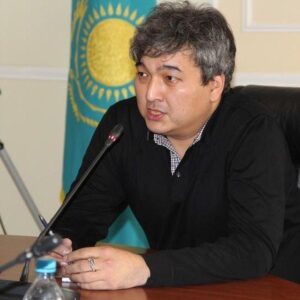
Political scientist and publicist Daniyar Ashimbayev. Photo credit: Ashimbayev’s Telegram channel
“The reduction in uncertainty did not occur through growth in the protest electorate. The ‘against all’ option remained stable throughout the pre-election polling, with sociological studies showing it at between 1.5% and 2.6%. According to the final results, 2.51% of voters chose ‘against all,’” said Abisheva.
Political scientist Daniyar Ashimbayev contrasted the strong turnout with earlier expectations of voter fatigue after repeated nationwide votes in recent years.
“There is no clear algorithm in voter behavior. At the end of last year, some expressed the view that voters were tired of voting. But this year, according to the CEC, turnout reached 73-74%, and it seems no one was tired after all,” Ashimbayev wrote in his Telegram channel on Aug. 24.
Why Adilet converted recognition into votes
Serik Zhusupov, head of the Department of Comparative Studies and Scientific-Theoretical Analysis at the Eurasian Integration Institute, said party recognition alone was not enough if voters could not identify what a party stood for.
He said surveys in late 2025 and early 2026 had registered broad demand for political and institutional change, with the new Constitution and Kurultai election forming successive stages of that process.
Serik Zhusupov. Photo credit: Nagima Abuova / The Astana Times
“When we talk about party recognition, most people say that they have heard of the parties, but they do not understand their ideological positions. Adilet adopted a fairly simple and clear construct for everyone – the concept of justice. In all opinion polls, the theme of justice has always been one of society’s demands,” said Zhusupov.
He said Adilet built practical proposals around that concept and competed across several electoral groups rather than relying on a narrow base. By contrast, he said Respublica and Aq Zhol competed for overlapping business-oriented voters, while left-wing parties struggled to consolidate their potential electorate.
“As for Baytaq, I understand that the environmental agenda is quite relevant, but this ideology itself is vague, not clearly oriented and it is unclear which electoral niches it targets,” said Zhusupov.
Parties become central to representation
Zhandos Aktayev, a member of the Youth Policy Council, said the move to a fully proportional system places political parties at the center of parliamentary representation.
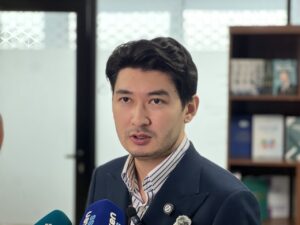
Zhandos Aktayev. Photo credit: Nagima Abuova / The Astana Times
“People who want to engage in political activity and participate in politics, that is, to represent the country in the Kurultai, need to join parties and represent their interests through those parties. If we, as citizens, want to see ourselves represented in one party or another, or more precisely in the Kurultai, we need to go into that party. Most likely, we will also need to change its political discourse and its program from within in order to form the agenda that matters to citizens,” Aktayev told the press on Aug. 25.
Zhusupov said polling also showed expectations about deputies’ professional backgrounds. In one survey, approximately 30% of respondents favored a legal background, while others emphasized public-service experience, communication skills and strong professional and social reputations.
Election ends, inter-election competition begins
For political parties, experts said the more challenging phase begins after the campaign. According to Zhusupov, their performance would depend largely on what they do between elections.
“The parties that are working now and will continue working should not operate from one campaign to another. The inter-election cycle is very important,” said the expert.
“This is when they can promote not simply their recognition, but their ideology. Taking into account the mistakes that were made, many parties simply need to reconsider their ideology. If you are trying to build a more or less sizable faction in Parliament, you need to work with much broader electoral niches and expand them in order to receive more votes,” he said.
Abishev said the focus would now shift from electoral competition to legislative work.
“After the distribution of mandates and the annual address, the real work will begin. Inside the chamber, party division is no longer felt as strongly. Laws need to be adopted, and the best ideas from all programs need to be put into practice. It is important that new faces have the opportunity to make their contribution,” he wrote.
EU notes election process, urges further reforms
Anouar El Anouni, spokesperson for EU foreign affairs and security policy, said the European Union acknowledged Kazakhstan’s efforts to organize the election in a “well-prepared and orderly manner” despite the short period between calling and holding the vote.
“The EU strongly encourages Kazakhstan to continue its work on democratic reforms, and reaffirms its commitment to supporting Kazakhstan’s reform agenda, including in the areas of human rights, rule of law, and democratic governance. We stand ready to continue our cooperation with Kazakhstan to further strengthen our strategic partnership, based on shared values and mutual respect,” said El Anouni.
