
ASTANA – A series of recent archaeological discoveries across Kazakhstan is offering new insights into the history, culture and everyday life of communities that lived on the Great Steppe centuries ago.
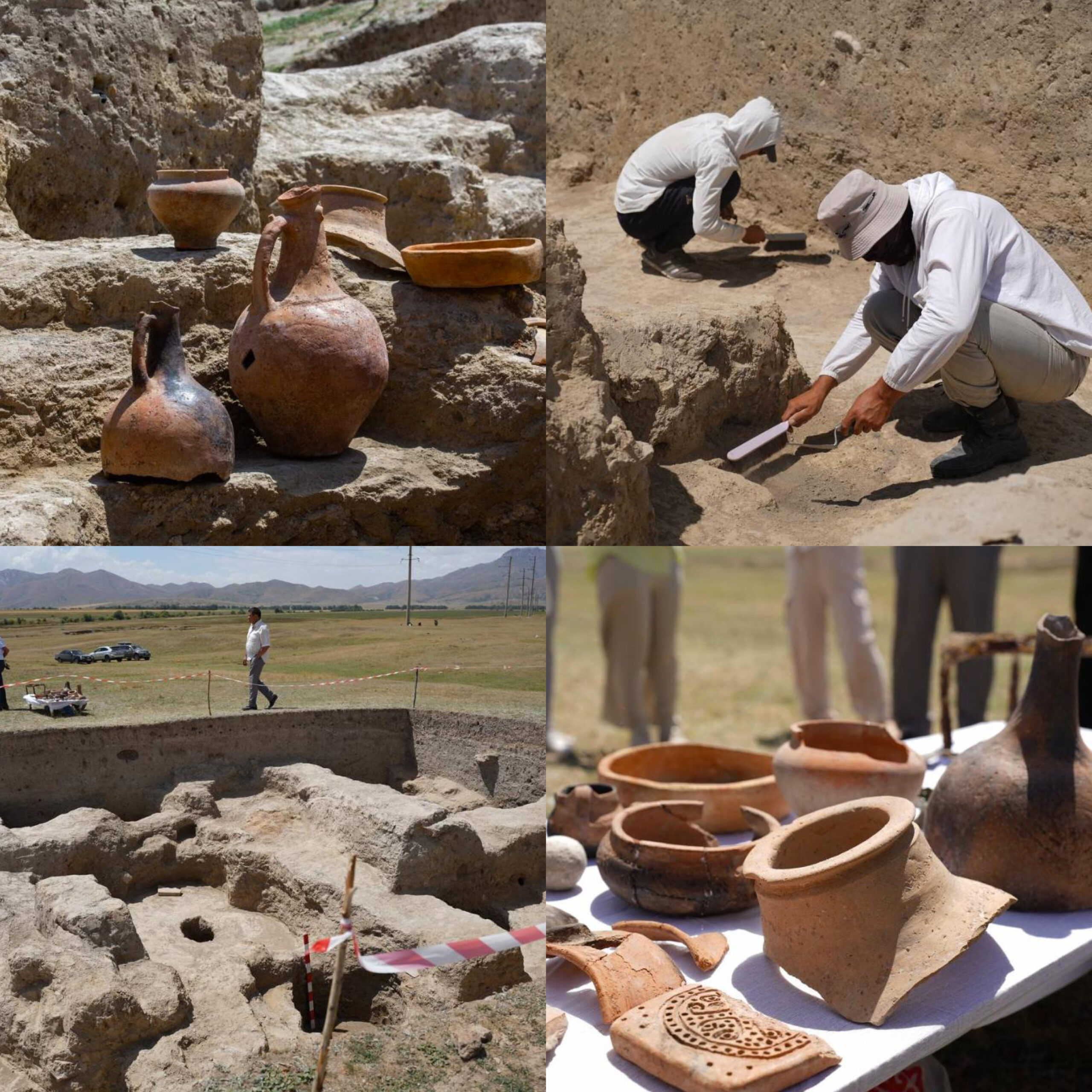
At the medieval settlement of Akzhar, excavations uncovered the remains of structures dating back to the 11th–12th centuries, built from mud bricks. Photo credit: gov.kz
Findings from archaeological sites in the Zhambyl, Turkistan and Pavlodar regions include medieval buildings, a mosque and paved streets, valuable artefacts and a remarkably preserved mobile dwelling associated with the Kimak-Kipchak period (9th-10th centuries). Together, the discoveries highlight the diversity of life in the medieval steppe and the region’s links with neighbouring civilisations.
Archaeologists working at the Akzhar settlement in Zhambyl Region have uncovered remains of structures dating to the 11th–12th centuries. The medieval settlement is located west of the Kurenbel village in the Zhualy district, between tributaries of the Akzhar River.
The excavations revealed structures made of mud brick, along with fragments of ceramics, iron and glass objects, stone tools and bones of domestic animals, reported the region’s Culture and Language Development Department. Researchers say the findings can help reconstruct the daily life of the people who inhabited the settlement during different periods.
The animal remains are of particular interest to researchers, as their study could provide information about the diet, economy and lifestyle of the settlement’s residents.
The excavations are being carried out as part of a scientific program studying the Syr Darya and Karatau regions in antiquity and the Middle Ages. Researchers expect the findings to help clarify Akzhar’s role in the development of medieval urban culture in the Karatau region.
Further south, archaeological work at the Otyrar settlement in the Turkistan Region has revealed several layers of historical development dating 13th-18th centuries.
Researchers identified five construction horizons containing residential and household areas, brick-paved streets and kilns used for firing bricks. One of the most notable discoveries was a collective burial site, known as a dakhma, identified for the first time at Otyrar.
At the lowest, fifth construction horizon, archaeologists uncovered the remains of a mosque dating to the Golden Horde period. A street paved with large stones led to the building and connected to a staircase made of fired bricks. According to the researchers, a paved street of this scale had not previously been documented at Otyrar.
The excavations also revealed painted window grilles, parts of inkpots, door or gate fittings, Chinese-style ceramic fragments, Chinese coins and coins minted in the names of rulers of the Golden Horde, a powerful state that dominated much of the Eurasian steppe from the 13th to 15th centuries.
One particularly notable discovery was a ring bearing an inscription, which researchers believe may have served as a seal in the medieval period.
The archaeological evidence points to Otyrar’s extensive connections with other parts of the region. Similar materials have been found at sites associated with Sogdiana, Tashkent, Fergana and Zhetysu, while imported objects and coins indicate the city’s participation in wider trade and cultural networks.
Researchers also believe the newly uncovered street could help reconstruct the layout of medieval Otyrar and identify commercial and public spaces that once stood along it. The excavations at the Otyrar settlement were conducted by a team led by Mukhtar Kozha, a professor and chief researcher at the Institute of Archaeology of Khoja Ahmed Yasawi International Kazakh-Turkish University.
In the Pavlodar Region, archaeologists have uncovered what researchers describe as an exceptionally rare example of a mobile dwelling from the Kimak-Kipchak period, reported the region’s press office.
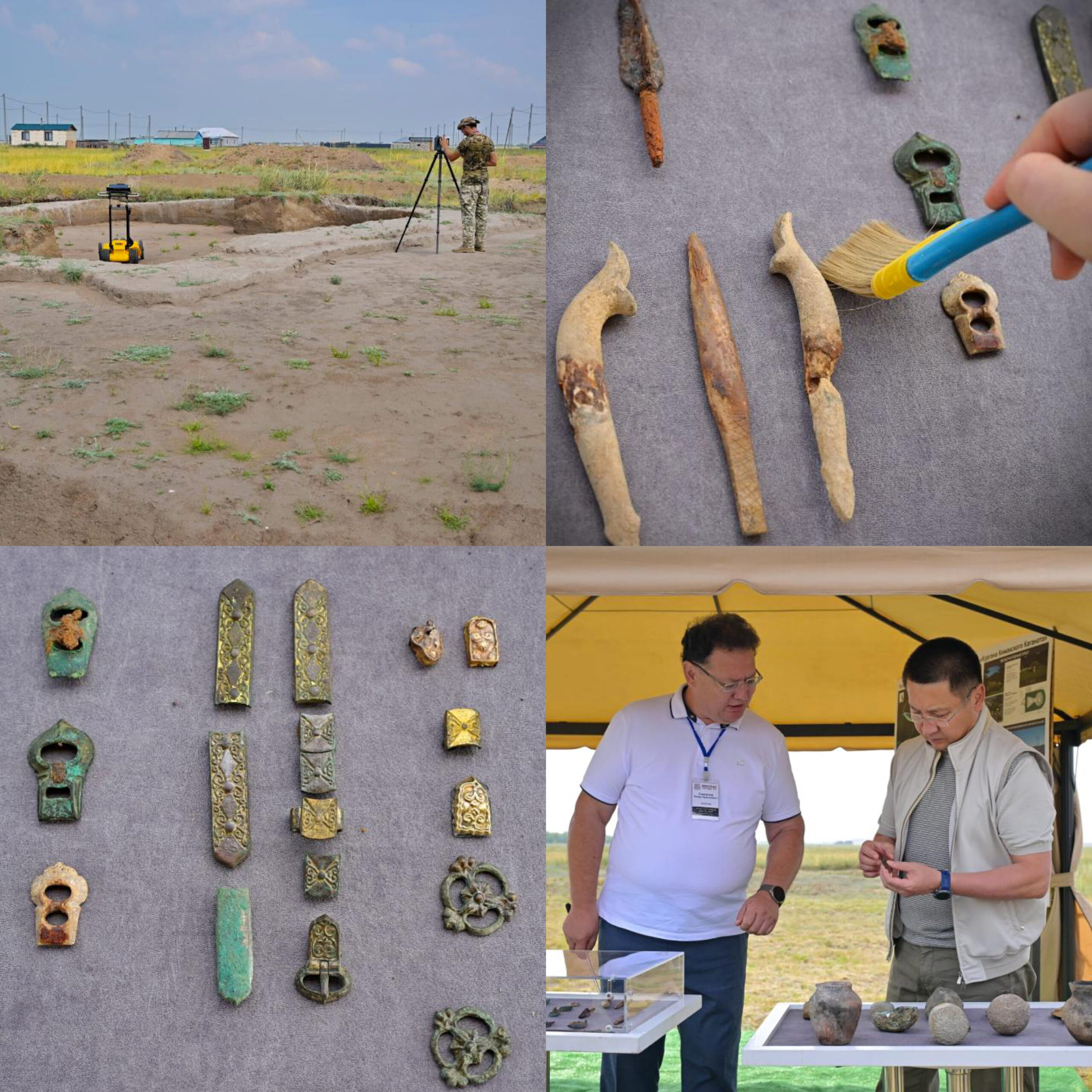
Baidala burial site near Pavlodar — believed to be the location of Imakiya, the political center of the Kimak Khaganate, shown on 10th-century Arab maps. Photo credit: gov.kz
The discovery was made at the Baidala burial ground in the Kenzhekol rural district of Pavlodar. The site is considered one of the significant archaeological monuments associated with the era of the Kimak Khaganate. According to researchers, the area may correspond to Imakia, described as a political center of the Kimak Khaganate, a medieval state or tribal confederation that existed roughly from the 9th to the early 11th century in what is now northeastern and central Kazakhstan and parts of western Siberia.
The most significant discovery is a fully preserved mobile dwelling consisting of a wooden wheeled structure with a tent-like covering. Archaeologists said its construction is similar to that of the traditional Kazakh yurt and that the discovery appears to be unprecedented in the archaeological record of the Eurasian steppe.
The dwelling was accompanied by a wooden saddle, stirrups, a bit, weapons, jewellery, silk textiles and other artefacts. These objects provide additional evidence about the material culture and everyday life of medieval nomadic communities. Before the discovery, knowledge about similar mobile dwellings largely came from written sources and schematic depictions.
Archaeological research at Baidala has been conducted for more than two decades led by archaeologist Timur Smagulov. Further excavations, conservation and restoration of the finds are planned, along with proposals to turn the complex into a museum site and develop it as an important historical and cultural heritage attraction.
The remains of buildings and streets reveal the organization of settled communities and their urban infrastructure, while the mobile dwelling offers a rare physical representation of nomadic life. Artefacts from Otyrar, meanwhile, point to the movement of goods, technologies and cultural influences across Central Asia and beyond.
For archaeologists, such discoveries are more than isolated objects or structures. They provide pieces of evidence that can be combined to reconstruct how people lived, travelled, traded and interacted across the Great Steppe.
While excavations and conservation work continue, researchers expect further discoveries to contribute to a more detailed understanding of Kazakhstan’s medieval heritage and its place in the broader history of Eurasia.
