
While the prevalent discourse in the 20th century centered on the importance of oil pipelines, gaining access to oil reserves and spotlighting countries controlling energy supplies ranging from OPEC states to European giants such as Norway for economic resilience, the current, global, geopolitical environment points to a new trend.
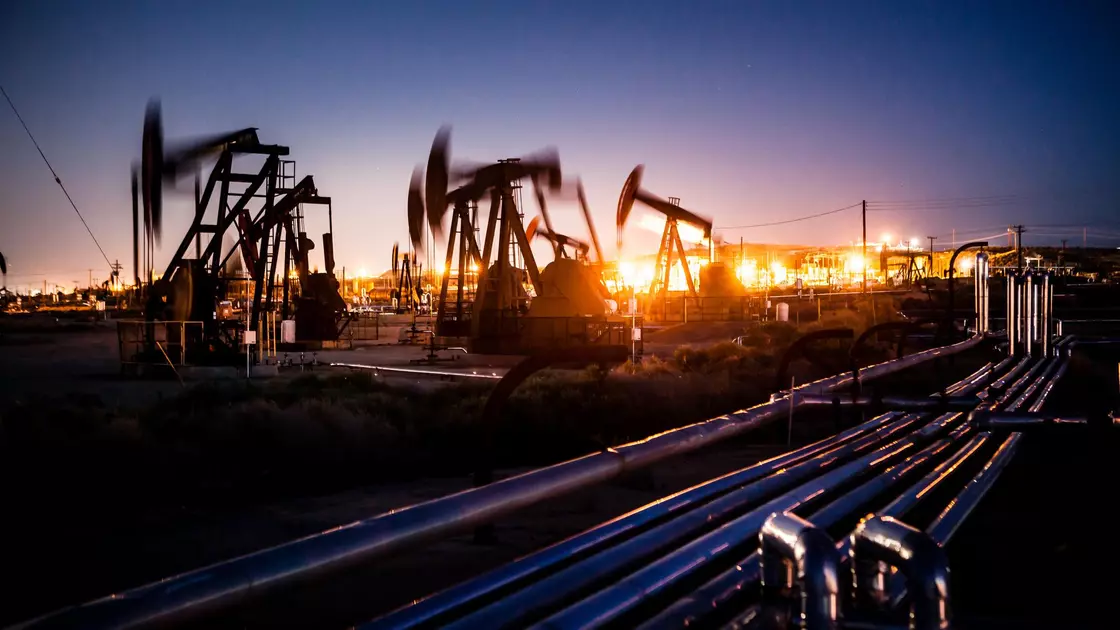
Oil drilling and pipelines. Photo credit: Gary Kavanagh / Getty Images
Supply side shocks impacting the international energy market due to militarization of strategic maritime chokepoints such as the Strait of Hormuz and the Bab El Mandeb Strait, is shifting attention towards countries controlling materials essential for powering domestic industries clean energy transitions, defense equipment, transistors, integrated circuits, diodes and solar cells. Regions less reliant on oil but have deposits of lithium, processing facilities, rare earths, copper reserves and uranium deposits are now increasingly relevant as this translates into greater strategic and economic influence.
Competition between the EU and China on the electrical vehicles front requires access to nickel, cobalt, graphite and rare earths whereas renewable energy systems warrant aluminum, silicon and rare earth magnets to sustain a workable ecosystem. Advanced electronics also require materials such as gallium and germanium whereas military industrial complexes seeking to counter adversaries need specialized minerals for aircrafts, radar systems, reconnaissance equipment and satellites. As a result, critical minerals are increasingly tied to national security.
The International Atomic Energy Agency in its recent Global Critical Minerals Outlook 2026 for example, underlines demand for minerals powering clean energy technologies growing exponentially in the next few decades as supply chains remain incredibly constrained and limited to certain economic regions. As per the IEA’s 2026 assessments, demand for lithium is projected to more than triple by 2040, which benefits countries such as China who dominate processing and refining of critical minerals. However, lessons from increased dependence on oil underlines an irrefutable fact- countries which rely on a few suppliers risk facing strategic challenges as supply chains remain volatile.
In light of this, Central Asia gains traction as a potential hub for global supply chain management. Kazakhstan for example remains one of the world’s largest uranium producers with extensive reserves of zinc and titanium alongside lithium and chromium at its disposal. The country’s national atomic corporation, Kazatomprom places Astana’s global uranium production in 2025 at 39% while accounting for 20% of global supplies. These unique advantages can be capitalized on if investments in refining, manufacturing, processing, research and technology to build domestic industrial capacities and support domestic resource bases become more pronounced.
Sitting at the confluence of Russia, China, Europe, the Middle East and South Asia the entire region is also a potential node for regional connectivity where minerals can aid supply chain management as an alternative to riskier routes. This includes the Middle Corridor for diversification of supply chains where the Trans Caspian International Transport Route continues to gain coverage in key policy circles ranging from capitals such as London to Beijing to address bottlenecks from reliance on maritime chokepoints in the Middle East.
However, mineral deposits prove valuable only if they manage to reach international markets.
This warrants the avoidance of the ‘resource trap’ in the current, global, geopolitical environment. Cases such as the Democratic Republic of Congo in Africa quintessentially point at how lack of requisite infrastructure and targeted investments can prevent realization of true economic potential. While Central Asia’s case differs significantly, indigenization remains the key. Selling of copper ores for example, while importing finished products creates economic imbalances domestically which can only be addressed if production of copper components for finished products indigenously is achieved. Similarly, developing relevant knowledge on nuclear technology to channelize uranium ore deposits is the correct approach for domestic prosperity amid increased global demand. For Central Asian states, this requires investments in advanced mining technologies, partnerships with countries specializing in producing finished commodities, development of human capital and institutional collaborations.
Yet despite challenges, few can doubt that Central Asia can act as a bridge particularly as global competition for minerals heats up ranging from the United States to Europe, seeking to invest in domestic capacities and build partnerships with resource rich states to counter China on battery supply chains and rare earth technologies. The Trump administration for example, is treating access to critical minerals as tied with issues of US national security. What is commendable is that from Uzbekistan to the Kyrgyz Republic, all five states alongside Azerbaijan have adopted multi vector, multipronged foreign policies in the absence of camp politics which allows the region to position itself as a credible, reliable supplier and a partner in technological development.
For the region, this constitutes an opportunity in 2026 to move beyond being a mere supplier of resources to becoming a key driver of the global economy provided that targeted investments take place to convert natural resources into innovation and economic resilience.
The author is Hamzah Rifaat, the president of Initiate Futures, a policy think tank. He is also an author for the Trends Group in Abu Dhabi and is cooperating with Nightingale Int.
Disclaimer: The views and opinions expressed in this article are those of the author and do not necessarily reflect the position of The Astana Times.
