
ASTANA —Kazakhstan recorded nearly 150,000 births in the first half of 2026, down approximately 7% year on year, while neonatal mortality fell to 3.9 per 1,000 live births in 2025, the lowest rate in Central Asia, according to the Bureau of National Statistics and the Ministry of Healthcare.
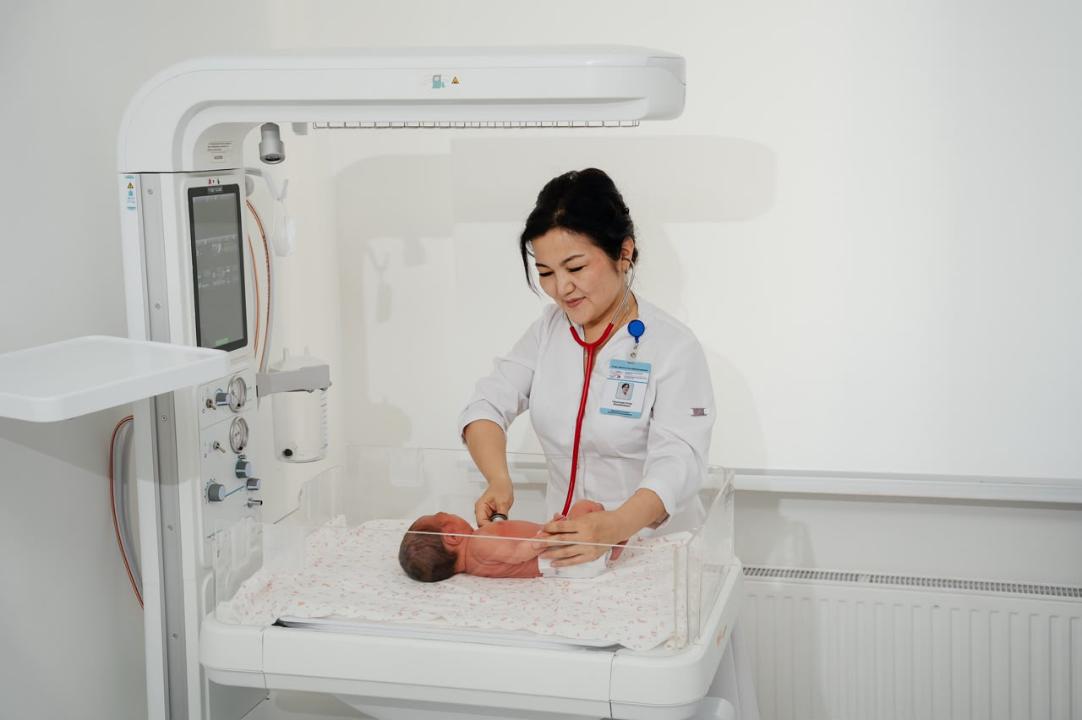
Photo credit: gov.kz
The decline in births follows a broader downward trend in Kazakhstan’s total fertility rate, which measures the average number of children a woman would have over her reproductive years. A demographic review by the Unified Accumulative Pension Fund (UAPF) shows the rate fell from 3.32 children per woman in 2021 to 3.06 in 2022 and 2.57 in 2025. The review described declining fertility as part of a broader global trend.
According to the Bureau of National Statistics, 335,000 children were born in Kazakhstan in 2025, with boys accounting for 51.5% of births and girls for 48.5%. The country recorded 64,700 deaths from January through June, resulting in a natural population increase of 85,100 people.
While the birth rate has been declining, the ministry data show improving outcomes for newborns requiring specialized medical care, particularly premature babies and children born with severe congenital conditions.
Survival improves in complex neonatal cases
Over the past five years, mortality among newborns with severe congenital conditions has fallen more than threefold, from 22% to 6.9%, while postoperative survival has risen to 93%. Approximately 1,400 operations are performed on newborns each year, with specialized care available at perinatal centers across Kazakhstan.
The ministry attributes the improvement to the development of obstetric and neonatal services, the introduction of modern medical technologies and the work of specialized medical teams. Such treatment can be particularly demanding for premature babies, who require specialized preparation before surgery and intensive care afterward.
Neonatal and pediatric surgeon Zhenis Sakuov told The Astana Times that successful treatment depends on coordination across the entire medical team.
“Operating on newborns is difficult, and operating on premature babies is even more difficult because they require specialized preparation for surgery. (…) The operation itself is complex, the postoperative period is complex, and they need specialized care afterward. This is teamwork,” he said.
About 17,000 premature babies were born in Kazakhstan last year, with each receiving a range of specialized medical care, according to the ministry.
Earlier diagnosis expands treatment options
Advances in neonatal care increasingly begin before birth. Modern prenatal diagnostics can detect many congenital conditions between 18 and 20 weeks of pregnancy, allowing doctors to determine how the pregnancy and delivery should be managed and prepare a medical team to assist the child immediately after birth. When fetal abnormalities are identified, expectant mothers are referred to specialized perinatal centers, where doctors determine the timing and method of delivery and prepare a treatment plan in advance.
This approach has also expanded through one-day clinics at fetal health centers. According to the ministry, since their introduction in 2024, prenatal screening coverage has increased by 10%, detection of fetal abnormalities by 12%, and childhood disability has declined by 8%.
Treatment in some cases can now begin even before delivery. Kazakhstan is developing fetal surgery, or the intrauterine correction of certain fetal conditions, with procedures performed at specialized centers in Astana and Almaty.
For some conditions, treatment can begin even before delivery. Kazakhstan is developing fetal surgery, which involves correcting certain fetal conditions in the womb, with procedures performed at specialized centers in Astana and Almaty.
After birth, about one-third of newborn surgeries are now performed using minimally invasive techniques. Kazakhstan has also used extracorporeal membrane oxygenation (ECMO) since 2022 to support patients in critical condition with severe respiratory failure.
“Intensive care is developing, as well as extracorporeal membrane oxygenation, anesthesiology, and diagnostics. All of this significantly increases children’s chances of recovery and a good quality of life. And most importantly, many families today can receive high-tech medical care without leaving Kazakhstan,” Pediatric Cardiac Surgeon Tlektes Nashkenov told The Astana Times.
The ministry’s data show survival rates of 80% to 90% for children born with congenital diaphragmatic hernia, 85% to 95% for esophageal atresia and more than 90% for gastroschisis. Mortality among premature babies with necrotizing enterocolitis has fallen more than 2.5 times as diagnostic and surgical treatment has improved.
