
ASTANA — Trade among Eurasian Economic Union (EAEU) member states is on track to surpass $100 billion for the first time in 2026, as the five-country bloc shifts its focus from traditional market integration toward digital trade, artificial intelligence and the removal of non-tariff barriers. Speaking at the Eurasian Intergovernmental Council meeting in Cholpon-Ata on Aug. 7, Kazakh Prime Minister Olzhas Bektenov said mutual trade within the EAEU reached $95 billion in 2025 and is expected to grow by 7.3% to $102 billion this year.
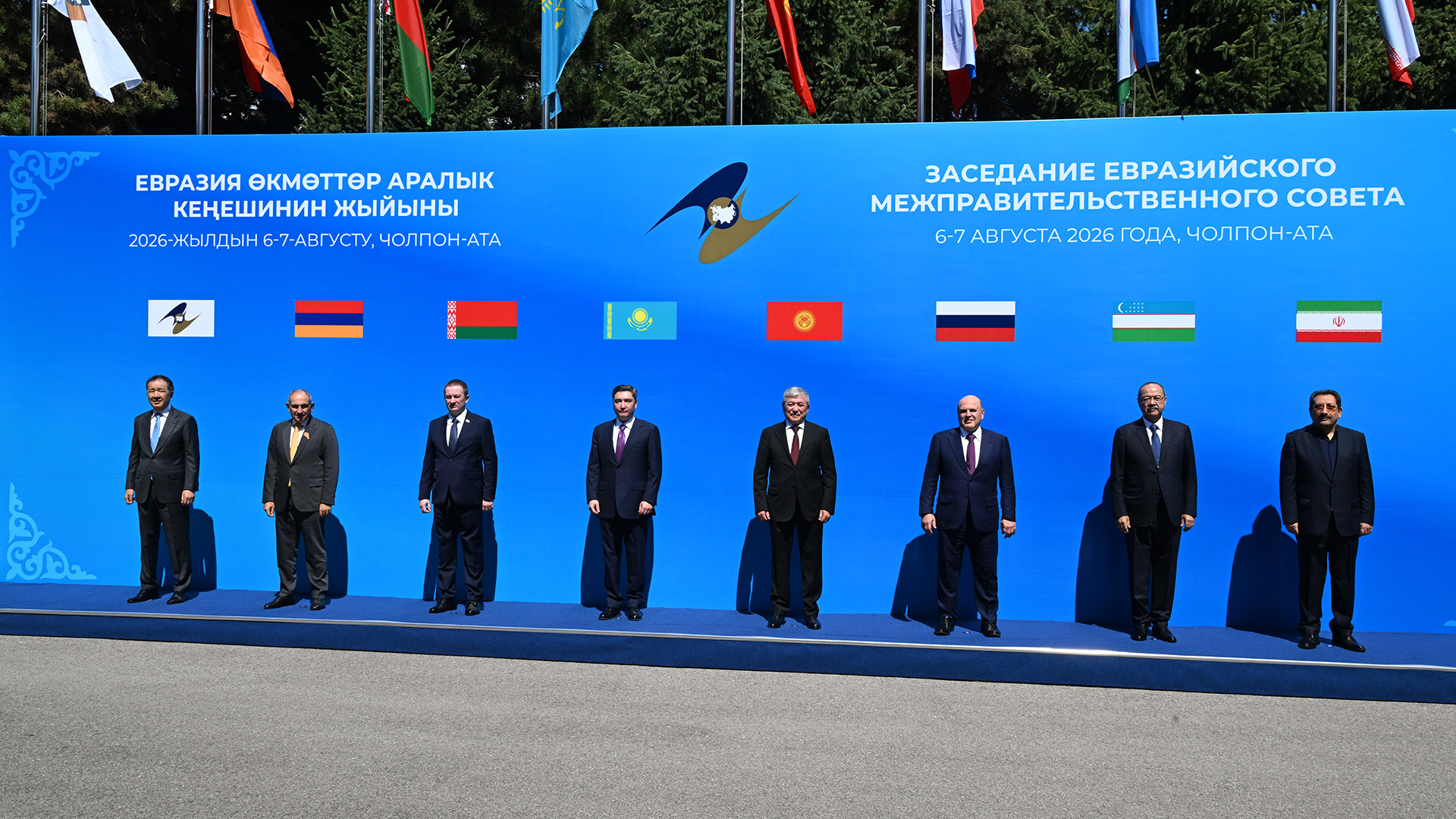
The Eurasian Intergovernmental Council meeting is held in Cholpon-Ata, Kyrgyzstan, on Aug. 7. Photo credit: gov.kz
The milestone also reflects the bloc’s continued importance for Kazakhstan’s external trade. As previously reported by The Astana Times, trade with fellow EAEU member states reached $9.87 billion in the first four months of 2026, up 13.3% year-on-year. Russia remained Kazakhstan’s largest trading partner within the union, accounting for 87.6% of Kazakhstan’s trade with EAEU members, followed by the Kyrgyz Republic, Belarus and Armenia.
The discussions reflected what officials increasingly describe as the next stage of EAEU integration. While the bloc was initially built around the free movement of goods, services, capital and labor, policymakers are now focusing on digital integration, harmonized regulations and more efficient cross-border trade.
At the meeting, the prime ministers discussed measures to further develop the EAEU’s internal market, deepen sectoral cooperation and strengthen financial and economic coordination. The agenda also included the digitalization of freight rail transport and international transport corridors, e-commerce, climate cooperation and the integration of artificial intelligence into the union’s information systems.
The meeting concluded with the signing of six documents, including an Agreement on Electronic Commerce, aimed at creating a more unified regulatory framework for online trade, expanding opportunities for businesses and improving market access across member states. Participants also approved an agreement on the mutual recognition of academic titles and adopted several decisions aimed at advancing regional cooperation.
Rather than focusing primarily on tariff liberalization, the EAEU is increasingly prioritizing the removal of non-tariff barriers, digital customs and logistics, and common digital rules designed to make businesses more competitive across the union. For Kazakhstan, that next phase of integration also means addressing long-standing barriers affecting exporters.
Bektenov said Kazakhstan’s exports of animal and plant products, as well as processed food, reached nearly $7 billion in 2025 and totaled $3.6 billion in the first five months of this year. At the same time, he pointed to concerns raised by businesses over restrictions affecting poultry and dairy exports to EAEU markets.
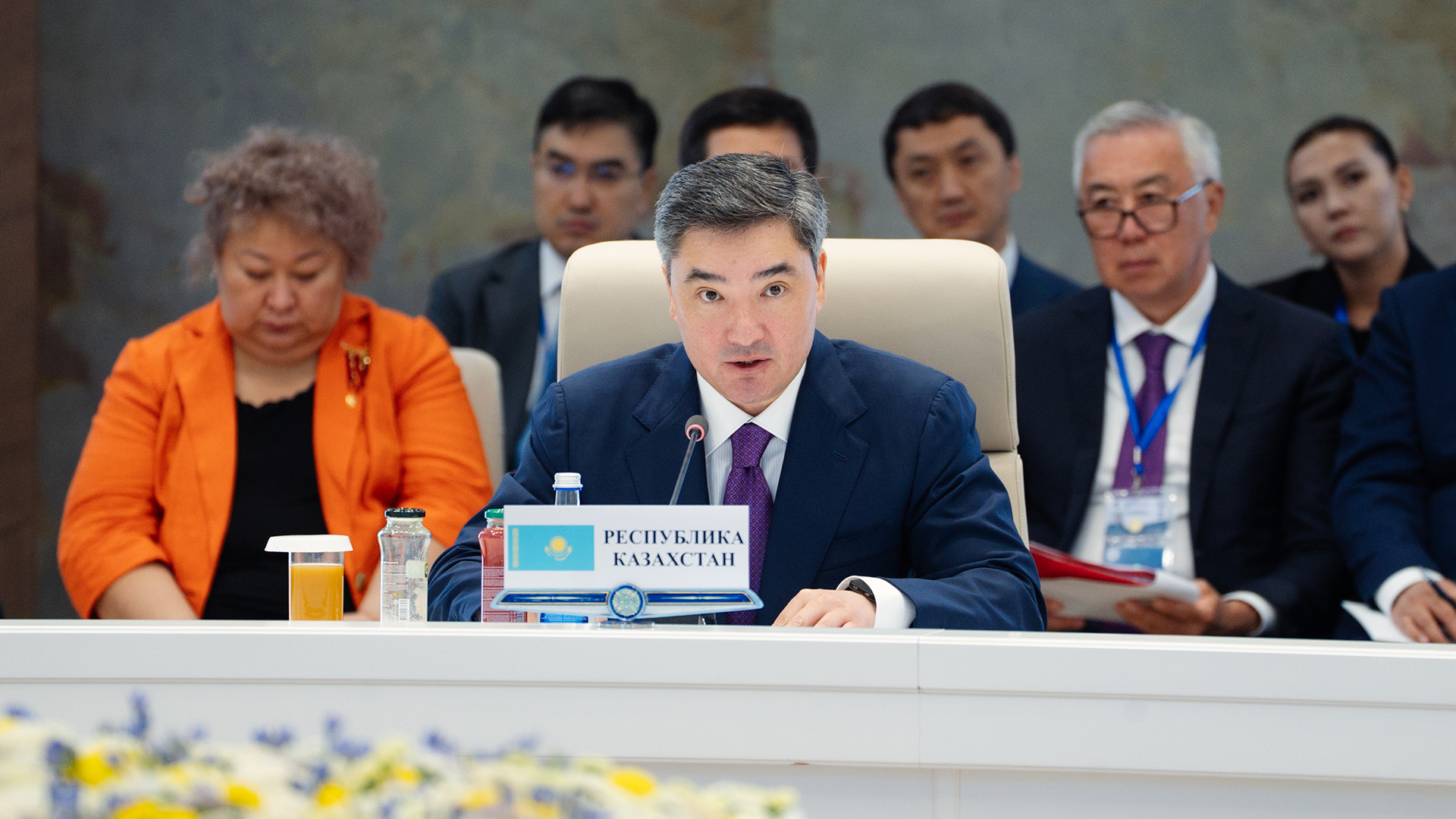
Kazakh Prime Minister Olzhas Bektenov highlights projected EAEU trade growth to $102 billion this year. Photo credit: gov.kz
Kazakhstan called for systematic monitoring of market access conditions for food products to ensure member states comply with their obligations under EAEU rules, arguing that a more consistent approach to resolving trade barriers would provide a significant boost to intra-union commerce. The proposal reflects a broader effort to address non-tariff restrictions, which have increasingly replaced customs duties as one of the main obstacles to deeper economic integration within the bloc.
Digital transformation emerged as another central theme of the meeting. The discussions build on commitments made at the Supreme Eurasian Economic Council summit in Astana in May, where member states adopted a Joint Statement on the Responsible Development of Artificial Intelligence. Speaking at that summit, President Kassym-Jomart Tokayev called for integrating national digital systems to accelerate customs procedures, identify bottlenecks and forecast cargo flows in real time.
“New technologies should not become the cause or source of digital gaps. They are designed to become an instrument of economic interconnectedness and powerful synergy of cooperation between our countries,” Tokayev said.
In Cholpon-Ata, Bektenov also highlighted Kazakhstan’s own digital ambitions, noting that 2026 has been declared the Year of Digitalization and Artificial Intelligence. Among the country’s flagship projects is the planned Data Center Valley in Ekibastuz, where the first 125 megawatts of computing capacity is scheduled to come online in June next year.
“The project will create digital infrastructure of international standards and strengthen Kazakhstan’s position as one of Eurasia’s digital hubs,” Bektenov said, inviting businesses and technology companies across the EAEU to participate in the initiative.
The meeting also reflected Kazakhstan’s close economic ties with fellow member Kyrgyzstan. During a collective meeting with Kyrgyz President Sadyr Japarov, Bektenov conveyed greetings from President Tokayev and noted that bilateral trade between Kazakhstan and Kyrgyzstan has doubled over the past five years to $2.2 billion, with both governments continuing efforts to expand commercial ties.
The next meeting of the Eurasian Intergovernmental Council is scheduled for Oct. 1-2 in Minsk, Belarus, where member states are expected to continue advancing the bloc’s digital integration agenda.
