
ASTANA – Kazakhstan is expanding artificial intelligence, automated traffic enforcement and average-speed monitoring as road safety indicators improve, while rapidly growing vehicle numbers are driving the development of smart transport systems in Astana.
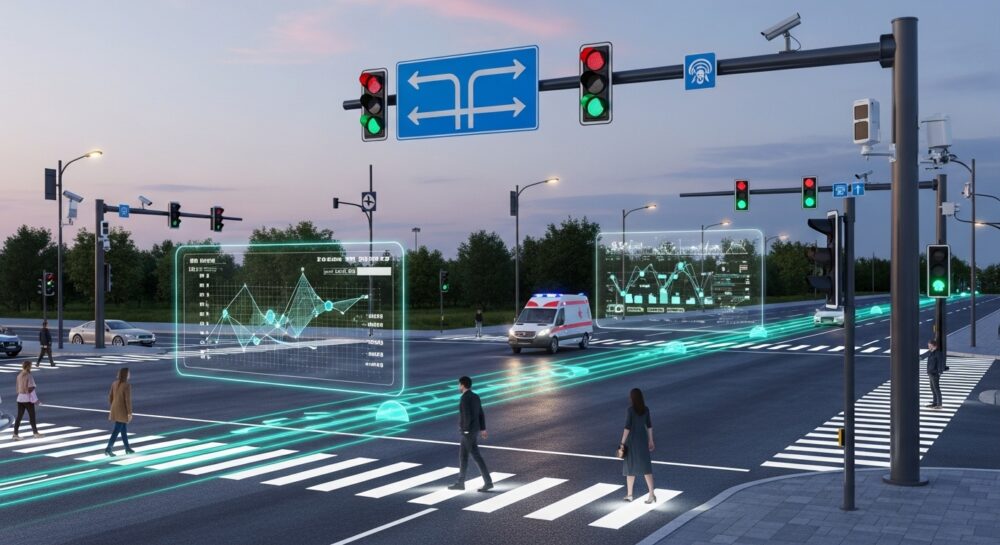
Photo credit: techfinitive.com
Road safety indicators improve
At a Sept. 22 government meeting, Minister of Internal Affairs Yerzhan Sadenov reported a 5% decline in road accidents nationwide, a 15% decrease in fatalities and a 6% reduction in injuries following measures to strengthen road safety.
On national roads, Transport Minister Nurlan Sauranbayev reported that from January to August, accidents fell by 10%, fatalities by 14% and injuries by 11%.
The authorities are expanding digital enforcement. The number of automated traffic-violation detection systems has increased from 28,000 to 32,000. The TOR platform brings together the Internal Affairs Ministry’s relevant digital services, while artificial intelligence monitors vehicles, identifies drivers who have been behind the wheel for more than eight hours, and helps locate stolen vehicles.
Average-speed monitoring is another key measure. The system currently operates on 12 sections covering 2,800 kilometers. Another 16 sections, covering an additional 2,800 kilometers, are planned by the end of the year, bringing total coverage to 5,600 kilometers across 28 sections.
Astana manages growing traffic
The capital is facing increasing pressure on its road network. Astana currently has 471,000 registered vehicles, compared with 420,000 in 2024 and 446,000 in 2025. The number increases by 25,000- 30,000 vehicles annually.
In addition, around 150,000 vehicles enter and leave the city every day, reflecting the scale of commuter traffic.
To manage these flows, Astana is implementing a comprehensive transport development program supported by an Intelligent Transport System (ITS). Some 80% of the city’s traffic-light facilities – 664 out of 847 – have been adapted to the system, with another 79 planned for adaptation this year.
AI supports the Smart City
As part of Astana’s Smart City project, more than 1,200 traffic-violation detection complexes operate in the capital, and more than 60,000 cameras are integrated into the city’s Situation Center.
The number of violations that can be detected automatically has increased from four to 15, while 35 types of AI-based video analytics have been introduced. Detection of the new violation types began in April.
These technologies are being developed alongside infrastructure measures to improve traffic flow and road safety.
Public transport expansion
Astana is also expanding public transport in response to growing mobility demand. Dedicated Bus Lanes now extend for 146 kilometers, 6.6% more than a year earlier.
The city’s bus fleet has increased by 60% over the past several years, from 1,200 to 1,900 vehicles. The city purchased another 80 buses this year, with 350 more planned for 2027.
The Tarlan Astana light rail transit (LRT) system will be integrated with bus routes and transport hubs as it develops. The city expects public transport users to reach 60% by 2030.
The city is also implementing new road infrastructure projects to redistribute traffic and improve connectivity across the capital.
