
The new methodology for calculating copper concentrate processing tariffs raises a broader question: how competitive and predictable will Kazakhstan’s copper value chain be for international business?
Against this backdrop, the Ministry of Industry and Construction has proposed a new methodology for calculating the tariff for processing copper concentrate. The aim is to establish a unified and transparent mechanism for determining the cost of processing raw materials at copper smelting facilities in Kazakhstan.
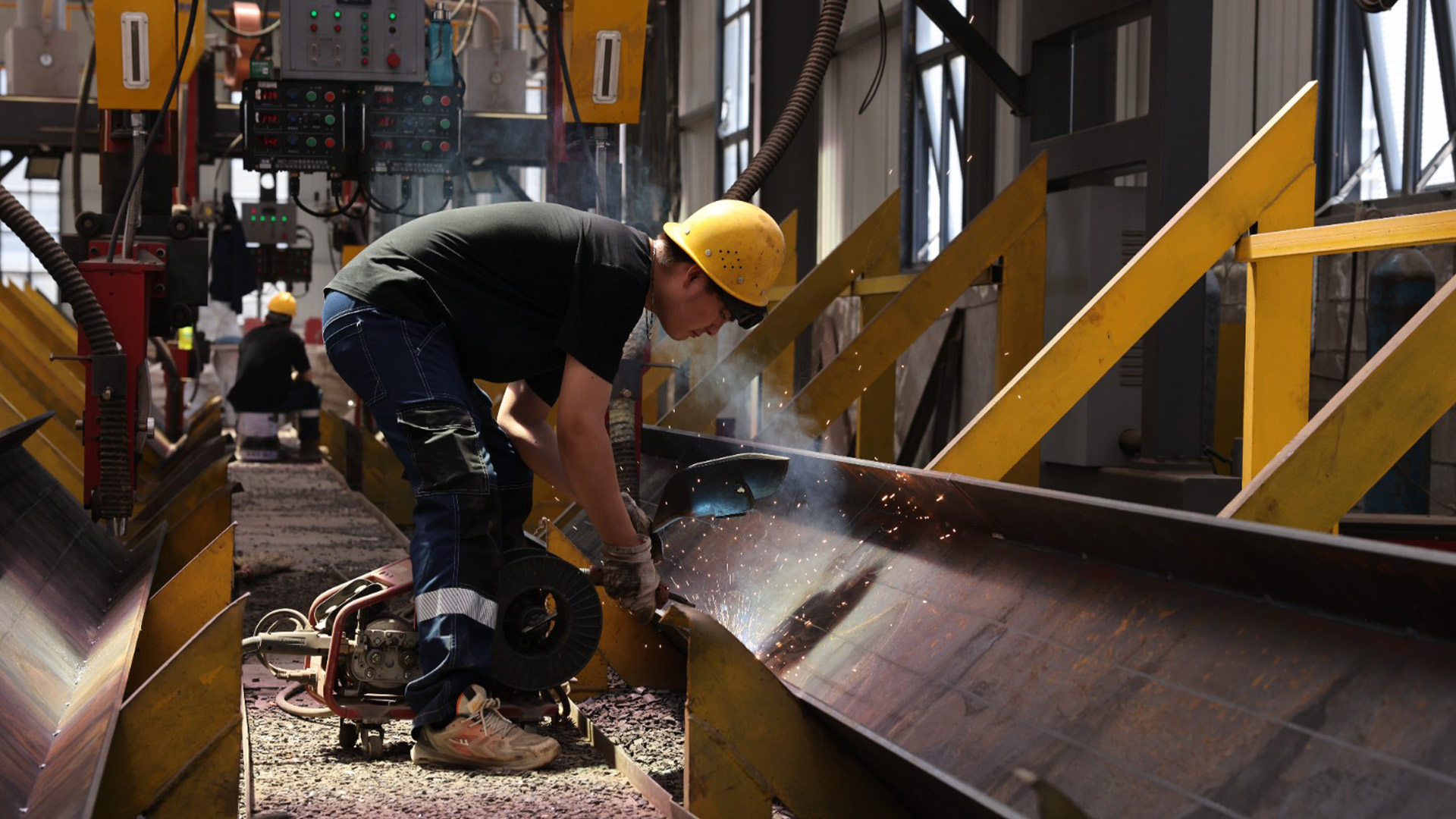
Photo credit: Press service of Kazakhstan’s Prime Minister.
Under the proposed approach, the tariff would be based on processing costs, a normative profit margin and investment components, including investment in new copper smelting capacity.
This approach can also be viewed from the perspective of predictability. Instead of directly reproducing international treatment charges at a particular point in the commodity cycle, the methodology establishes a defined framework based on domestic processing economics and investment requirements.
In practical terms, this could make one important element of the copper value chain more predictable for both existing producers and potential investors, even when conditions on the international concentrate market change.
Global market, global benchmarks
One of the key market benchmarks is the Treatment Charge (TC). When concentrate is abundant and smelting capacity is relatively limited, treatment charges tend to be higher. When concentrate becomes scarce, smelters compete for feedstock and TC declines.
In some market conditions, treatment charges can reach zero or even become negative.
At the same time, international TC is a market benchmark rather than a direct measure of the actual cost of processing concentrate at a particular plant. It can fluctuate sharply depending on the global balance between concentrate supply and available smelting capacity. For a country seeking to maintain and expand its own processing base, simply importing this volatility into domestic pricing may therefore provide limited visibility for long-term investment decisions.
One concentrate, multiple sources of value
A copper smelter generates economic value from more than the treatment charge itself.
Copper and other metals, including precious metals, are recovered from the concentrate. Sulphur contained in the feedstock can be used to produce sulphuric acid, which also has an independent market value.
This is why a zero or negative TC does not automatically indicate that processing is loss-making. Under certain market conditions, a smelter may accept concentrate without a treatment charge in order to maintain capacity utilization and generate value from the metals and by-products recovered during processing.
However, these additional revenue streams are neither fixed nor cost-free. Their value depends on the composition of the concentrate, recovery rates and market prices, while extracting additional metals or increasing sulphur recovery may require dedicated equipment, technologies and further capital investment. Revenues from by-products are therefore part of the overall economics of a smelter, but they do not automatically eliminate the need for a sustainable mechanism to finance the processing operation itself.
What does this mean for Kazakhstan?
For investors, one of the most important elements of the proposed methodology is its treatment of capital expenditure on existing and new processing capacity.
According to published descriptions of the draft methodology, separate components are envisaged for capital expenditure on maintaining and modernising existing capacity and for investment in new or expanded processing capacity. The latter should not be interpreted as a legal guarantee of investment returns. It is, however, a mechanism through which the capital intensity and payback requirements of new processing projects can be reflected in tariff formation. For an investor considering a multiyear industrial project, that increases the visibility of how future processing economics will be determined.
Kazakhstan is already entering a capital-intensive phase of expanding and modernising its metallurgical base. A new copper smelter in the Abai Region, designed to produce 300,000 tonnes of copper annually, has an estimated project cost of around $1.5 billion.
Another major project is planned in Balkhash, where a new copper smelter of similar capacity is expected to be built. International investment is planned to be attracted for the project, amounting to 750 billion tenge.
Moreover, investment is also required to modernize existing metallurgy. In Zhezkazgan, a new sulphuric acid plant is planned to be built by the international consortium, with investment amounting to $213.76 million.
Together, these projects illustrate the scale of capital required not only to create new processing capacity, but also to improve the technological and environmental performance of existing plants.
From raw materials to global value chains
Recent agreements with the Republic of Korea make this industrial logic particularly relevant. During President Kassym-Jomart Tokayev’s September visit to Seoul, Kazakhstan proposed a “resources – technology – industry” model and called for full-cycle projects covering exploration, extraction, deep processing and the production of critical materials. Copper was specifically identified among the strategic resources produced by Kazakhstan, while the broader cooperation agenda extends to semiconductors, microelectronics, batteries and components for electric vehicles.
This does not mean that downstream Korean investment in Kazakhstan’s copper industry is automatic. But it demonstrates why maintaining competitive domestic processing capacity matters.
Each additional stage of processing established inside the country can make the next stage more commercially realistic. If manufacturers of electrical equipment, electronics, batteries or other high-value products establish production in Kazakhstan, access to locally produced metals and intermediate materials can potentially shorten supply chains, reduce logistics costs and lead times, and lower exposure to external supply disruptions.
In that context, the stability of domestic smelting can become part of the investment proposition for industries further down the value chain. An investor considering a new manufacturing facility will assess not only whether Kazakhstan has copper underground, but whether the required processed material can be supplied locally, consistently and under understandable long-term commercial conditions.
More than a tariff
For Kazakhstan, the question is not simply whether the domestic tariff is identical to the international TC at any given moment.
The more fundamental issue is whether the country can establish a transparent and economically sustainable framework that allows mining to remain competitive while giving processing companies sufficient visibility to operate, modernise and invest in new capacity.
If the methodology is based on verifiable costs, clearly defined investment components and transparent calculation rules, it could itself become part of the predictable investment environment that international businesses seek. Its role would not be to remove market risk or guarantee profitability, but to make the rules governing one critical stage of the value chain clearer and less dependent on short-term external volatility.
For Kazakhstan, the debate therefore goes beyond the price of processing copper concentrate. Ultimately, it is about the country’s position in the global copper value chain — whether Kazakhstan remains primarily a supplier of raw materials, becomes a processor, or develops into a fully-fledged participant in international value chains, creating greater value through processing, technology and industrial capabilities.
