
ASTANA — The relationship between Kazakhstan and the European Union (EU) is entering a new phase, marked by growing trade volumes, closer political dialogue and expanding cooperation in digital governance, critical raw materials and transport connectivity. A series of high-level meetings held this month in Astana, Brussels and Strasbourg highlighted the breadth of the partnership, which increasingly extends beyond traditional energy ties and reflects broader European interest in Central Asia amid shifting geopolitical and economic realities.
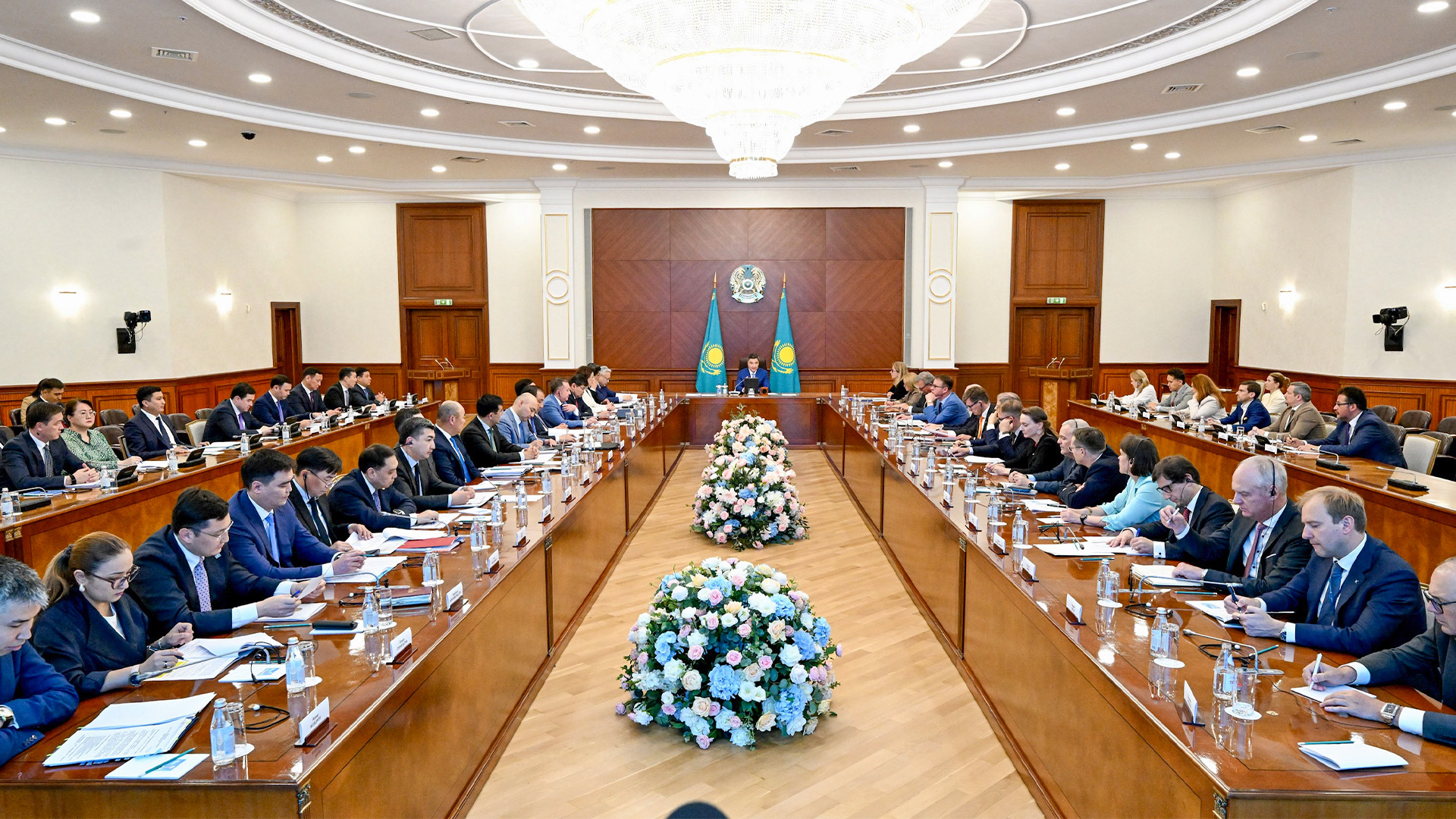
High-level meetings highlighted the growing EU–Central Asia partnership beyond traditional energy ties. Photo credit: primeminister.kz
EU remains Kazakhstan’s largest economic partner
The strength of economic ties was underscored during the 19th meeting of the Kazakhstan-European Union Dialogue Platform chaired by Prime Minister Olzhas Bektenov in Astana on June 11, the Prime Minister’s press service reported.
The gathering brought together European diplomats, representatives of major business associations and international companies to discuss investment conditions, technical regulation, customs administration and cooperation in critical raw materials. The figures presented during the meeting illustrate the scale of the relationship.
Trade turnover between Kazakhstan and the EU reached $45.2 billion in 2025, while bilateral trade totaled $12.4 billion during the first four months of 2026. Kazakhstan’s exports accounted for $9.27 billion during that period. Particularly notable was the growth of non-resource exports. Kazakh agricultural exports to the EU increased by 34.3% to $266.2 million, reflecting the government’s efforts to diversify the economy beyond traditional commodity sectors.
Bektenov noted that the EU now accounts for more than 30% of Kazakhstan’s foreign trade, while cumulative European investment in the country’s economy has exceeded $200 billion.
“These figures clearly demonstrate the high level of mutual economic interest between our countries. Kazakhstan remains a reliable and predictable partner of the EU in matters of energy security, industrial cooperation and transport connectivity,” Bektenov said.
The Prime Minister also highlighted ongoing reforms aimed at improving the investment climate. These include the introduction of the Altyn (Golden) Visa program for investors and highly skilled professionals, the expansion of Kazakh Invest’s international presence and the establishment of the Kazakhstan Investment House as a centralized support platform for investors.
European business representatives welcomed the government’s efforts but also raised issues related to customs administration, intellectual property protection, regulatory predictability and technical standards. German representatives emphasized the importance of harmonizing standards in areas such as technical regulation, accreditation and conformity assessment, arguing that closer alignment would further facilitate trade and investment flows between Kazakhstan and the EU.
Critical minerals and the Middle Corridor gain strategic importance
The Astana dialogue also reflected Europe’s growing focus on supply chain resilience and access to critical raw materials. Kazakhstan possesses significant reserves of rare earths and strategic minerals that are increasingly important for Europe’s green transition and industrial competitiveness. Both sides discussed expanding cooperation in geological exploration and critical raw materials development. Representatives of Spanish company Xcalibur Smart Mapping presented proposals aimed at modernizing Kazakhstan’s geological infrastructure through advanced geoscience technologies and high-precision airborne geophysical surveys.
Transport connectivity emerged as another key area of cooperation. Kazakh officials reported that cargo volumes along the Trans-Caspian International Transport Route, also known as the Middle Corridor, increased by 69% during the first five months of 2026, while the number of vehicles using the route grew by 38%. As Europe seeks alternative trade routes connecting Asia and Europe, Kazakhstan views the Middle Corridor as a cornerstone of its strategic partnership with the EU and supports further development under the EU’s Global Gateway initiative. The Kazakh side also reiterated its interest in advancing discussions on visa facilitation, a long-standing issue in relations with the bloc.
Kazakhstan’s reforms draw attention in the European Parliament
Economic cooperation is increasingly accompanied by deeper political engagement. This week, members of the European Parliament gathered in Brussels for a conference dedicated to political developments in Kazakhstan and the future of Kazakhstan-EU relations. The event, organized by the Patriots for Europe group, attracted lawmakers from several parliamentary factions, including members of the Delegation for Relations with Central Asia and Mongolia. Opening the discussion, Belgian publication Diplomatic World Editor-in-Chief Alberto Turkstra highlighted the significance of Kazakhstan’s domestic reforms and their relevance for European policymakers.
French Member of the European Parliament Thierry Mariani emphasized the growing importance of Central Asia for Europe and called for a pragmatic approach toward understanding Kazakhstan’s reform process.
“Astana is choosing a path of gradual and sovereign modernization at its own pace. This pragmatism is something we should understand rather than replace with our own perceptions,” Mariani said.
Members of the European Parliament also expressed interest in Kazakhstan’s constitutional reforms and efforts to strengthen democratic institutions. According to participants, such exchanges provide an opportunity for European and Kazakh stakeholders to better understand each other’s perspectives on regional and global geopolitical developments.
Digital governance emerges as a new area of cooperation
Perhaps the most rapidly evolving dimension of Kazakhstan-EU engagement is digital cooperation.
This was highlighted by Kazakhstan’s recent acquisition of observer status at the Committee of Convention 108 of the Council of Europe, the world’s leading international framework governing personal data protection and privacy. The decision was adopted during the committee’s 50th plenary session in Strasbourg with the participation of Vice Minister of Artificial Intelligence and Digital Development Doszhan Musaliyev.
According to Musaliyev, observer status will enable Kazakhstan to exchange expertise with international partners and further strengthen its national data protection framework based on global best practices. He noted that recent constitutional amendments explicitly recognize the right of citizens to protection of personal data, including in the digital sphere, making participation in the convention’s work a logical continuation of broader institutional reforms.
Digital transformation was also the focus of the Digital Kazakhstan briefing held at the Council of Europe headquarters in Strasbourg. During the event, Kazakh officials presented the country’s progress in digital government services, artificial intelligence and digital infrastructure development. Musaliyev highlighted Kazakhstan’s position among global leaders in digital public services, noting that the country ranks tenth worldwide in the UN Online Services Index and remains the leading performer in the CIS region. Officials showcased Kazakhstan’s GovTech ecosystem, which integrates digital identity, public services, state databases, analytics tools and AI-powered solutions.
The discussions also explored future cooperation between Kazakhstan and European institutions in areas including artificial intelligence governance, cybersecurity, digital rights and protection of personal data. Council of Europe representatives welcomed Kazakhstan’s growing engagement in these areas and viewed observer status under Convention 108 as an important step toward deeper institutional cooperation.
