
ASTANA – Kazakhstan’s Deputy Foreign Minister Arman Issetov participated in the ministerial meeting on advancing connectivity between Central Asia, the Eastern Partnership, Türkiye, and the EU in Luxembourg. The discussions focused on strengthening cooperation in transport, energy, digital transformation, and trade, with particular attention to developing the Trans-Caspian International Transport Route and ensuring affordable clean energy.
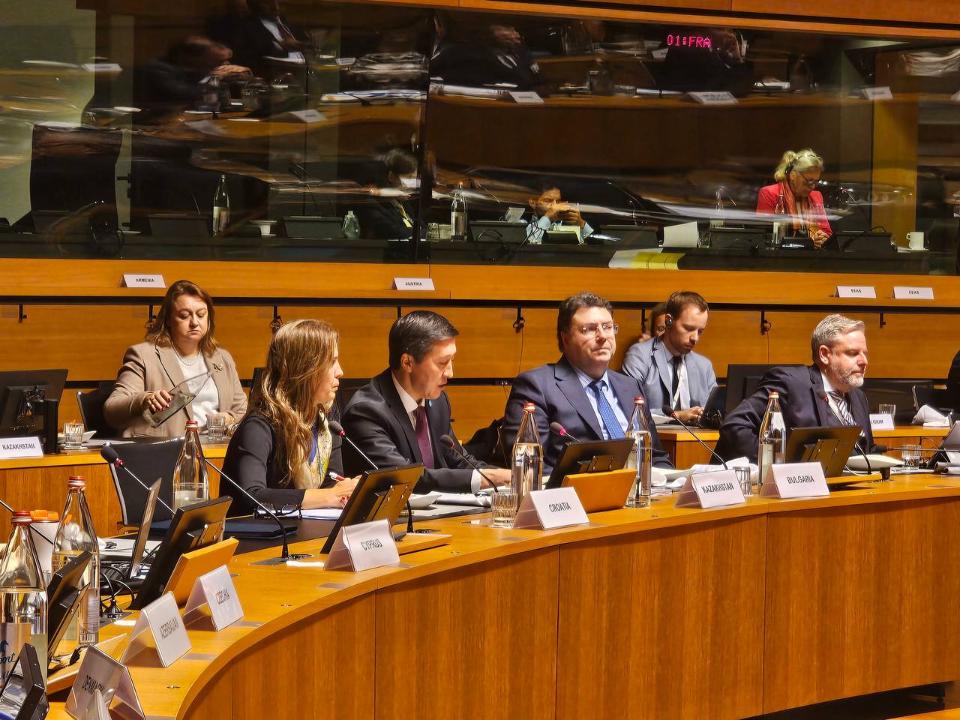
Kazakhstan, EU reaffirmed their commitment to deepening collaboration in connectivity, green energy, and digital transformation through joint projects and investments that strengthen regional resilience and sustainable growth. Photo credit: Kazakh Foreign Ministry.
He underlined Kazakhstan’s role as the region’s largest economy and key transit hub, noting $35 billion invested in transport and logistics infrastructure over the past decade. Kazakhstan reaffirmed its readiness to participate in practical measures to strengthen regional and interregional linkages.
Strategic partnership
On the sidelines of the ministerial meeting, Issetov held meetings with EU High Representative for Foreign Affairs and Security Policy Kaja Kallas, European Commissioner for International Partnerships Jozef Síkela, and EU Special Representative for Central Asia Eduards Stiprais, reported Kazakh Foreign Ministry’s press service on Oct. 21.
The officials expressed satisfaction with the dynamic and multifaceted cooperation between Kazakhstan and the EU, grounded in mutual respect, trust, and shared interests. This progress stems from the practical implementation of the Enhanced Partnership and Cooperation Agreement (EPCA).
Among the 29 areas of cooperation under the EPCA, Astana and Brussels are advancing joint priorities in transport and logistics, critical raw materials, green energy, digital transformation, agriculture, education, and science.
Issetov emphasized that strengthening bilateral cooperation enhances cross-regional ties between Central Asia and the EU and highlighted the importance of implementing agreements from the Central Asia–EU Summit in Samarkand. He also briefed EU counterparts on Kazakhstan’s reform agenda outlined in President Kassym-Jomart Tokayev’s state-of-the-nation address on digital transformation and artificial intelligence.
Officials discussed upcoming high-level events, including the visit of EU Special Representative Eduards Stiprais to Astana, and agreed to continue advancing joint projects across all areas of partnership.
EIB confirms interest in expanding cooperation with Kazakhstan
Issetov also met with European Investment Bank (EIB) Director-General Andrew McDowell to discuss expanding cooperation in infrastructure, energy, and digital projects, as well as the Kazakhstan–EU Strategic Partnership on Critical Raw Materials.
The officials reviewed the Memorandum of Understanding worth 1.47 billion euros (US$1.7 billion), signed between the EIB and the governments of Kazakhstan, the Kyrgyz Republic, and Uzbekistan, supporting Middle Corridor development. They also discussed cooperation in clean energy, including the Kambarata-1 Hydropower Plant project signed during the Global Gateway Forum in Brussels.
Progress in EIB negotiations with Sarytogan Graphite and ZhezkazganRedMet was noted within the joint Kazakhstan–EU Roadmap on Critical Raw Materials (2025–2026). The meeting participants also explored cooperation in digitalization and innovation, including Kazakhstan’s Alem.AI International Center and Smart Cargo digital platform.
Kazakhstan thanked the EIB for supporting digital inclusion projects, notably the initiative with Luxembourg-based SES to provide internet access to over 600 rural settlements.
