
I am deeply convinced that our historic responsibility to future generations is not simply to leave them money in bank accounts, but to build and pass on a fundamentally different country: one that is technologically advanced, with a strong, competitive economy, modern infrastructure and a high standard of living, where every citizen has the opportunity to realize their potential.
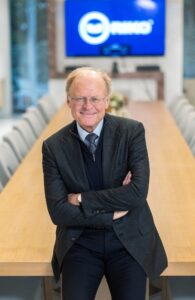
Janez Škrabec. Photo credit: Janez Škrabec’s personal archive
In my view, these words from an address by Kazakh President Kassym-Jomart Tokayev best capture the essence of the country’s new stage of development: the responsibility to turn today’s economic opportunities, natural resources and aspirations for progress into a solid foundation for the stability, competitiveness and prosperity of future generations.
As a Slovenian entrepreneur who has spent many years developing business ties and friendships with Kazakhstan, I see the President’s address as an ambitious yet pragmatic vision for the country’s future. Over 35 years of independence, Kazakhstan has moved beyond its role as a supplier of natural resources to become an important Eurasian hub for energy, economic activity and logistics. The country’s next challenge is to make greater use of its natural wealth and strategic geographic location to develop industry, modern infrastructure, new technologies and a knowledge-based economy.
Particularly noteworthy is the President’s emphasis on public investment to stimulate private investment. The state lays the groundwork for progress through infrastructure development, well-designed industrial policies and development institutions. Yet its full potential can be realized only through entrepreneurial initiative, innovation and long-term private investment. Combining public and private capital is therefore one of the key conditions for successful economic diversification.
In this context, I am reminded of the reflections of the great Kazakh poet and philosopher Abai Kunanbayev, who explored the relationship between reason, will and heart in his Book of Words. A country’s development requires reason to shape a vision of the future, will to turn that vision into reality, and heart to give it a human dimension. Infrastructure, technological progress and economic growth acquire their true value when they improve people’s lives and create new opportunities for future generations. This is where I see the connection between Abai’s philosophical legacy and contemporary visions of Kazakhstan’s future.
My many years of experience in international business have convinced me that turning ambitious plans into reality requires practical measures and resources: well-prepared projects, qualified professionals, reliable partners, appropriate financing mechanisms, and a stable and predictable business environment. When implementing infrastructure and industrial investment projects designed to operate for decades, honoring contractual obligations and ensuring that agreed rules remain in place are just as important as the quality of technological solutions.
This is where I see significant opportunities for cooperation between Kazakhstan and Europe. European countries can make a substantial contribution to Kazakhstan’s economic transformation by providing engineering expertise, technological solutions, experience in managing complex investment projects, and access to development finance institutions. The long-term value of such cooperation lies in partnerships that combine international expertise with Kazakhstan’s domestic potential, support local industry development and create new added value.
Slovenia also has an important role to play in this process, drawing on its industrial traditions and companies that operate successfully in international markets in energy, engineering, pharmaceuticals, logistics and advanced industrial technologies. Decades of business experience across the vast Eurasian region have given us a deeper understanding of Kazakhstan’s development needs and institutional environment, enabling us to build more effective partnerships and manage risks responsibly.
I see particularly promising opportunities in energy and transport infrastructure, including modernizing electricity grids, building power generation facilities and transformer substations, and upgrading railway and logistics infrastructure. Reliable and efficient energy infrastructure is essential for Kazakhstan to ensure a stable power supply for its population and economy, develop new industries, attract investment and strengthen its competitiveness.
The close relationship between energy and industrial development could therefore become one of the main drivers of the country’s further progress. Integrated approaches that combine engineering design, equipment supply, construction and financing play a particularly important role in implementing such projects. They allow complex investment projects to be managed more efficiently, responsibilities to be allocated more clearly, and financial predictability to improve, while also creating opportunities for local companies to participate and strengthen their capacity to deliver projects.
The Middle Corridor, also known as the Trans-Caspian Transport Corridor (TITR), connects Central Asia with Europe and is another route of major strategic importance. Beyond diversifying trade routes, it strengthens economic ties and opens new opportunities for industry, logistics and trade.
Thanks to its geographic location, railway connections and access to Central European markets, Slovenia’s Port of Koper could become an important gateway for Kazakh goods entering the European market, as well as for European exports destined for Kazakhstan and other Central Asian countries. This would help strengthen both economies and deepen ties between the two countries.
New opportunities are also emerging in pharmaceuticals, digitalization, technological cooperation and joint industrial investment projects that generate high added value. Kazakh companies bring knowledge of the domestic market, local production and organizational capabilities, and established regional networks. Slovenian enterprises, in turn, can contribute technology, specialized engineering expertise and access to European business networks.
Combining these strengths makes it possible to undertake more complex projects, enhance the competitiveness of both economies and jointly expand into Central Asian markets. Beyond commercial results, such partnerships help build expertise, strengthen trust and create new development opportunities.
Economic cooperation depends not only on institutions, agreements and financial instruments, but above all on people. My experience of working with Kazakhstan has repeatedly demonstrated the importance of personal reputation, mutual respect, reliability and a willingness to build long-term partnerships. These values provide a strong foundation for agreements and joint projects.
For this reason, Kazakhstan has never been merely a market for me. My connection with the country is rooted in its people, friendships, shared experiences and a firm belief that cooperation between our nations can bring substantial benefits. I follow Kazakhstan’s economic transformation and the ambitious goals it has set for itself with great interest, respect and genuine affection.
Slovenian President Nataša Pirc Musar’s official visit to Kazakhstan on March 31-April 1, 2025, gave fresh momentum to bilateral relations and opened opportunities to translate the political friendship between our countries into concrete economic projects. Such projects will provide the most convincing evidence of our partnership’s strength and future potential.
This brings me back to President Tokayev’s words about our responsibility to future generations. The legacy of the current stage of development will be measured not only by investments, completed projects and economic indicators, but also by the knowledge gained, the strength of state institutions, the opportunities available to young people and the level of trust between people.
I am convinced that Kazakhstan has the capacity to turn its vision for the future into sustainable economic and social development. We in Slovenia seek to be reliable, proactive partners for Kazakhstan, focused on long-term cooperation. I firmly believe that we share an understanding that the true value of projects and partnerships is also measured by their contribution to the well-being of future generations.
The author is Janez Škrabec, president of the Riko Group and honorary adviser to Kazakhstan’s ambassador to Slovenia on economic and investment affairs.
Disclaimer: The views and opinions expressed in this article are those of the author and do not necessarily reflect the position of The Astana Times.
