
ASTANA – The Explorers Club, a New-York based international organization dedicated to scientific exploration, opened its Central Asia chapter on Nov. 12, establishing a new platform in Kazakhstan to support international research partnerships and scientific expeditions across the region.
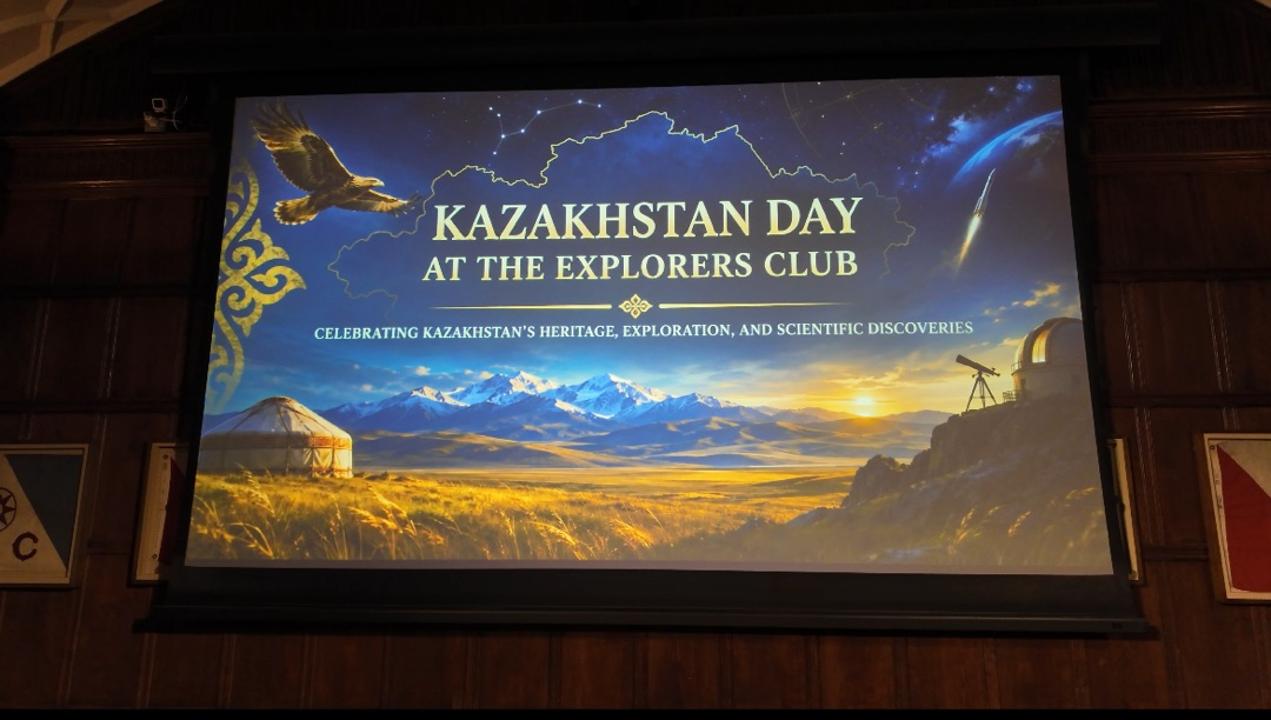
The Central Asia Chapter of the club will be based in Kazakhstan. Photo credit: Kazakh Consulate General in New York.
The launch seeks to bring Central Asia closer to the international community of explorers, scientists, adventurers and conservation professionals. The chapter was officially inaugurated at the club’s headquarters in New York, bringing together explorers, scientists, diplomats and conservation experts to discuss opportunities for joint research, according to Kazakhstan’s Consulate General in New York.
Founded in 1904 in New York, the Explorers Club brings together scientists, explorers and conservation professionals and has been associated with major milestones in exploration, including expeditions to Mount Everest, the ocean’s deepest depths and the Moon.
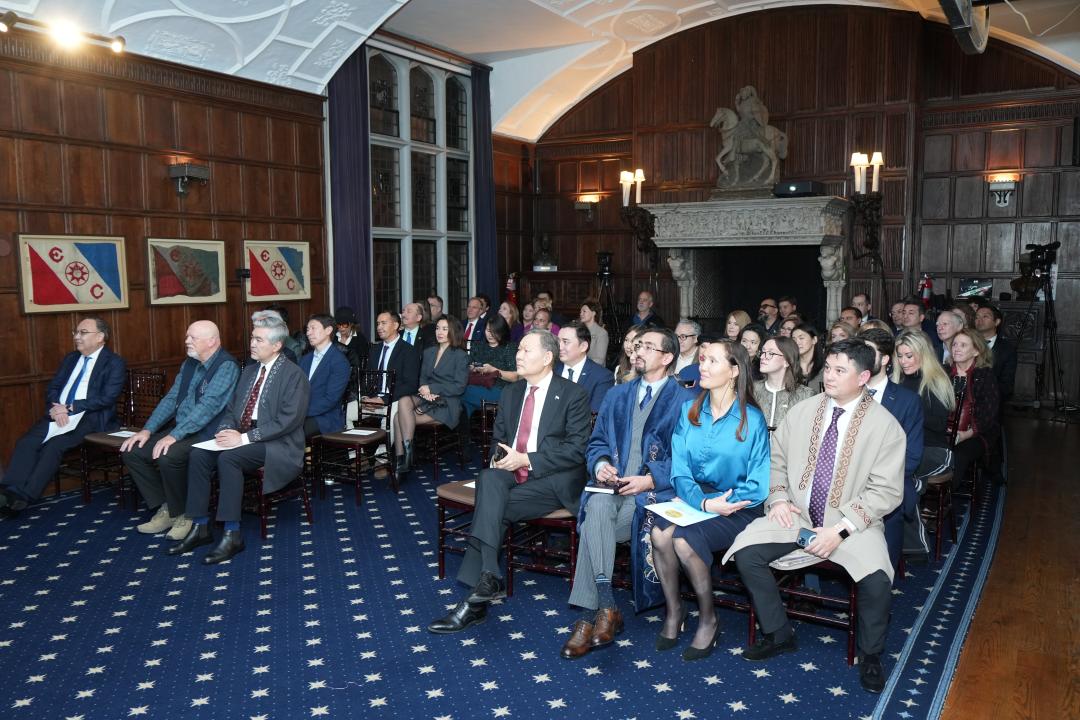
Founded in 1904 in New York, the Explorers Club brings together scientists, explorers and conservation professionals. Photo credit: Kazakh Consulate General in New York
The initiative aims to expand cooperation between Central Asian and international researchers, with a focus on exploring the region’s archaeological and natural heritage, advancing conservation efforts and creating opportunities for young scientists to participate in international expeditions.
The Explorers Club has more than 30 national and international chapters that serve as local networks for explorers, scientists and students. According to the club, many chapters organize expeditions, lectures, seminars and educational events, while also offering field-research grants to students.
For Kazakh conservationist Albert Salemgareyev, who presented the country’s experience in restoring the saiga antelope population, the most meaningful part of the event came after his presentation, when discussions turned from Kazakhstan’s conservation achievements to the challenges that lie ahead.
Salemgareyev represents the Altyn Dala Conservation Initiative, a project spearheading the efforts to protect and restore the saiga antelope population, one of the country’s prominent wildlife conservation achievements.
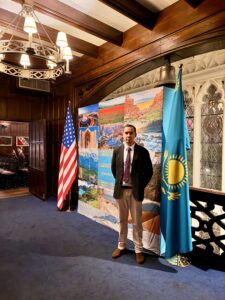
Albert Salemgareyev, a lead specialist at the Association for the Conservation of Biodiversity of Kazakhstan. Photo credit: personal archive
“I came away with the sense that people wanted to understand the challenges we face now. Saiga numbers are growing, and new roads and railway lines are being built across the steppe. How do we plan to keep migration routes open as that network expands? And where saigas and livestock share the same pastures, how can we make sure there is room for both?” Salemgareyev told The Astana Times.
“I see an opportunity for international scientists and explorers to join our field teams and contribute to the research that we are carrying out through the Altyn Dala Conservation Initiative. I also hope the chapter can introduce this work to potential funders. Understanding how migration routes change takes years of observation, and that requires sustained support,” he explained.
Among the possibilities that he noted are joint expeditions to study steppe ecosystems, the use of artificial intelligence to identify and count saigas in aerial survey photographs, and expanded GPS tracking to better understand animal migration.
“One promising use of artificial intelligence is to help us find and count saigas in aerial survey photographs. There is also scope to study other steppe species,” he said.
Such research could also help address tensions between conservation efforts and the livelihoods of farmers, particularly where saigas and livestock compete for pasture.
“By tracking herds over several years and comparing their movements with farmers’ observations, we could better understand when and where saigas enter farmland and under what circumstances farms experience losses. That would help us work with farmers on ways to reduce those losses while keeping migration routes open,” Salemgareyev said.
“The chapter could bring together researchers and field teams for this work and help secure long-term funding,” he added.
Salemgareyev sees Kazakhstan’s steppe and the Ustyurt Plateau particularly promising opportunities for future exploration.
“In Torgai [in northern Kazakhstan], the return of kulan and Przewalski’s horses gives us an opportunity to study how they use different pastures through the seasons and how their grazing affects vegetation and steppe birds over time,” he said.
“On Ustyurt, I would focus on saiga migration and the seasonal movements of goitered gazelles. I am particularly interested in the routes these animals take as they approach the border between Kazakhstan and Uzbekistan, where they cross and where they encounter obstacles,” he added.
Joint fieldwork could help researchers identify important migration crossings, understand where animals encounter obstacles and determine which routes require greater protection.
“Together, we could identify which crossings matter most for each species and agree on where to focus our efforts to keep those routes open,” he added.
The launch ceremony was attended by Kazakhstan’s Ambassador to the United States Magzhan Ilyassov, presidential representative Erzhan Kazykhan and Richard Wiese, president emeritus of The Explorers Club, alongside representatives of the scientific and diplomatic communities.
Beyond wildlife conservation, the launch highlighted the region’s broader scientific and archaeological potential. During the event in New York, British explorer Nick Fielding presented the history of ancient cities along the Syr Darya River and their role in connecting civilizations across Central Asia.
