
Central Asia is entering a new phase of economic development. Kazakhstan and Uzbekistan are attracting rising international investment, regional capital markets are deepening, entrepreneurial wealth is accumulating, and a new generation of business owners is beginning to think seriously about succession, diversification and the preservation of family wealth.
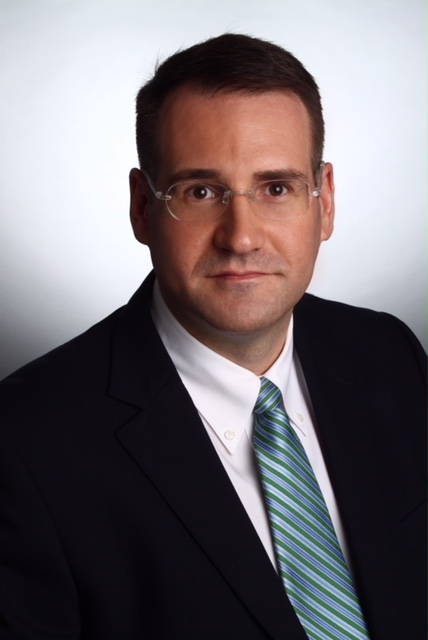
Rainer Michael Preiss.
Yet one part of the region’s financial architecture remains underdeveloped. Central Asia has no natural home for private capital and family offices. Astana has an opportunity to change that.
Through the Astana International Financial Centre (AIFC), Kazakhstan has already built much of the institutional architecture an internationally credible financial Centre requires: an English-law framework, an exchange in AIX, an independent court and regulator. The next step should be more ambitious — transforming Astana from a financial jurisdiction into the capital-allocation and family-wealth Centre of Central Asia.
This would not require Astana to become another Singapore, Switzerland or Dubai. Attempting to imitate those centers would probably be a mistake.
Ecosystems, not buildings
Successful financial centers are ultimately ecosystems rather than towers, tax regimes or regulatory frameworks. A wealthy family does not establish a family office because a jurisdiction offers an attractive license. It needs private banks, investment managers, lawyers, accountants, trustees, tax advisers, fund administrators, private-equity specialists and succession advisers. Most importantly, it needs other families and investors nearby. That is the network effect which distinguishes established centers, and it is why Singapore’s position rests on far more than a single regulatory initiative, and Switzerland’s on far more than its private banks.
Astana must think in the same terms. The AIFC’s dedicated family-office framework was an important move, but regulation is the beginning of a strategy rather than its conclusion. The bigger question is what grows around those family offices.
One logical next step would be an AIFC Family Wealth and Private Capital Centre whose purpose extends well beyond licensing — bringing family offices, private banks, asset managers, lawyers, trustees, private-equity and venture managers and family-governance specialists under a recognizable institutional umbrella.
Regional, not national
Astana should resist positioning itself as Kazakhstan’s family-office Centre. The far more powerful proposition is Astana as Central Asia’s international wealth-management jurisdiction, with an addressable market extending to entrepreneurs and families in Uzbekistan, Kyrgyzstan and Tajikistan, and potentially the Caucasus and Mongolia.
Many wealthy Central Asian families currently look to Zurich, London, Singapore or Dubai for private banking, custody and wealth structuring. There is nothing wrong with that; those centers hold expertise accumulated over generations. Astana does not need to replace them. It can connect them to Central Asia. An AIFC Singapore corridor is a tangible and realistic proposition.
A family office might be established in the AIFC while maintaining custody relationships with Swiss, Singaporean or Emirati banks and investing through international managers. The model becomes: Central Asian family → Astana family office → global financial system. Astana becomes the bridge rather than attempting to recreate the entire international financial system domestically.
Multi-family offices deserve particular attention. Not every wealthy family wants the cost and complexity of its own investment institution. A capable MFO can provide several families with investment advice, consolidated reporting, asset allocation, manager selection, governance support and succession coordination — a model well suited to a region where large private fortunes are numerous but individually below the scale that justifies a standalone office. Ten or twenty credible platforms would bring with them lawyers, auditors, administrators and investment professionals.
Where the real advantage lies
Astana is unlikely to compete with Switzerland in private banking or Singapore in global portfolio management. It does not need to. Its competitive advantage lies closer to home, in Central Asian private markets.
This is the part of the proposition no other center can replicate. Infrastructure, logistics, mining and metals processing, agriculture, energy transition and a young technology sector, across a market of some 80 million people, all require capital the region’s banks alone cannot supply. International investors seeking that exposure need local partners, local diligence and local judgement. A family office in Zurich cannot originate a Kyrgyz hydro deal or a Tashkent logistics platform; an Astana-based one can. Proximity to deal flow, not proximity to custody, is the genuine edge. So was it in Singapore and so could it be in Astana with the right strategic action plan.
Private banking should still form part of the strategy, but in a realistic form. International private banks could establish Central Asian advisory desks in Astana without full booking centers: assets custodied in Switzerland, Singapore or the UAE, while relationship managers and family-office specialists sit in Astana. Rather than competing with global custody centers, Kazakhstan integrates itself into their networks.
The academic foundation
Every serious financial center rests on an educational base, and this is the element most easily overlooked because its returns arrive a decade late. Singapore’s rise as a wealth-management hub was underwritten by sustained investment in its universities and by the deliberate importation of foreign faculty and curricula. Switzerland’s private-banking tradition is sustained by a dense network of institutes, certification bodies and executive programs that continuously replenish its talent pool. Neither position was built on regulation alone.
A joint AIFC–Nazarbayev University center for private capital and family enterprise — combining academic research, executive education and practitioner teaching — would give the jurisdiction something more durable than a licensing regime.
The AIFC’s own professional training capability should be broadened accordingly. Its existing focus on financial regulation and market infrastructure needs to be extended into family-office advisory, trust and succession law, private-markets investing, compliance, philanthropy, impact investing, digital assets and the application of artificial intelligence to portfolio and risk management.
Research deserves equal weight. Reliable data on Central Asian private wealth, family-business ownership structures and regional private-market returns barely exists, and its absence is itself a barrier to investment. An annual Central Asia Family Wealth Report, produced to academic standards, would give international allocators something to reference and would establish Astana as the authority on its own market — a role London, Zurich and Singapore each play for their regions.
Finally, a Central Asia NextGen Family Enterprise Program could bring together young members of prominent business families from Kazakhstan, Uzbekistan, the Kyrgyz Republic and neighboring economies for a structured curriculum in governance, investment and philanthropy. Its immediate financial impact would be hard to measure. Its long-term impact could be considerable: the relationships formed in such programs tend to determine, twenty years later, where a generation chooses to domicile its capital.
Bringing it together
Astana should also create a flagship gathering built specifically around private capital — a Central Asia Family Capital Summit of perhaps 300 to 500 principals, CIOs, private bankers, sovereign funds and entrepreneurs. Its value would come from selectivity rather than scale.
Family offices become anchor investors around which entire ecosystems form. They allocate to private equity and venture capital, invest alongside sovereign funds, finance entrepreneurs and employ professionals. Singapore can remain Asia’s portfolio-management center; Switzerland can remain synonymous with wealth preservation; Dubai can, thanks to Emirates airlines, remain a global crossroads. Astana should establish a category of its own to make the central Asian family office GREAT again.
The question is no longer how many family offices Astana can register. It is whether Astana can become the place where Central Asia’s private capital comes together.
The author is Rainer Michael Preiss, Partner and Portfolio Strategist, DAS Family Office.
Disclaimer: The views and opinions expressed in this article are those of the author and do not necessarily reflect the position of The Astana Times.
