
ASTANA – From coral reefs and the microscopic organisms that sustain them to marine mammals inhabiting the Caspian Sea, every species is part of a larger natural system. A photo exhibition that explores this interconnected world opened in Astana on Sept. 23, bringing together stories of biodiversity from Kazakhstan and around the world.
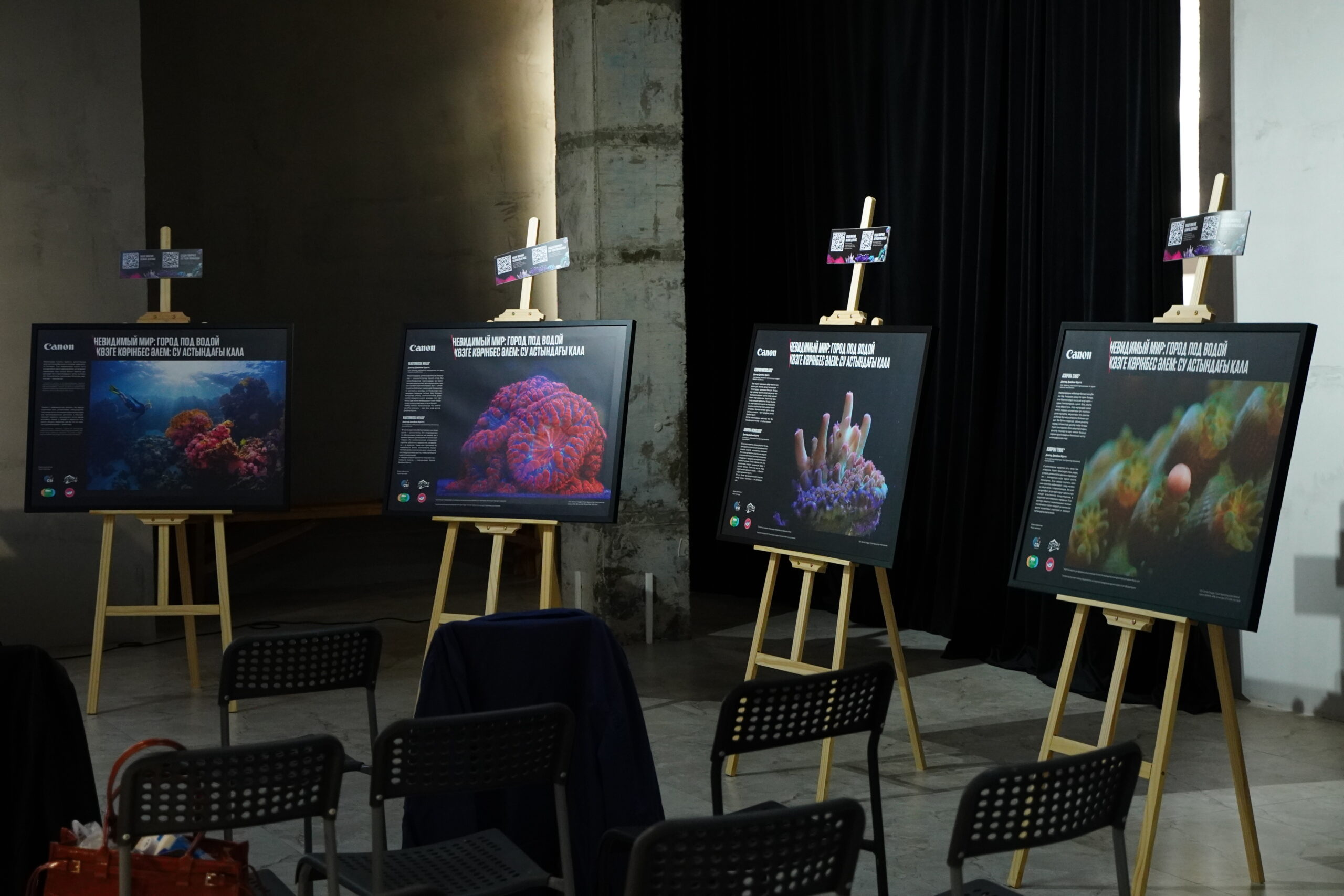
Photo credit: The Astana Times/ Fatima Kemelova
An exhibition, titled “Invisible World: A City Underwater” will run through Nov. 1.
One biodiversity story comes from a small laboratory in London, where marine biologist Jamie Craggs, a co-founder of Coral Spawning International, managed to recreate the natural conditions required for coral spawning. The work has opened new possibilities for producing young corals in controlled conditions while maintaining greater genetic diversity.
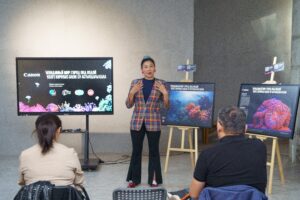
Maral Rakhimzhanova, corporate communications manager at Canon’s representative office in Kazakhstan. Photo credit: Sultan Anarbekov
The project later expanded to the Seychelles, where Nature Seychelles established another laboratory as part of the Assisted Recovery of Coral (ARC) Programme. Unlike traditional coral gardening methods, the project uses sexual reproduction to produce genetically diverse corals. Early results recorded the settlement and growth of around 65,000 young corals.
As Maral Rakhimzhanova, corporate communications manager at Canon’s representative office in Kazakhstan, explained, the importance of coral reefs extends far beyond their colourful appearance.
“Corals are very colorful, but in fact their color is given by algae that live in symbiosis with them. It is a relationship between two living organisms,” she said.
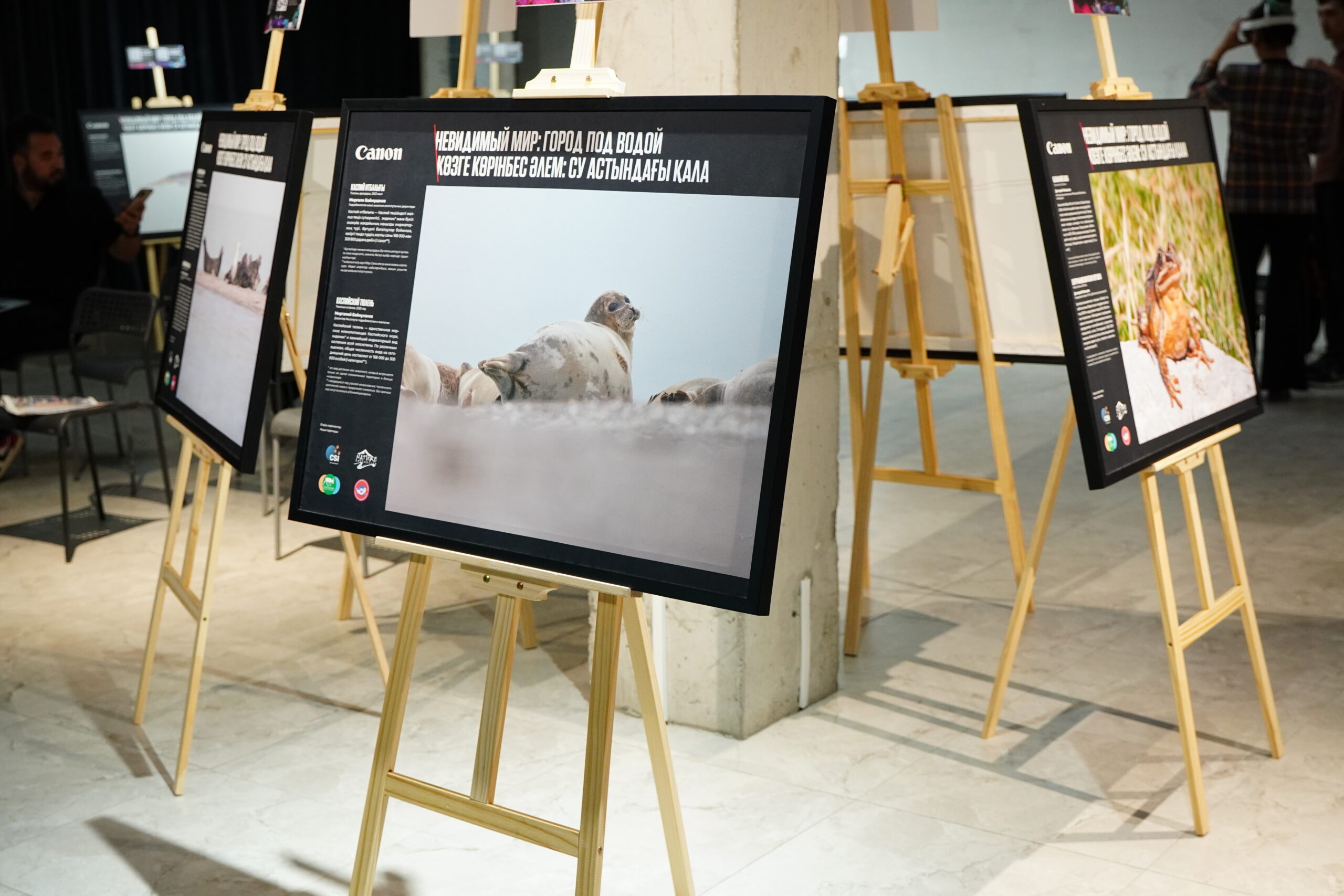
Photo credit: The Astana Times/ Fatima Kemelova
When water temperatures rise, corals can become stressed and expel the algae living within their tissues, causing coral bleaching. If the stress continues, the corals may eventually die. Reefs also provide food and shelter for a wide range of marine species, linking corals to the wider food chain.
Rakhimzhanova noted that these connections are relevant for a landlocked country such as Kazakhstan, as changes in one part of the natural world can have consequences far beyond it.
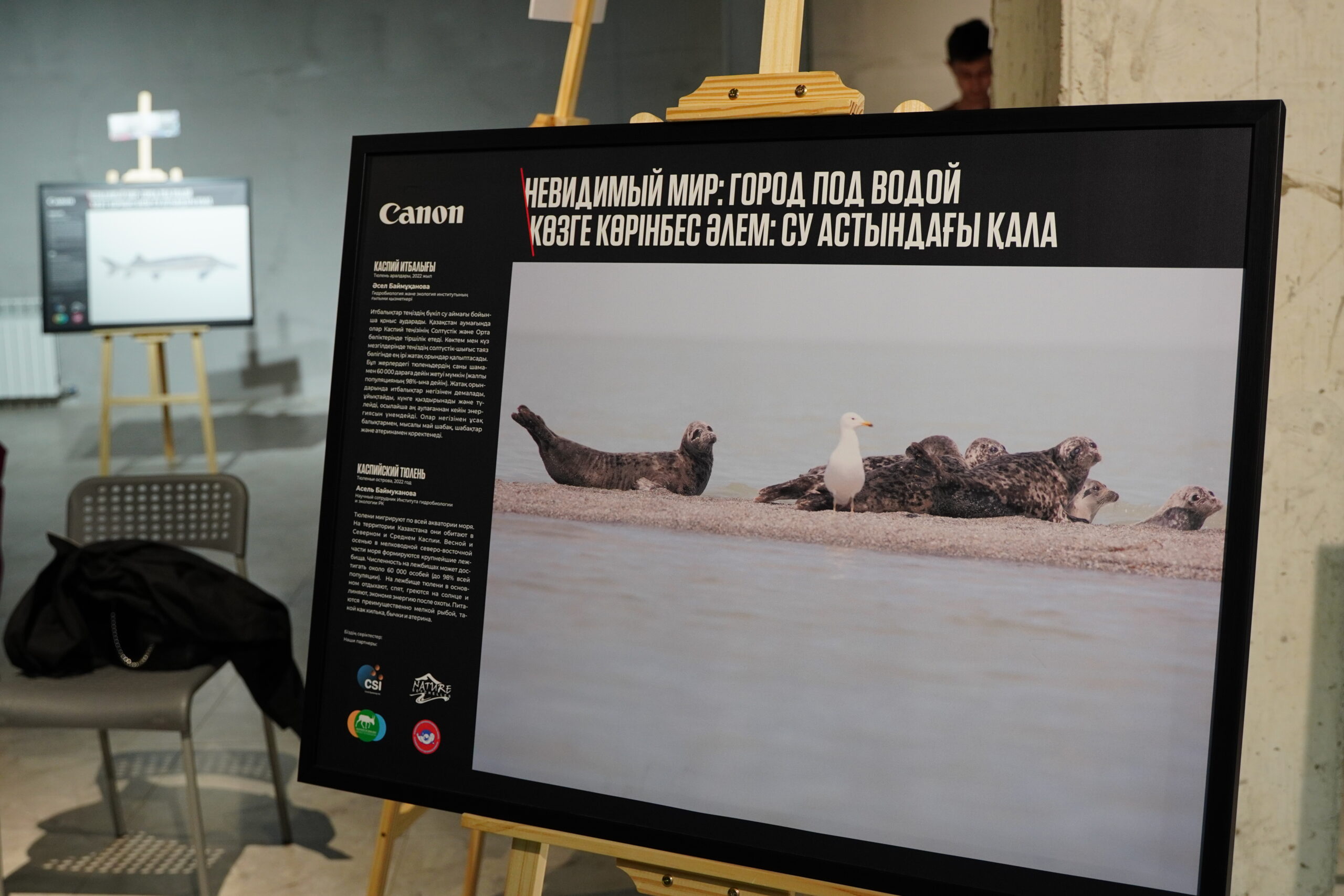
A photograph of Caspian seals by Assel Baimukanova. Photo credit: The Astana Times/ Fatima Kemelova
The same idea takes a different form in Kazakhstan’s waters, where the Caspian seal is among the species facing a changing environment. The animal, which is found only in the Caspian Sea, is included in Kazakhstan’s Red Book and has been the subject of long-term research by scientist Assel Baimukanova.
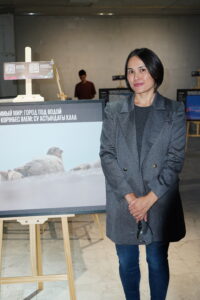
Kazakh ecologist Assel Baimukanova. Photo credit: The Astana Times/ Fatima Kemelova
“Field research shows that these animals have their own character and social interactions that we are still learning to understand. The Caspian Sea is their home, and protecting the Caspian seal has become my main goal. These animals are affected by a range of factors, including shipping, fishing, environmental pollution and climate change. As the sea changes, seals are also forced to adapt and change their usual resting sites,” Baimukanova explained.
“The health of the Caspian seal is closely connected to the health of the Caspian Sea itself. By observing how the animals are doing, we can learn a great deal about the condition of the ecosystem they depend on. Exhibitions like this help bring scientific research closer to the public, make science more accessible and encourage more people to take an interest in these issues,” Baimukanova told The Astana Times.
Her photographs are featured alongside works by Mirgaliy Baimukanov, a director of the Institute of Hydrobiology and Ecology, Dmitry Malakhov, a researcher at the Institute of Zoology of Kazakhstan, wildlife photographer Vladislav Yakushkin and birdwatcher Gennady Dyakin. Illustrations of rare fish by designers Vladimir Timokhanov and Timofei Bannikov add another perspective to the collection.
The story extends beyond photography through virtual reality technology, allowing visitors to virtually explore coral reefs and experience the underwater environment.
