
ASTANA – With Kazakhstan’s first Kurultai election concluded and the new unicameral Parliament set to convene for its inaugural session tomorrow, attention now turns to the institutional changes and key appointments that will shape the next phase of the country’s political transition.
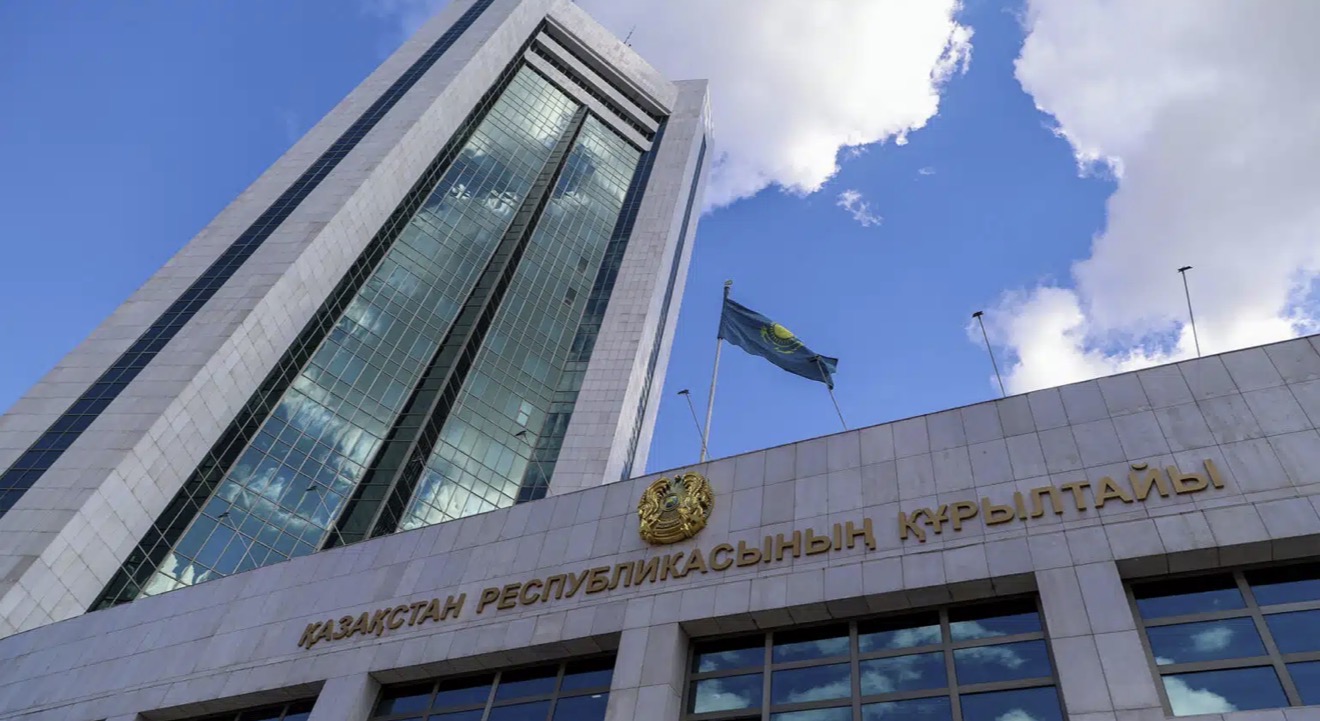
Photo credit: Serikzhan Kovlanbaev
The Kurultai, named after gatherings when Turkic and Mongol tribes used to make major decisions, will have its first session on Aug. 28. As in every other year, the first session is opened and chaired by President Kassym-Jomart Tokayev.
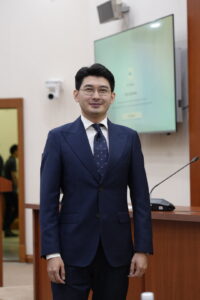
Zhandos Aktayev. Photo credit: Aktayev’s personal archive
“The political and institutional steps are clearly set out in law. The next stage will begin with the opening of Kurultai’s inaugural session, where the newly elected deputies will take the oath of office,” Zhandos Aktayev, chairman of the Esti Bol Qory public foundation and doctor in law, told The Astana Times.
The inaugural session will formally activate the political system established under the country’s new Constitution that took effect July 1. The Central Election Commission registered the 145 members of Kurultai on Aug. 27.
Deputies will take their oaths, elect Kurultai’s leadership and begin a process that will include the formation of a new government, the appointment of a vice president and the establishment of the People’s Council.
Under the new Constitution, the 145-seat Kurultai serves as Kazakhstan’s sole legislative chamber, where members serve a five year term. It passes laws, approves the president’s nominees for vice president and prime minister, oversees the government and national budget, authorizes certain senior judicial and state appointments, and decides on matters including war, peace, referendums and presidential elections. It may also hold government members to account and pass a vote of no confidence in the government.
“The election of the new Kurultai marks a continuation of Kazakhstan’s political reforms, meaning its decisions and use of its newly defined powers will face close scrutiny. The members of this first convocation will be remembered for their role in shaping a new political culture and advancing public policymaking in Kazakhstan,” Aktayev said.
Under the Constitution, Kurultai’s first order of business will be to elect its chair from among the 145 deputies. The President nominates a candidate, who must be fluent in Kazakh and secure an absolute majority in a secret ballot. Once elected, the chair will nominate three deputy chairs, who must also be approved by a majority of all Kurultai members.
Aktayev said the first session of Kurultai will be followed by the formation of the Kazakhstan People’s Council, a new supreme constitutional advisory body that replaced the Assembly of the People of Kazakhstan.
“The council will have the authority to submit legislation to the Kurultai, initiate national referendums and serve as a platform for dialogue between the state and civil society,” he added.
The opening of the first session will also set the government formation process in motion. The government has to resign its powers before the new chamber. The President will submit a nominee for prime minister following consultations with the political party factions represented in the Kurultai.
The legislature will also participate in the selection of members of the government, although its role in that process is consultative. The prime minister presents prospective ministers to the relevant permanent committees before submitting their names to the President. Each committee will issue a conclusion on the nominee, but its recommendation will not be legally binding.
Despite being a new institution, experts say the Kurultai will not begin with a blank legislative agenda.
“Although the Kurultai is a new institution, it will inherit legislation left unfinished by the previous Parliament, giving deputies an immediate and substantial workload,” said Aktayev.
“I expect its initial focus to be on lawmaking and improving the regulatory framework rather than public-facing activities. The country has shifted to a unicameral legislature and a proportional electoral system based on a single nationwide constituency, and the new chamber will still need to establish an effective working rhythm within this redesigned institutional framework,” he said.
“It would also be reasonable to expect elections to local representative bodies, known as maslikhats, to complete the transition to the new system and renew elected representation at every level. Such elections, however, can take place only if the President dissolves the current maslikhats after consulting the prime minister and the chair of the Kurultai,” Aktayev said.
The composition of the government will offer another measure of the transition’s scope. It will show whether the constitutional changes bring significant personnel and policy renewal or largely preserve the existing governing structure. Early appointments point to continuity in several key state institutions. On Aug. 24, Tokayev reappointed Timur Suleimenov as National Bank governor, Yermek Sagimbayev as National Security Committee chairman, Dmitry Malakhov as head of the Supreme Judicial Council and Artur Lastayev as commissioner for human rights. All four already held those positions.
The reappointments suggest that the constitutional transition will not necessarily produce a broad turnover across the state apparatus. Tokayev, however, has said changes are expected but described reshuffles as a way to give the cabinet fresh momentum rather than an exercise in dismissals.
The President also nominates the vice president, which is subject to Kurultai’s approval. The appointment must be made within two months of the inaugural session. The choice of vice president, a new office established under the Constitution, carries longer-term significance because the office is situated immediately below the presidency in the revised hierarchy. It does not necessarily mean a successor, but under the law the officeholder immediately takes on presidential powers in case the President dies, leaves office or is unable to exercise duties.
Experts will also be watching how the seats are allocated given the scale of Adilet’s victory. According to the CEC, Adilet will have 110 seats in Kurultai followed by Auyl with 10. Respublica will have nine seats, while the National Social Democratic Party and Aq Jol each will have eight.
“The President has repeatedly stressed that the public expects to see a new generation of younger professionals in Kurultai. I do not think the parties will disregard that message,” he added.
Adilet, a pro-presidential party, secured 71.17% of the vote, according to final results, giving it an overwhelming majority in the new legislature. The outcome has also raised questions about political competition. Although Adilet is a newly established party, its platform closely reflects Tokayev’s political agenda. Party chairman Aibek Dadebai, a former head of the presidential administration, has described Adilet as a “political pillar” of Tokayev’s strategic course.
A large majority could allow Adilet to advance legislation quickly and provide the political stability needed to implement the new constitutional framework. At the same time, the scale of its victory increases the party’s responsibility to demonstrate that the Kurultai can scrutinize government policy rather than merely ratify executive decisions.
The inaugural session will put Kazakhstan’s new constitutional model into practice, but institutional redesign alone does not guarantee political change. Whether it can exercise meaningful oversight and permit genuine debate or whether it becomes a more efficient vehicle for implementing decisions made by the executive remains to be seen.
