
ASTANA – Kazakhstan’s first campaign for the new Kurultai has brought all seven registered political parties into a national political debate, with televised discussions and public meetings highlighting their policy priorities ahead of the Aug. 23 vote.
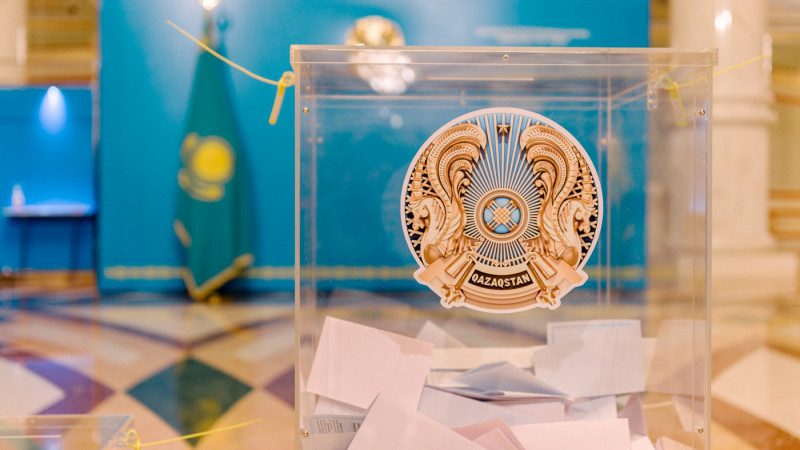
Photo credit: Tengrinews.kz
A campaign built around debate
The campaign has emphasized televised debates. Over four weeks, representatives of all seven parties took part in discussions broadcast by Qazaqstan TV, Channel 7, Jibek Joly and 24KZ. Different formats covered topics ranging from education and human capital to economic growth, social policy and regional development.
The final debate on Aug. 19 brought the leaders of all seven parties together to discuss how economic growth could translate into better living standards. The format gave party leaders an opportunity to present their programs, challenge opponents and respond to questions.
The debates also created a common public space in which parties had to explain their positions in direct exchanges with political opponents.
This aspect of the campaign was highlighted at a meeting of the Kazakhstan Institute for Public Development’s SARAP Expert Club, which brought together political, academic and civil society representatives on Aug. 20.
Kazakhstan Institute for Public Development Deputy Chairperson Zhanar Bukanova described televised debates as an important feature of the campaign because they provide opportunities for open discussion of party programs and political positions, expand voters’ access to information and contribute to substantive political competition.
“At the same time, elections are not the final point of the socio-political process. After voting is completed, responsibility to society only increases. It is important that the initiatives voiced during the campaign and the demands of citizens find their continuation in concrete decisions. Therefore, after the elections, it is also important to maintain dialogue between the state, political parties, civil society and experts,” Bukanova said.
From broad priorities to policy solutions
Economic and social matters occupied much of the campaign. Employment, household incomes, education, healthcare, social protection, entrepreneurship and regional development repeatedly featured in party programs and televised discussions.
The parties nevertheless placed different emphasis on these topics. Auyl Party focused on agriculture and regional development, while Ak Zhol highlighted entrepreneurship and business interests. Baytaq Green Party centered its campaign on environmental subjects, while the People’s Party of Kazakhstan and Nationwide Social Democratic Party gave greater emphasis to social policy. Adilet presented a program covering law and order, regional development, economic competitiveness, digitalization and social policy.
Taken together, the campaign showed that parties often identified similar concerns but differed in what they emphasized and the approaches they proposed.
Beyond party programs, the campaign also provided a broader forum for discussing topics raised by voters and communities. Public meetings and regional campaigning allowed parties to present their positions outside the televised debates and engage directly with citizens.
Key election details
The Aug. 23 election will be the first nationwide vote under Kazakhstan’s new parliamentary model. Citizens will elect 145 members of the Kurultai, the new unicameral Parliament, through proportional representation in a single nationwide constituency. Seven parties are contesting the election, with a 5% threshold for entering the legislature.
Campaigning ended at midnight on Aug. 21, followed by a campaign silence day on Aug. 22. More than 12.6 million people are eligible to vote.
A total of 777 foreign observers from 42 countries and 13 international organizations have been accredited to monitor the Kurultai election.
According to data from territorial election commissions, all polling stations across the country are ready for election day as of Aug. 21. The necessary conditions have also been created to ensure that people with limited abilities can exercise their voting rights.
