
ASTANA – Kazakhstan is preparing new support to place domestically produced goods in major foreign retail chains as the country seeks to build on rising nonresource exports and shift sales toward higher-value finished products.
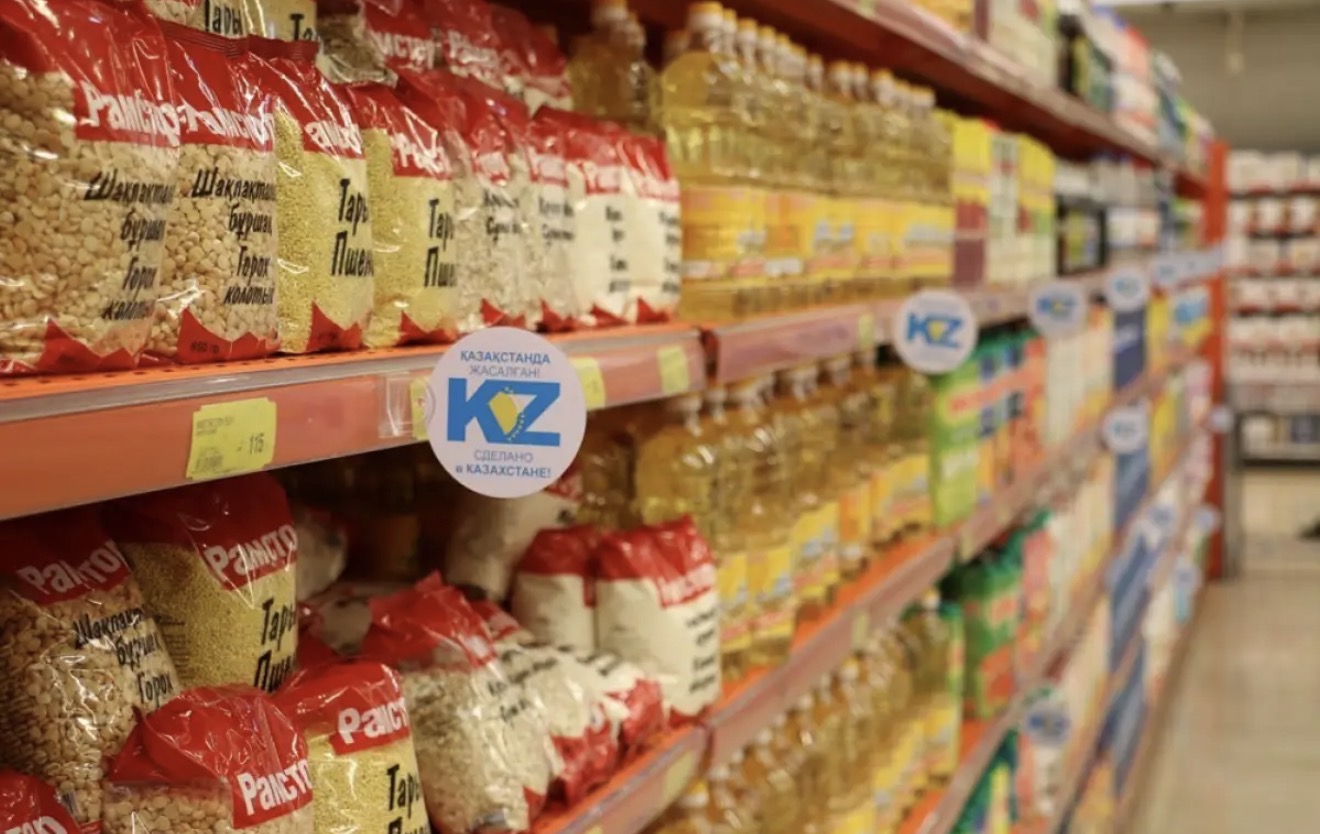
Photo credit: kaztag.kz
Nonresource exports increased 14.5% in the first five months of 2026 to $11.8 billion, while around 44% of goods produced in Kazakhstan are now sold abroad, Trade and Integration Minister Arman Shakkaliyev said at an Aug. 4 government meeting.
“The priority is to strengthen support for exports and expand export markets, primarily to the Eurasian Economic Union, Central Asia, the Middle East, Europe, and China. To this end, approximately 10 trade and economic missions are conducted annually, involving more than 300 Kazakh exporters. To nurture new exporters, 120 companies participate in the export acceleration program each year,” said the minister.
Financial support to exporters is also expanding. The Export Credit Agency provided more than 400 billion tenge (US$850.3 million) in insurance support in the first half of the year and Shakkaliyev said the figure is expected to reach 1.2 trillion tenge (US$2.6 billion) by the year’s end. The government also allocates around six billion tenge annually to reimburse exporters’ logistics costs.
According to Shakkaliyev, over the past five years, exports of higher-processed goods have increased 2.5 times, from $4.2 billion to $11.1 billion, and now account for 38.8% of nonresource exports.
The next step is to promote finished Kazakh products abroad. The government is developing a new support measure to help domestic goods secure shelf space in major international retail chains, including Lulu Hypermarket, Carrefour, Gross, Panda and Spinneys.
Prime Minister Olzhas Bektenov instructed the Trade Ministry and other state bodies to identify priority countries, foreign retail chains and product groups. They are expected to develop measures covering certification, logistics, promotion and product placement.
Stronger domestic capacity
The export push is closely linked to the government’s efforts to strengthen domestic producers at home. Officials said that stable demand through public procurement, national companies and local retail chains can give Kazakh manufacturers the scale needed to compete abroad.
Bektenov noted Kazakhstan had established the main instruments for supporting domestic manufacturers, including tax incentives, state financing and priority access to national and infrastructure projects.
“It is now necessary to ensure steady growth in the share of domestic products in the domestic market and to expand exports of Kazakh goods,” said Bektenov.
Supporting production is not enough when domestic companies cannot secure predictable buyers and the government is now trying to close that gap through public procurement, guaranteed purchase agreements and greater access to retail networks.
Bektenov also instructed the Trade and Integration Ministry to develop within one month a comprehensive program to promote goods under the Made in Kazakhstan brand. Officials are also expected to identify priority product categories and establish targets for increasing the share of domestic goods in each one.
“I believe that retail chain owners should reconsider their attitude toward goods produced in Kazakhstan. Giving preference to imported goods at the expense of domestic ones is wrong not only from a legal standpoint but also from a moral one,” he added.
Shakkaliyev said current legislation requires retailers to allocate at least 50% of shelf space to domestic food products and at least 30% to locally produced nonfood goods. Proposed legal changes would require those shares to be met within individual product categories and subcategories, rather than across a store’s total inventory. The change is intended to prevent retailers from formally meeting the quota by concentrating domestic goods in only a few sections.
Similar requirements are being introduced on major Kazakh e-commerce platforms. Retail chains are also prohibited from rejecting supply agreements with domestic producers without justification.
Public procurement
Government agencies signed more than 45,000 contracts worth 82 billion tenge (US$174.3 million) with domestic producers in the first half of the year, according to Minister of Industry and Construction Yersayin Nagaspayev. Companies under the Samruk Kazyna Sovereign Wealth Fund signed more than 3,800 contracts with Kazakh manufacturers. These included 286 long-term agreements and offtake contracts worth 390 billion tenge (US$829 million).
“In the subsoil use sector, which is one of the key drivers of the country’s industrial potential, 425 guaranteed purchase agreements totaling 123 billion tenge (US$261.4 million) have been concluded,” he added.
The figures illustrate the central argument behind the government’s strategy. Reliable demand can allow manufacturers to use existing capacity more fully and justify investment in new production. Manufacturing output increased 9.8% in the first half of the year and exceeded 16 trillion tenge (US$34 billion) according to Nagaspayev.
Agricultural sector
Agricultural exports are also becoming more diversified. They rose 37% in 2025 to $7 billion, with processed products accounting for more than half of the total. The sector recorded a trade surplus of around $500 million for the first time, said Vice Agriculture Minister Azat Sultanov.
“A notable achievement of the phytosanitary service was the expansion of feed meal exports to China. The harmonization of requirements and approval procedures made it possible to process fourth- and fifth-grade grain and generate steady export demand for it. As a result, feed meal shipments increased 2.4-fold to approximately three million metric tons,” said the Kazakh official.
Grain and flour exports in grain equivalent reached a record 15.3 million tons in the 2024-2025 marketing year, while shipments have expanded to Morocco, Algeria, the United Arab Emirates, Vietnam and several European countries. Deliveries to Azerbaijan, Georgia and Türkiye have also resumed, said Sultanov.
Addressing the meeting, Bektenov urged greater focus on livestock farming, particularly beef production, which he said has a “significant multiplier effect.”
“It is important to maximize this potential and consolidate Kazakhstan’s position in foreign markets as one of the leading exporters of meat products,” he added.
Sultanov said the ministry is increasingly focusing on deeper processing rather than exports of raw agricultural commodities. Planned projects include the production of starch, amino acids, gluten, animal-feed additives and aviation fuel made from oilseeds.
