
ASTANA — Trade and investment between the Gulf Cooperation Council (GCC) and countries in the Caucasus and Central Asia (CCA) remain below their potential despite growing economic complementarities, according to a new International Monetary Fund (IMF) paper presented during a July 7 virtual launch event. The paper, Strengthening GCC-CCA Economic Cooperation, examines trade and investment links between the two regions and outlines policy measures that could help unlock greater economic integration.
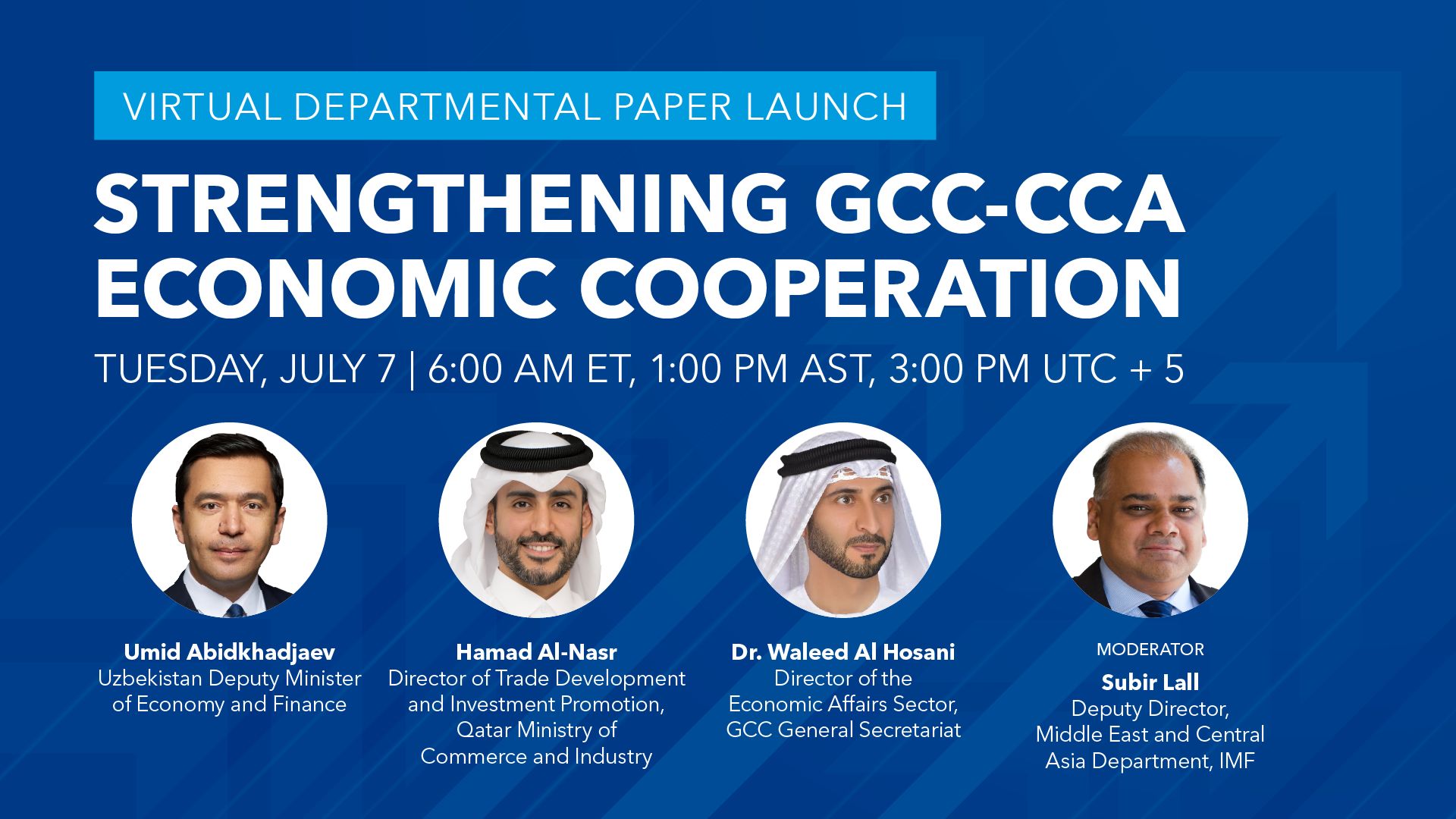
Opening the discussion, IMF Deputy Director for the Middle East and Central Asia Department Subir Lall said strengthening regional partnerships has become increasingly important amid global uncertainty.
“Strengthening regional partnerships is not simply about expanding economic opportunities. It is also about building resilience. Strengthening trade and investment can help countries better withstand external shocks while supporting growth,” Lall said.
Trade remains limited despite openness
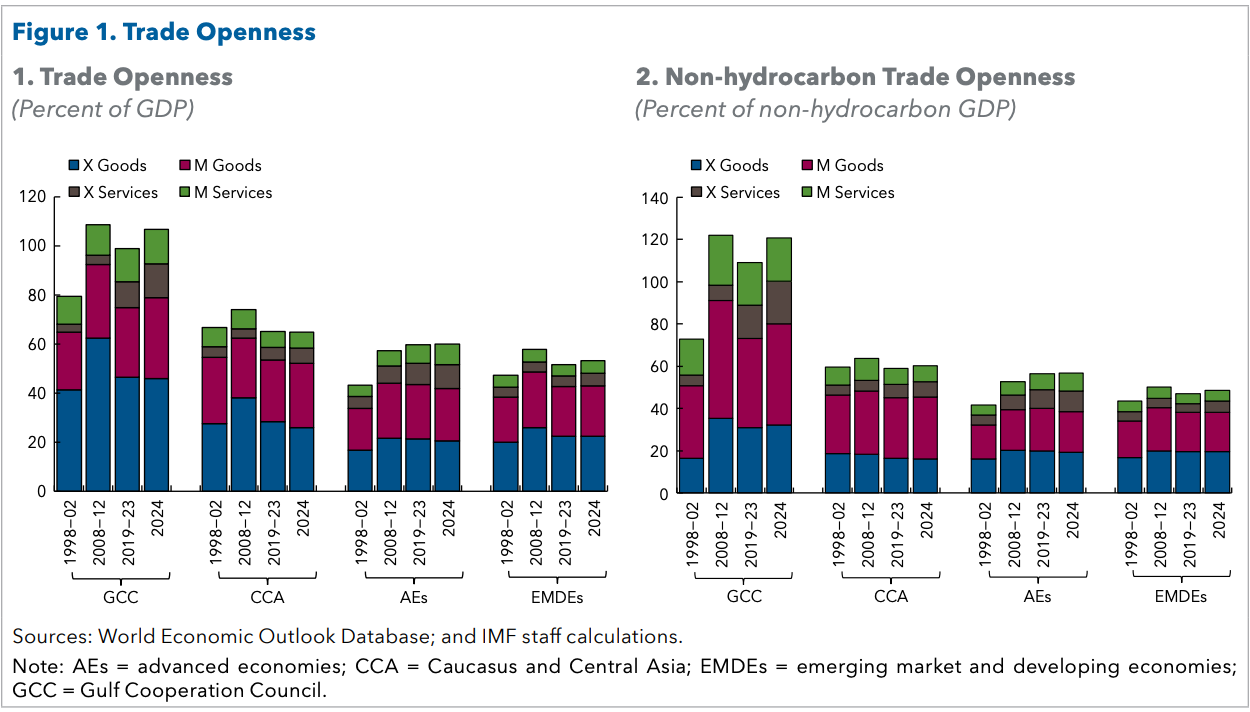
Presenting the report’s findings, IMF co-lead author Francois Painchaud said both the GCC and CCA are among the world’s more open economies, with trade openness exceeding that of many emerging and advanced economies. However, trade between the two regions remains relatively modest.
“Despite the high trade openness in the GCC and the CCA, trade between the GCC and the CCA remains limited, although it has been increasing recently,” Painchaud said.
According to the IMF analysis, exports in both regions remain concentrated in minerals and fuels, though diversification efforts are gradually changing the composition of trade.
“Both charts show a gradual reduction in the share of minerals and fuels in exports, reflecting the impact of ongoing diversification policies. This is important because this diversification creates more opportunities for trade between the GCC and the CCA,” Painchaud said.
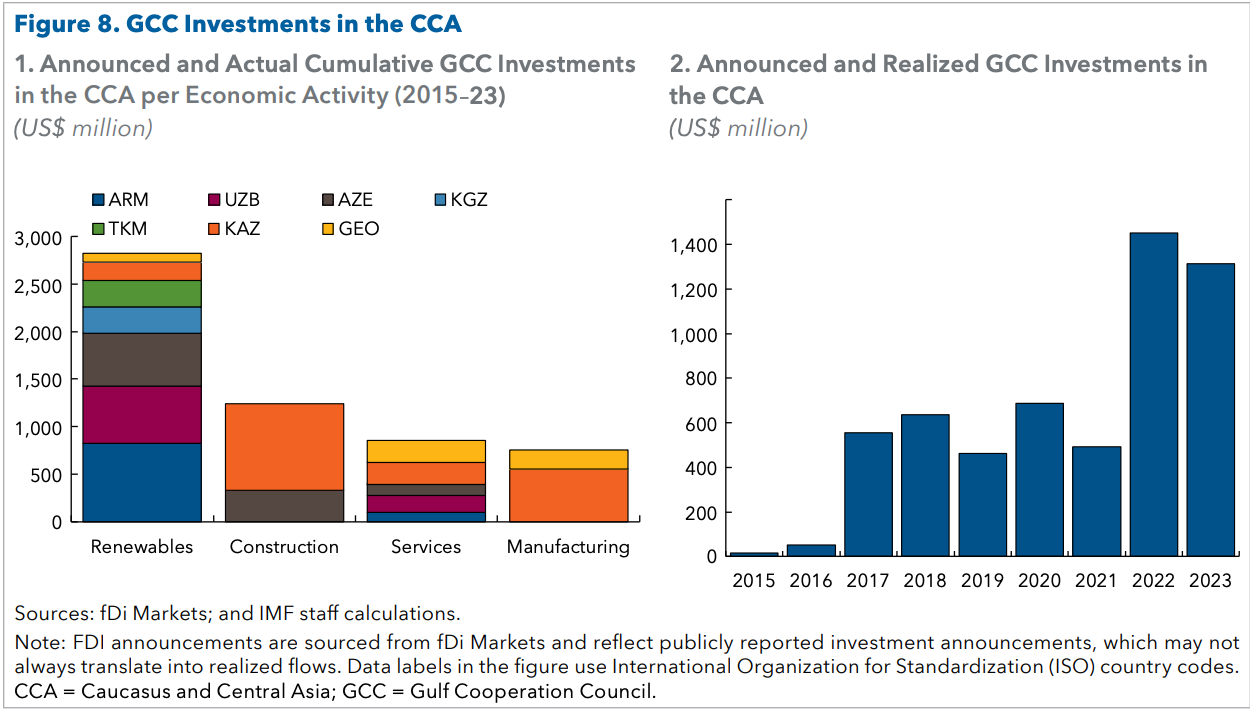
The report also found that the GCC and Central Asia have complementary investment dynamics. While GCC economies have traditionally generated current account surpluses and supplied capital globally, Central Asian economies have largely been recipients of foreign direct investment (FDI). Still, realized FDI flows remain below potential.
“When we look at the average FDI-to-GDP ratio in the GCC and the CCA, we can see that it is well below the average of emerging markets, which suggests substantial areas for improvement,” Painchaud said.
Trade agreements could deliver significant gains
The IMF’s econometric analysis found that policy choices play a major role in determining trade outcomes. According to the report, trade agreements are associated with an 80% increase in bilateral trade, with the strongest effects observed in agricultural products. Improvements in logistics, governance, and reductions in tariffs and non-tariff barriers were also linked to stronger trade performance. For Central Asian countries, the IMF identified logistics and governance reforms as the highest-impact priorities.
“The CCA countries should prioritize improving logistics and governance, and reducing trade restrictions and tariffs would also help boost trade,” Painchaud said.
The report also concluded that structural reforms could significantly increase foreign investment, particularly in Central Asia. According to IMF estimates, closing policy gaps could generate FDI gains equivalent to around 0.7% of GDP in the CCA region, compared to 0.14% of GDP in GCC countries.
The IMF recommended expanding trade and investment agreements, improving cross-border payments, strengthening governance, and enhancing trade facilitation. The report cautioned, however, that special economic zones and public-private partnership mechanisms should complement broader reforms rather than replace them.
GCC views Central Asia as a natural partner
Speaking from the GCC perspective, Director of the Economic Affairs Sector at the GCC General Secretariat Dr. Waleed Al Hosani described Central Asia as a strategic partner in the Gulf’s diversification agenda.
“Diversifying trade and investment partnerships lies at the heart of the GCC’s economic vision. The GCC is proactively widening its partner network toward promising non-traditional markets. The CCA is a natural fit — a bridge on the Asia-Europe corridors, rich in resources, fast-growing,” Al Hosani said.
He identified renewable energy, logistics, food security and infrastructure as priority sectors for cooperation. Al Hosani also pointed to commitments made during the GCC-Central Asia Summit in Jeddah in 2023, where leaders emphasized strengthening political and economic ties, improving supply-chain resilience, and expanding cooperation in energy, transportation and investment.
Transportation and connectivity, he said, remain among the most important pillars of future cooperation. According to Al Hosani, studies project that passenger traffic on the GCC railway network could exceed 8 million passengers by 2040, while freight volumes could reach approximately 95 million tons.
Uzbekistan highlights reform success
Uzbekistan’s Deputy Minister of Economy and Finance Umid Abidkhadjaev said the country’s investment strategy has focused on creating a predictable business environment backed by structural reforms.
“For an investor, the decisive factor is the overall climate of confidence, the consistency of policy and the credibility of the commitment that the reforms are irreversible,” Abidkhadjaev said.
He highlighted reforms aimed at improving investor protections, including legislation guaranteeing the free transfer and repatriation of funds, mediation mechanisms for dispute resolution, and an expansion of special economic zones from three in 2017 to 33 today. Uzbekistan also reduced the number of taxes from 13 to nine and lowered value-added tax from 20% to 12%, he said.
The deputy minister noted that more than 2,700 public-private partnership projects worth approximately $29 billion have been implemented since the adoption of the country’s PPP law in 2019, with an additional $30 billion project pipeline approved through 2030. According to Abidkhadjaev, investment from Gulf countries has expanded rapidly.
“Over five years, investment volumes rose nearly 19 times to $8.3 billion. Around 90% of these funds are concentrated in power generation and renewable energy projects,” he said.
He added that foreign investment and external financing increased from $3.3 billion in 2017 to approximately $43 billion in 2024.
Looking ahead, Abidkhadjaev said Uzbekistan aims to position itself as a strategic bridge between East and West while focusing on higher-value sectors such as digital infrastructure, artificial intelligence, data centers, innovation clusters and green technologies.
“Our aim is to lift this partnership from individual projects to the level of a systemic economic platform, where a long-term model can bring together trade, investment, logistics, finance and human capital,” he said.
