
ASTANA – Long before climate change and water scarcity became global concerns, the nomads of the Kazakh steppe built a way of life around mobility, restraint and close observation of the natural world. Their experience offers a striking example of how human societies once lived in balance with nature rather than trying to dominate it.
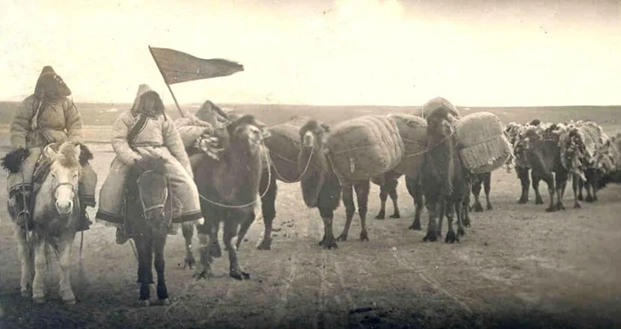
An Oirat Caravan in the early 20th century. Photo credit: Wikimedia Commons
According to Bereket Karibayev, a professor at Al-Farabi Kazakh National University, doctor of historical sciences and academician, nomadic civilization emerged alongside sedentary civilization as one of the two major forms of human social development.
“Today, world historians speak of two primary civilizations: sedentary and nomadic. Naturally, both were formed simultaneously and evolved side by side,” Karibayev said.
On the territory of present-day Kazakhstan, the first signs of a nomadic way of life began to take shape around the 16th to 15th centuries B.C. As livestock numbers grew, communities were forced to search for new pastures, leading to one of the earliest major divisions of labor: some people focused on agriculture, while others turned to herding.
A way of life shaped by the land
For nomads, livestock was more than a source of food and income. It was also a way of understanding the rhythms and limits of nature. Across the Kazakh steppe, various forms of livelihood developed in response to local climate, terrain and access to pastureland.
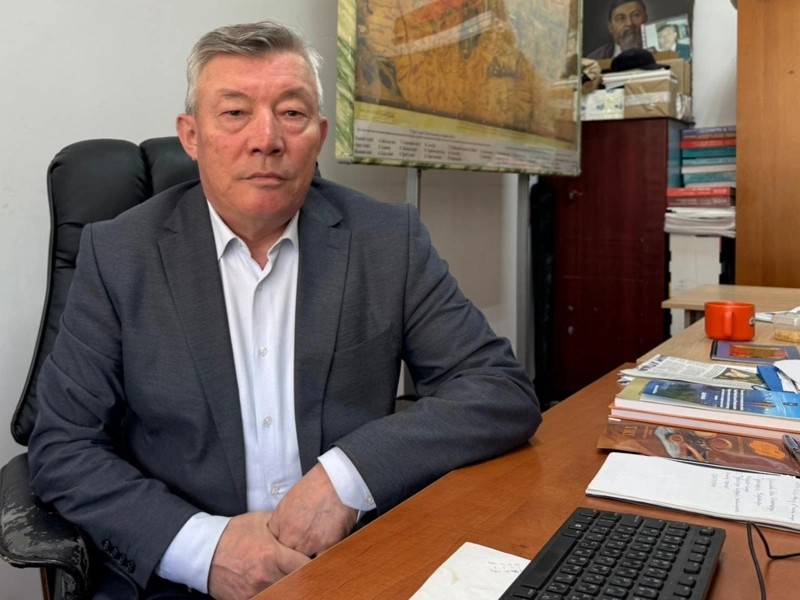
Bereket Karibayev, a professor at Al-Farabi Kazakh National University, doctor of historical sciences and academician. Photo credit: Meirman Less
Fully nomadic pastoralism developed in the Mangystau and the Aral Sea region, while semi-nomadic, semi-settled and settled forms of economic life took shape elsewhere.
“Pure nomadic pastoralism means that herding tribes provided for themselves entirely through livestock products, such as meat, milk, hides and wool,” Karibayev said.
Under a semi-nomadic lifestyle, people with smaller herds also practiced farming and gardening, adapting their livelihoods to local environmental conditions.
Karibayev said nomads did not see nature as an endless resource. Instead, they understood the value of soil, water and pastureland, and developed practices aimed at preserving them.
“For centuries, steppe dwellers lived in close connection with nature. To avoid exhausting pastures, they did not remain in one place for long. Seasonal migrations between winter camps (kystau), spring pastures (kokteu), summer pastures (zhailau) and fall pastures (kuzeu) were a way of preserving nature,” he said.
Karibayev describes this as a “law of dispersion” in nomadic life: by spreading people and livestock across vast territories, pressure on any single area of land was reduced.
Wealth meant knowing the steppe
In nomadic society, wealth was measured not only by the size of a herd, but by a person’s understanding of nature and ability to manage it wisely.
“A person who knows only the size of their herd, but does not understand the subtleties of caring for it, cannot become rich. Kazakhs knew exactly where winter grazing could take place, how long the grass under snow would last, and in which season and to which region they needed to migrate. Everything was taken into account, including the condition of livestock during spring lambing, summer insects and autumn grass reserves,” Karibayev said.
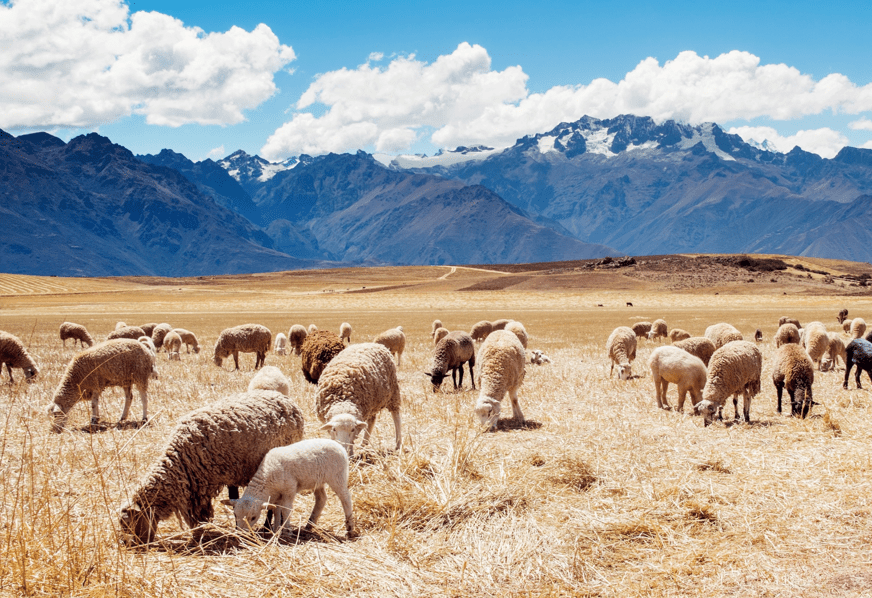
Seasonal movement between pastures was key to preserving the steppe’s natural balance. Photo credit: energyprom.kz
The great Kazakh poet Abai Kunanbaiuly captured this mindset in lines about a wealthy herder reluctant to trample pasture too early:
“Lest I consume my land too soon,
The rich man lingers in the autumn pasture in a shelter.”
According to Karibayev, the verse reflects the careful and economical use of pastureland that lay at the heart of nomadic life.
Reading the weather like a map
Kazakhs closely observed seasonal patterns and gave names to natural phenomena that could affect livestock and migration. Among the best known are “Kuralaidyn salkyny” (the coolness of Kuralai) and “Beskonak” (five guests).
“Kuralaidyn salkyny” refers to a spring cold snap that coincides with the calving season of saiga antelopes. “Beskonak” describes a period of unstable weather, usually between March 17 and 21, when rain, sleet, wind and cold can last for five to seven days.
During such periods, Kazakhs avoided long journeys and did not send newborn livestock out to pasture.
According to folk tradition, the term “Beskonak” is linked to a story about five travelers who, journeying at night, stopped at a lone house on the edge of an aul (village), to spend the night. As they prepared to leave, a storm broke out, first rain, then a fierce blizzard, forcing them to remain there for nearly a week. The saying “Spring will not arrive until Beskonak has passed” is believed to have grown out of that story. Because of the phenomenon, Kazakhs traditionally treated that period with caution, avoiding long journeys and keeping livestock close to shelter.
“If you do not understand the features of nature and drive livestock out to pasture, the animals may give birth right in the steppe, and the young, unable to withstand the cold, may die,” he said.
At the same time, such cold spells were seen as important indicators of the coming season. If “Beskonak” passed without heavy precipitation, people worried that summer might be dry and harvests would be poor.
When imbalance turns into disaster
Nomads understood that violating the balance of nature could have devastating consequences.
“If harmony with nature is broken and the number of livestock in a given place exceeds acceptable limits, it can inevitably end in zhut,” Karibayev said, referring to the mass death of livestock caused by severe weather and a lack of forage.
Kazakhs also tracked natural cycles that repeated every 12 to 13 years. Harsh winters and zhut (a severe winter disaster) were often associated with the “year of the hare,” and only those who understood the laws of nature were able to preserve their herds.
Karibayev argues that the Soviet-era belief in humanity’s superiority over nature broke with the worldview of the nomadic steppe and led to serious environmental damage.
“Relying on science and technology, we decided that we were stronger than nature and set out to conquer the land. What did that lead to? The Syr Darya and Amu Darya rivers began to shrink, and the Aral Sea was sacrificed,” he said.
Karibayev noted that nomads, by contrast, sought not to conquer nature, but to live in accordance with it. In the Kazakh worldview, water, soil, grass and mountains were all treated as sacred and understood as an amanat, something entrusted for safekeeping.
“Nomads understood that natural resources are not infinite. The Kazakh proverb “Sudyn da surauy bar” (Even water will be accounted for) is rooted in this very idea,” Karibayev said.
That ethic of stewardship, reflected in proverbs, customs and seasonal migration practices, remains one of the clearest lessons of nomadic civilization: survival depended not on mastering nature, but on understanding its limits.
The article was originally published in Kazinform.
